
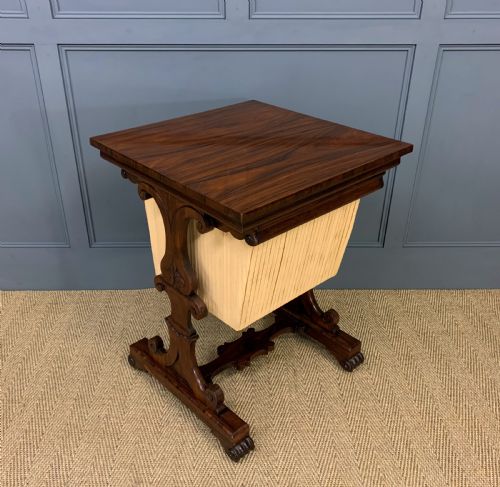
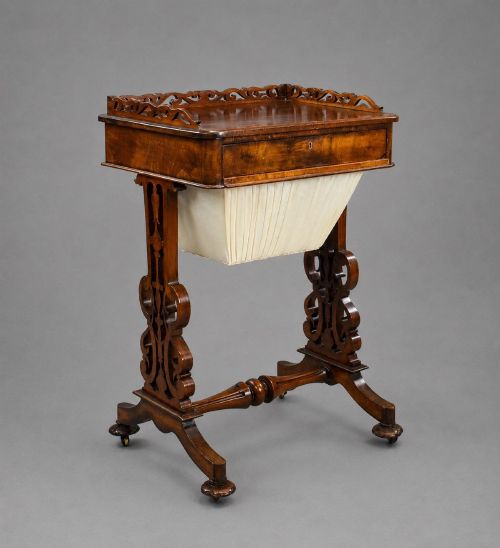


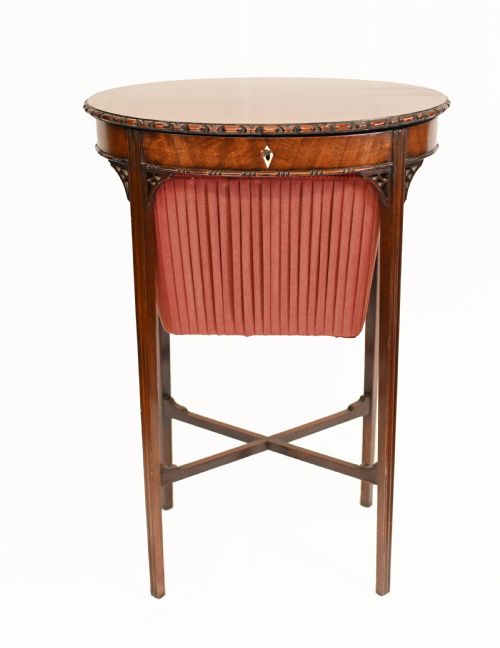


Antique Pleated Sewing Box
An antique pleated sewing box or work table brings refined storage and rich timber to a room, combining domestic craft with elegant nineteenth-century design.
Antique Pleated Sewing Box
The antique pleated sewing box, most frequently encountered here as a work table or sewing stand, is a specialised piece of nineteenth-century furniture designed to house needles, threads and intricate needlework. These items combine a solid timber top with a suspended fabric bag underneath, which gathers in pleats to hold textiles and sewing tools safely out of sight.
The pieces on this page span the Regency, Victorian, and Edwardian eras, offering a variety of formats from pedestal tables to drop-flap stands. Most examples serve a dual purpose, functioning as occasional tables or games tables alongside their primary role as dedicated workboxes.
Makers from the Georgian period through to the early twentieth century utilised dense hardwoods like mahogany, rosewood and burr walnut for the main structure. The pleated bag below relies on textiles such as silk to provide a soft contrast to the polished timber frames above.
How they were made
Cabinetmakers constructed the main framework using timbers like mahogany, rosewood, satinwood and burr walnut, often highlighting the natural grain with polished finishes. Drop-flap designs and pedestal bases required precise joinery to ensure stability while accommodating movable components.
The characteristic pleated element utilises gathered fabric, most notably silk, suspended from a wooden or fabric-lined frame beneath the tabletop. This soft container required careful hand-stitching to maintain its pleated structure through years of opening and closing.
Listings feature woods such as mahogany, rosewood, burr walnut and satinwood across Regency, Victorian and Edwardian periods.
What varies in quality
The distinction between standard examples and finer pieces often lies in the choice of timber veneer, such as figured mahogany or burr walnut, and the sophistication of the pedestal or leg turning. More ambitious pieces incorporate multiple functions, combining a sewing compartment with a chess or backgammon board on the top surface.
The condition and execution of the pleated fabric bag also influence the overall standard of the piece, as original silk linings demonstrate superior hand-craftsmanship compared to later replacements. Details such as brass mounts, fitted interior trays for spools, and painted satinwood decoration elevate the workmanship of the work table.
The Antique Pleated Sewing Box Glossary
- Work table
- A small occasional table fitted with drawers and a fabric bag for holding sewing equipment and textiles. These pieces became essential household items during the nineteenth century.
- Burr walnut
- A prized timber veneer taken from the wart-like growths on walnut trees, known for intricate, swirling grain patterns. Cabinetmakers used it on high-status nineteenth-century furniture.
- Drop-flap
- A hinged leaf on the side of a table that can be raised to extend the surface area or lowered when space is restricted. This mechanism appears frequently on Regency and Victorian sewing stands.
- Pedestal table
- A table supported by a central pillar rising from a weighted base or splayed legs rather than four standard corner posts. This construction allows greater knee clearance around the seat.
Antique Pleated Sewing Box: Frequently Asked Questions
What is a sewing table used for?
These tables provided a dedicated workspace for women engaged in needlework, embroidery and mending during the nineteenth century. The top surface offered space for stitching, while internal compartments and the pleated bag below kept threads and tools organised.
Over time, many of these pieces transitioned into general occasional furniture, serving beside armchairs or sofas as small side tables with concealed storage.
How do I date a sewing table?
Dating relies on identifying the prevailing style, timber choices and construction methods visible in the piece. Regency and William IV examples often feature rosewood, brass inlay and robust pedestal bases, whereas later Victorian versions frequently employ burr walnut or figured mahogany.
Edwardian and early twentieth-century variations often display lighter satinwood construction with painted details, reflecting changing interior tastes away from heavier dark woods.
What are pleated sewing boxes made of?
The structural framework relies on dense hardwoods including mahogany, rosewood, walnut and satinwood, selected for their strength and decorative grain patterns. Some finer versions incorporate burr walnut veneers or painted surfaces.
The hanging basket or bag underneath traditionally employs soft textiles, with silk being a preferred material to create the gathered, pleated effect that holds the sewing supplies.
Can I use an antique work table today?
These tables adapt easily to modern interiors as bedside stands, lamp tables or hallway surfaces where small items require storage. The drawers and compartments work well for contemporary stationery, craft supplies or small accessories.
Care should be taken to place them away from direct heat sources and strong sunlight to protect the aged timber finishes and delicate fabric linings.