




Antique Pleated Sewing Basket
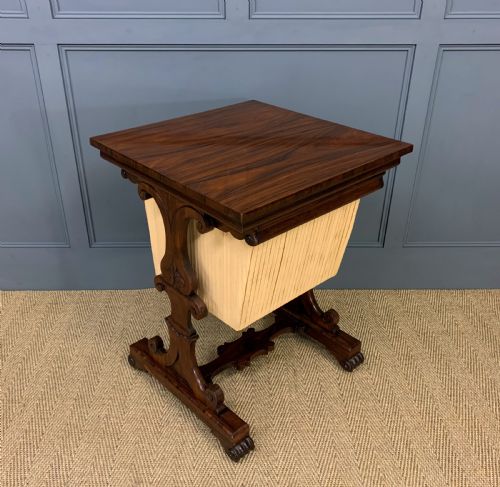
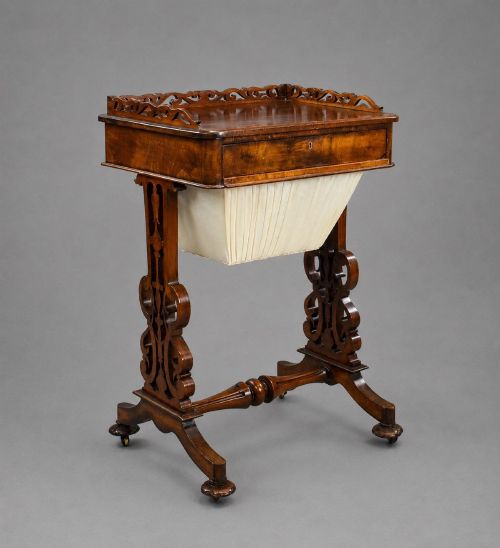
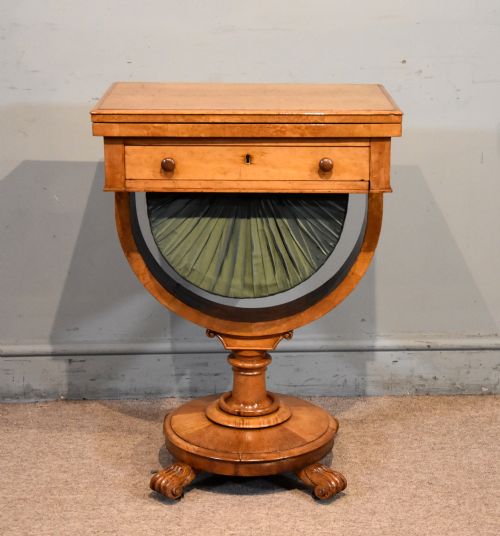
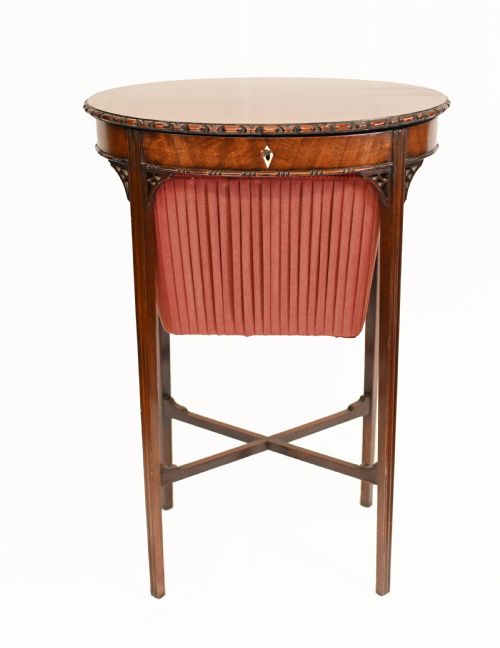
These antique pleated sewing basket forms are refined nineteenth-century work tables that bring elegance and practical storage to a modern room.
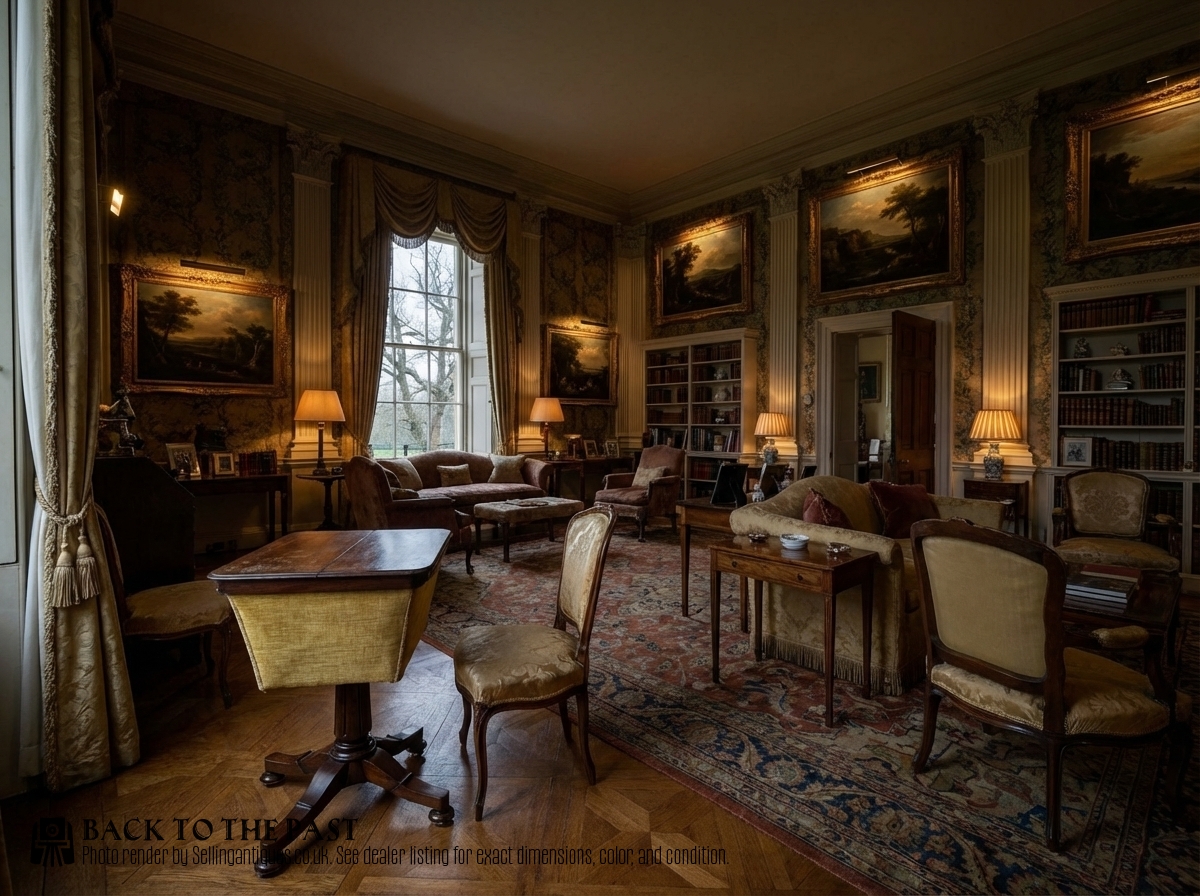
Antique Pleated Sewing Basket
An antique pleated sewing basket search uncovers refined nineteenth-century work tables, sewing stands, and occasional tables designed for domestic needlework and small crafts.
The most common examples on this page date from the Regency, William IV, and Victorian periods, often taking the form of compact side tables with integrated fabric compartments.
These pieces combine utilitarian origins with polished cabinet-making, serving equally well today as bedside tables or refined storage furniture in a sitting room.
How they were made
Cabinet-makers utilised dense timbers such as mahogany, rosewood, burr walnut, and pollard oak to construct the main frames and drop-flap tops of these tables.
Silk and other fine fabrics were gathered into pleated compartments suspended beneath the drawer or table top to hold sewing materials securely.
Inlaid details, brass mounts, and turned pedestals demonstrate the skilled joinery typical of Georgian, Regency, and Victorian workshops.
Many of these tables include hidden compartments designed specifically to keep stray thimbles and pins from rolling away during needlework.
What varies in quality
The sophistication of the timber figure and the precision of the cabinet-making separate standard examples from finer pieces.
Well-executed joinery in the drawers and the condition of the integrated fabric work-bags heavily influence the overall character of the table.
The Antique Pleated Sewing Basket Glossary
- Work Table
- A small table fitted with drawers and a fabric bag for holding sewing equipment. These items were essential furnishings in nineteenth-century domestic interiors.
- Regency
- A British design style spanning the early nineteenth century, characterised by classical influences and clean architectural lines. Pieces from this era often employ figured mahogany or maple.
- William IV
- A transitional period of British design bridging the Regency and Victorian eras, noted for robust proportions and rich rosewood veneers. Furniture from this time displays confident carving and substantial pedestals.
- Drop Flap
- A hinged leaf on the side of a table that can be raised to extend the surface area or lowered when space is limited. This mechanism adds versatility to compact sewing stands.
Antique Pleated Sewing Basket: Frequently Asked Questions
What is an antique sewing table used for today?
These tables function well as compact bedside surfaces or elegant side tables in a living room, offering discreet storage within their drawers and pleated fabric compartments.
Their small footprint allows them to fit easily into modern spaces while retaining a distinct nineteenth-century character.
How do I identify a Regency sewing table?
Regency examples typically feature classical proportions, fine mahogany or maple timbers, and understated brass mounts or inlay.
They reflect the design sensibilities of the early nineteenth century, often appearing lighter and more architectural than later Victorian pieces.
What woods were used for these tables?
Cabinet-makers relied on hard timbers such as mahogany, rosewood, walnut, and pollard oak to ensure stability and a polished appearance.
Exotic veneers and burl figure patterns were frequently selected for the top surfaces to showcase the natural grain.
Are these tables suitable for small rooms?
Their compact dimensions make them exceptionally well-suited for smaller spaces where traditional furniture might overwhelm the room.
The inclusion of drop flaps and internal storage further maximises their utility without sacrificing floor space.