


Regency Sewing Stand
These regency sewing stand pieces offer neat storage and elegant surfaces, bringing practical early nineteenth-century charm to a modern room.
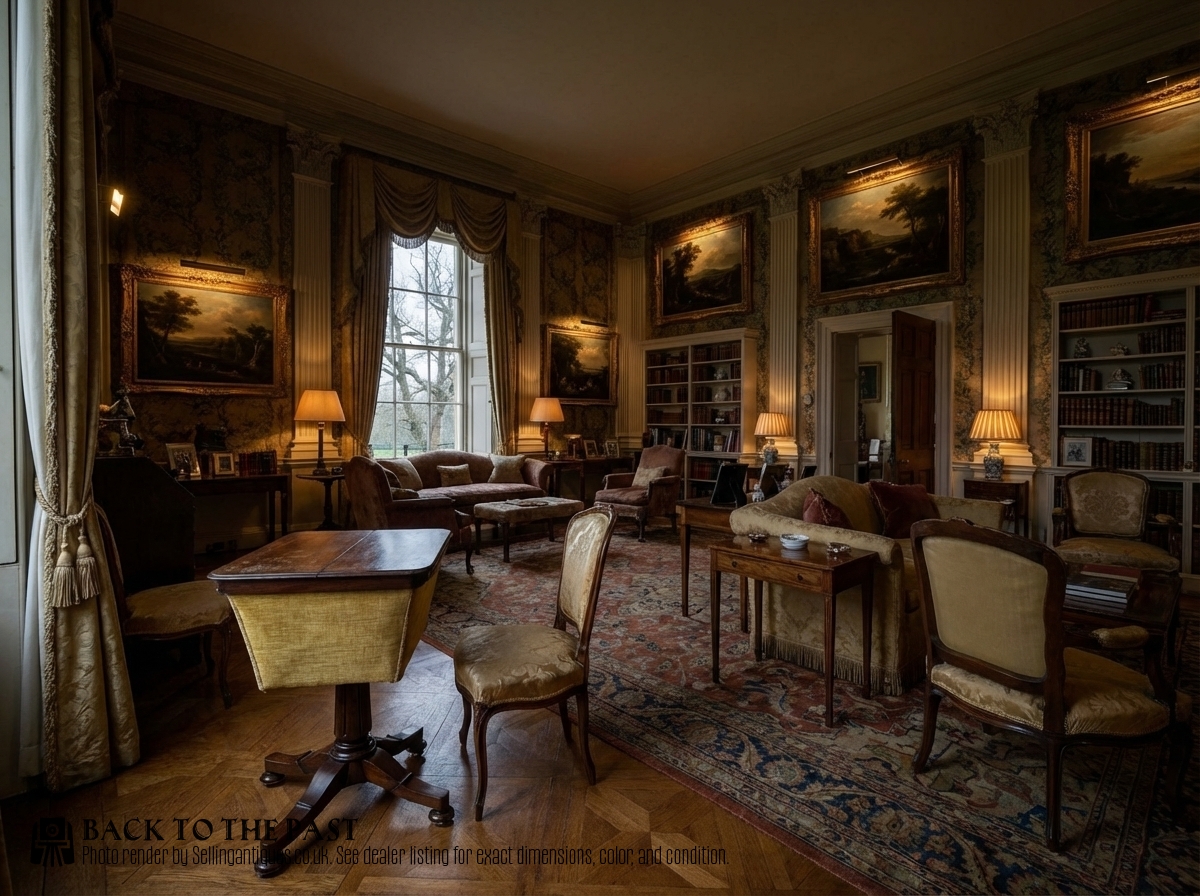
Regency Sewing Stand
A regency sewing stand provides a compact tabletop combined with storage for needlework, taking the form of worktables, workboxes on stands, and teapoys. The examples met on this page date primarily from the Regency period and the nineteenth century, including William IV variations.
Makers designed these items as versatile occasional furniture, functioning equally as lamp tables, side tables, and dedicated sewing companions. Mahogany and rosewood form the main body of these pieces, often featuring silk linings or fabric elements within internal compartments.
How they were made
Cabinetmakers utilised solid mahogany, flame mahogany, and rosewood, frequently incorporating boxwood inlay to define the borders and tabletops. Structural stability relied on turned legs and freestanding frames built to support fitted internal workboxes.
Textiles played a functional role through silk and cotton fabrics fitted inside the sewing compartments. Brass components added durable detailing to hinges, mounts, and castors.
Listings feature mahogany, rosewood, and silk, spanning the Regency and William IV periods through to eighteen-ninety.
What varies in quality
The refinement of the timber selection marks the distinction between standard examples and superior pieces, particularly the choice between plain mahogany and highly figured flame mahogany or rich rosewood. Precision in the boxwood inlay also separates baseline construction from finer cabinetwork.
The sophistication of the turning on the legs and the integrity of the internal workbox fittings determine the overall standard of the stand. Freestanding capability with finished panels on all sides indicates a higher grade of original commission.
The Regency Sewing Stand Glossary
- Regency
- An English design style spanning the early nineteenth century, known for classical lines and refined proportions. This period forms the core aesthetic of the items listed here.
- Teapoy
- A small stand or box originally used to store tea, often sharing forms with sewing tables of the same era. These pieces reflect the varied domestic uses given to occasional furniture.
- Flame mahogany
- A highly figured wood grain pattern resembling flickering flames, prized for decorative tabletops. Cabinetmakers utilised this veneer to create visual movement on prominent surfaces.
- Worktable
- A specialised table incorporating drawers or hanging fabric bags for sewing and needlework supplies. It serves as the primary functional category for these stands.
- Boxwood inlay
- Contrasting pale wood inserted into darker timber surfaces in geometric or linear patterns. This technique highlights the edges and panels of finer tables.
Regency Sewing Stand: Frequently Asked Questions
What is a regency sewing stand used for?
These pieces served historical households as dedicated workstations for needlework, storing threads, fabrics, and tools inside built-in boxes or silk bags. Today, they function well as compact side tables or lamp stands in living spaces.
Their tabletop surfaces and internal compartments offer practical storage while maintaining a decorative antique presence.
How do I date a sewing stand?
Dating relies on identifying stylistic markers from the Regency period, such as specific leg turnings and timber choices like rosewood or flame mahogany. Reference to the nineteenth century or William IV era helps narrow the timeframe.
Construction methods and the presence of period brass hardware also assist in confirming the age of the piece.
Are sewing stands and teapoys the same?
While they share similar nineteenth-century proportions and freestanding forms, teapoys were originally designed for storing tea rather than sewing equipment. Both types appear within this furniture category due to their comparable size and function as occasional tables.
Internal layouts provide the clearest distinction between the two forms.
How do I style a sewing stand at home?
These compact pieces fit easily beside a sofa or armchair as a lamp table or occasional surface. Their narrow footprint allows them to occupy small spaces without crowding a room.
The historical character brings texture and warmth to contemporary interiors.