
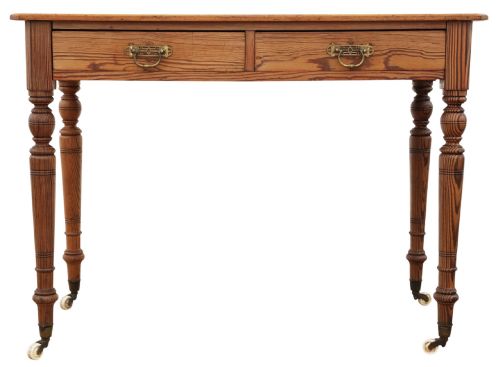
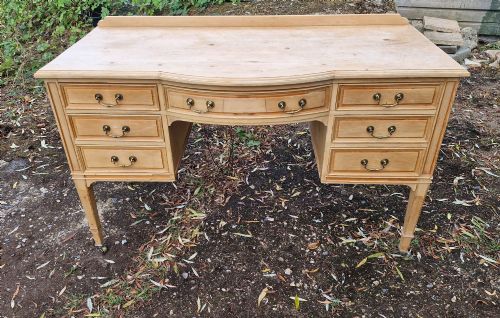
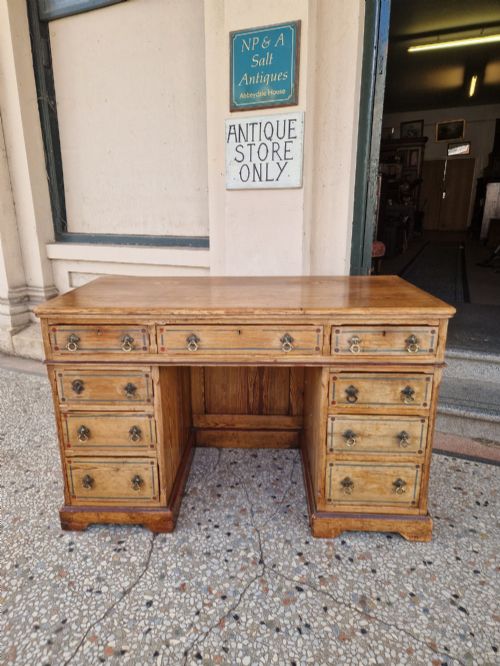
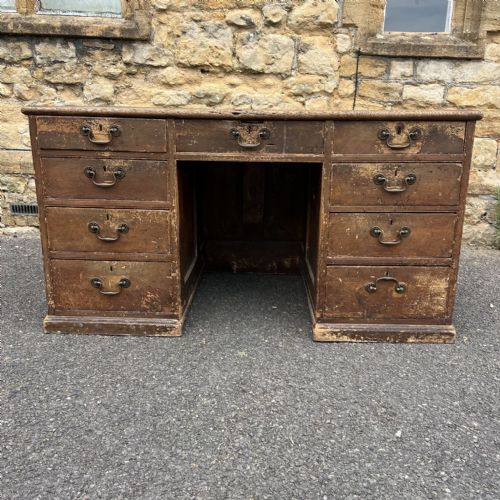
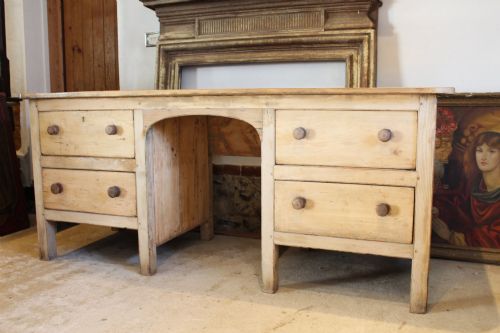
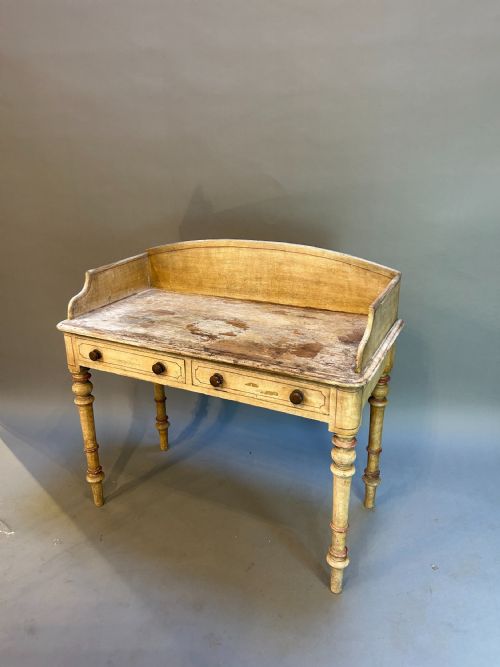
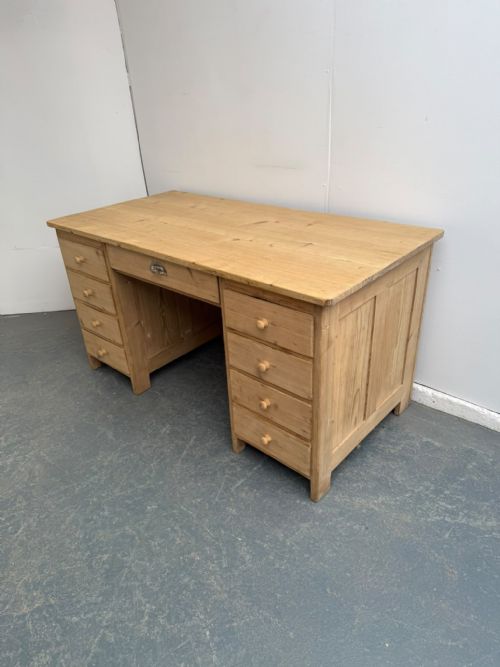
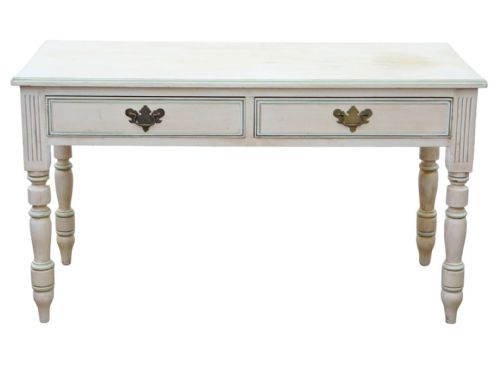

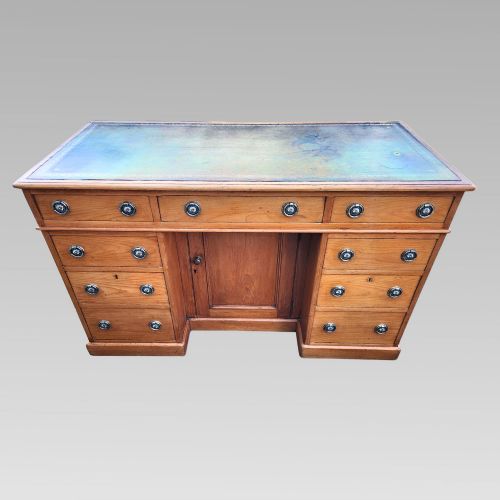


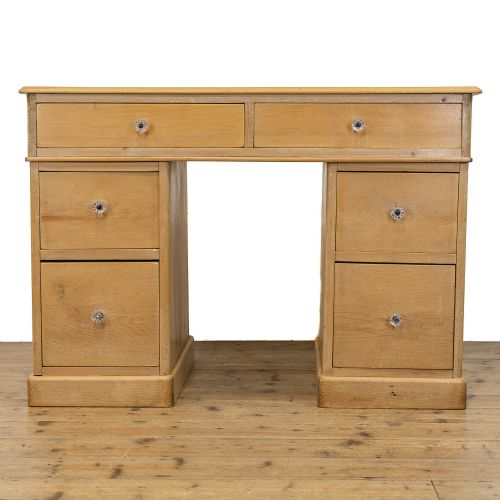
Antique Pine Study Table
An antique pine study table brings honest utility and warmth to a room, offering robust surfaces shaped by generations of practical work.
Antique Pine Study Table
An antique pine study table encompasses a practical range of writing desks, pedestal desks, and side tables shaped across the nineteenth and early twentieth centuries. These pieces span simple country work tables to substantial Victorian pedestal office desks and Arts and Crafts examples.
Most items you will meet on this page belong to the Victorian and Edwardian eras, constructed in standard pine or denser pitch pine. Forms range from compact single-drawer kneehole desks to large multi-drawer estate and partners writing tables.
Origins stretch from English country workshops to Swedish houses, taking in Georgian influences and Gothic styling alongside straightforward painted surfaces. Each table reflects the utilitarian needs of schools, offices, and domestic studies from past centuries.
How they were made
Construction relies heavily on solid pine and pitch pine, frequently augmented with oak, sycamore, and iron or brass hardware. Timber selection dictated the strength of the writing surface and the durability of the frame.
Joinery methods range from straightforward plank construction to panelled pedestals and dovetailed drawer boxes. Surfaces were left to natural wax finish, painted, or prepared for future polishing depending on the original commission.
Listings span periods from George III through to the Edwardian era, featuring both standard pine and dense pitch pine.
What varies in quality
Quality rests upon the density of the timber, particularly where pitch pine provides a harder, more figured grain than standard softwood. The robustness of the structural frame and the execution of drawer construction also set pieces apart.
Proportion and scale distinguish finer architectural desks, such as pedestal partners tables, from simpler side tables. The integrity of original painted finishes or the depth of a patinated wax surface determines the visual weight of the piece.
The Antique Pine Study Table Glossary
- Pitch pine
- A dense, resinous variety of pine timber prized for its prominent grain and durability. It was frequently utilised for heavier Victorian and Arts and Crafts desks.
- Kneehole desk
- A writing table featuring a central recess for the user's legs, flanked by pedestals of drawers. This form became standard for nineteenth-century office and study furniture.
- Partners desk
- A large double-sided desk designed for two people to work opposite one another. These substantial pieces often incorporate pedestals of drawers on both sides.
- Sycamore
- A light-coloured hardwood sometimes combined with pine in secondary framing or drawer linings. It offers a smooth, tight grain suited to interior components.
Antique Pine Study Table: Frequently Asked Questions
How are these tables best used today?
These tables serve naturally as working desks in home studies or living spaces, accommodating modern laptops alongside traditional writing materials.
Their sturdy timber construction also allows them to function effectively as side tables or occasional writing surfaces in larger rooms.
What maintenance do pine surfaces need?
Routine care involves dusting with a dry cloth and occasionally feeding waxed timber with a traditional beeswax polish to maintain the finish.
Painted variants require gentle cleaning with a damp cloth to protect the surface coating from moisture and wear.
How can I identify a Victorian desk?
Victorian examples typically display heavier proportions, darker patination, and robust pedestal or kneehole configurations built from pitch pine or standard pine.
Construction details such as hand-cut dovetails in the drawer boxes and period brass or iron handles further indicate nineteenth-century origin.
Where were these tables originally used?
Many originated in domestic studies, estate offices, and schoolrooms where durable writing surfaces were an everyday necessity.
Others emerged from regional domestic workshops, reflecting the vernacular furniture traditions of English and Swedish interiors.