
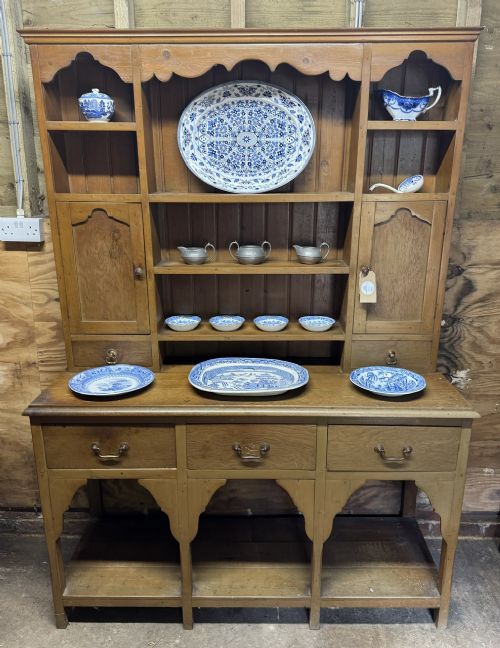
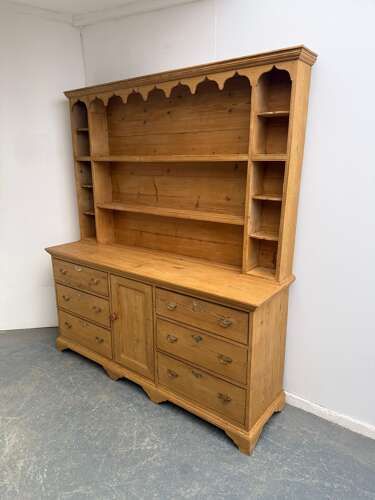


Antique Pine Sideboard Rack
These antique pine sideboard rack pieces are sturdy kitchen dressers offering open shelving and storage, bringing authentic rustic charm to any interior.
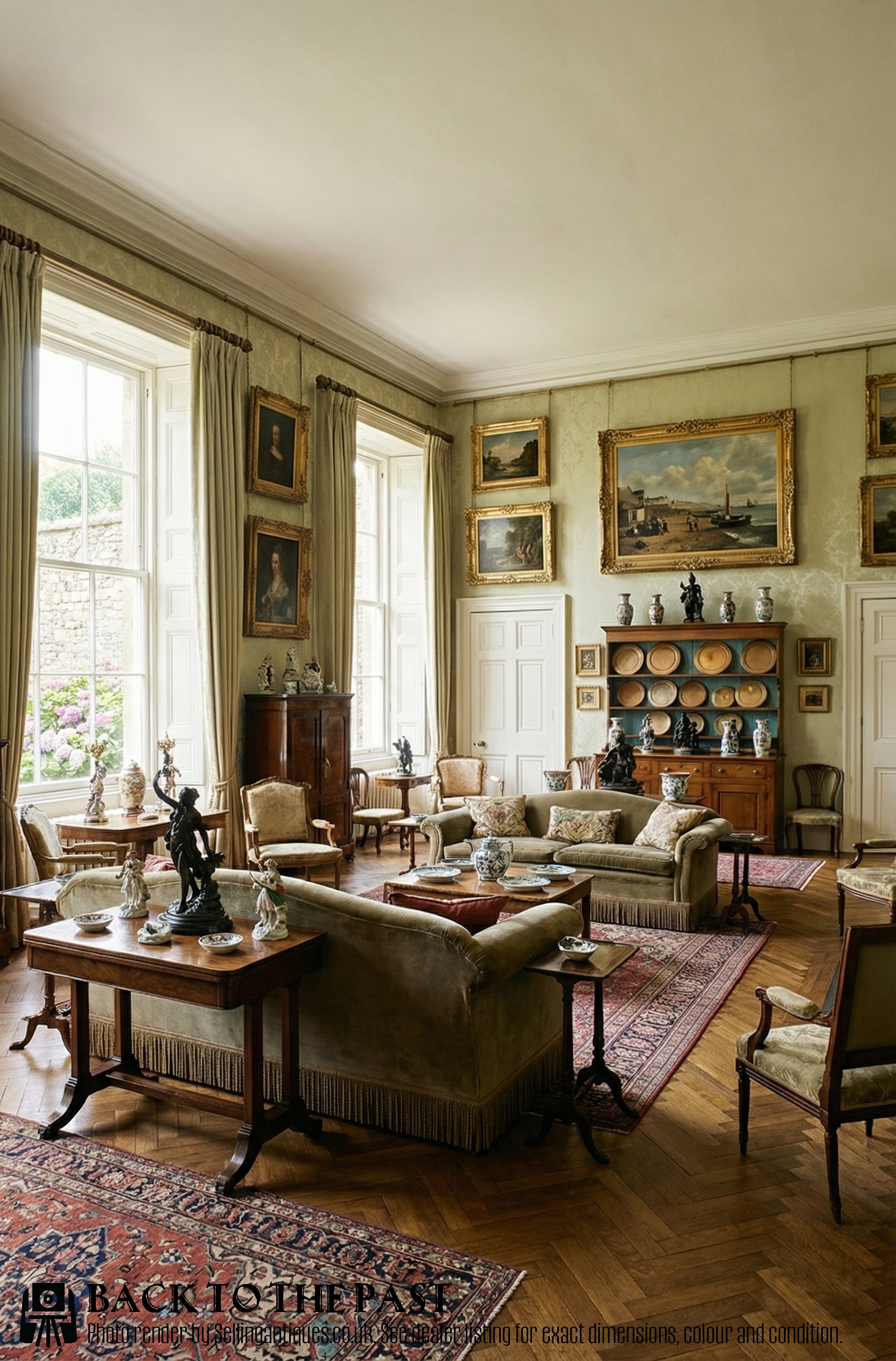
Antique Pine Sideboard Rack
An antique pine sideboard rack combines a lower base with drawers or cupboards and an upper plate rack designed for displaying crockery in domestic kitchens. These pieces serve as practical storage solutions while embodying traditional craftsmanship from various regional traditions.
The versions most frequently encountered on this page date from the 19th century and the Victorian period, though earlier Georgian examples and later pieces also appear. Regional variations such as Welsh vernacular, West Country, and English country styles define the primary forms available.
Makers utilised native softwoods and hardwoods, often finishing the timber with paint, wax, or retaining an original patinated surface. The combination of open shelving above a solid sideboard base creates the classic profile desired by collectors of country furniture.
How they were made
Joiners constructed these pieces primarily using pine, oak, and mahogany, assembling the carcase with traditional mortise and tenon joints to ensure lasting stability. Backboards commonly consist of vertical tongue and groove planking fixed with handmade iron nails or screws.
Surface treatments vary widely between original painted finishes, waxed pine, and stripped timber that exposes the grain. Iron and brass hardware such as drawer pulls and hinges complete the construction, reflecting the utilitarian origins of each piece.
Listings feature pieces spanning the 18th century, Georgian period, 19th century, Victorian era, and 1930.
What varies in quality
The integrity of the original surface patina separates standard examples from exceptional pieces, as untouched waxed or painted finishes retain historical character. Proportion and regional vernacular details, such as breakfront drawers or potboards, influence the overall desirability of a dresser.
Structural originality, including matching base and rack combinations and minimal timber replacement, determines the grade of a piece. Finer examples display careful attention to moulding details and harmonious proportions between the sideboard base and the upper rack.
The Antique Pine Sideboard Rack Glossary
- Potboard
- An open slatted lower shelf beneath a dresser base traditionally used for storing pots and pans. This feature is particularly characteristic of early English and Welsh country furniture.
- Welsh Dresser
- A traditional kitchen unit featuring an upper plate rack combined with a lower sideboard base containing drawers and cupboards. These pieces often display regional stylistic traits specific to different valleys and towns.
- Patina
- The surface sheen and colour acquired by wood and paint over decades of use and waxing. A desirable patina demonstrates age and authenticity without heavy modern restoration.
- Breakfront
- A piece of furniture where the central section projects forward from the flanking outer sections. This architectural arrangement adds visual depth to the base of larger dressers.
- Vernacular furniture
- Items made by local joiners and country craftsmen using regional styles and readily available materials rather than following metropolitan fashion. These pieces reflect the practical needs of rural households.
Antique Pine Sideboard Rack: Frequently Asked Questions
What is a pine dresser rack?
A pine dresser rack is the upper shelving component designed to sit atop a sideboard base for displaying plates and bowls.
These racks attach securely to the back of the base unit and often feature multiple tiers with plate grooves.
Are these dressers solid pine?
Most examples are constructed primarily from solid pine timbers, though secondary woods like oak or mahogany occasionally appear in structural components or drawers.
Craftsmen selected pine for its workability and abundance in regional workshops across Britain and Scandinavia.
Can I separate the rack from the base?
Many dresser racks are separate units that simply rest upon or bolt to the sideboard base for ease of transport.
Checking how the rack connects to the base helps determine if the upper and lower sections started life together.