
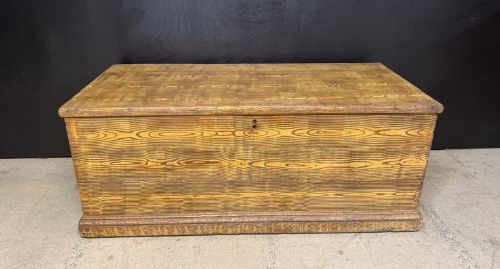
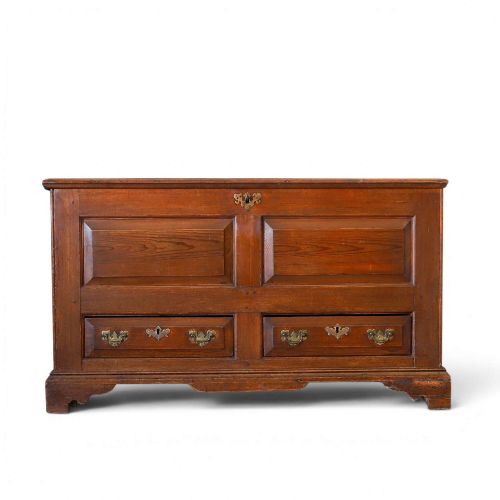
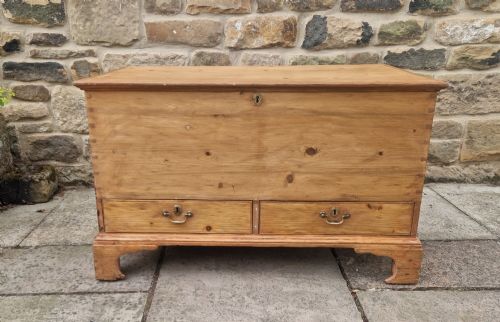
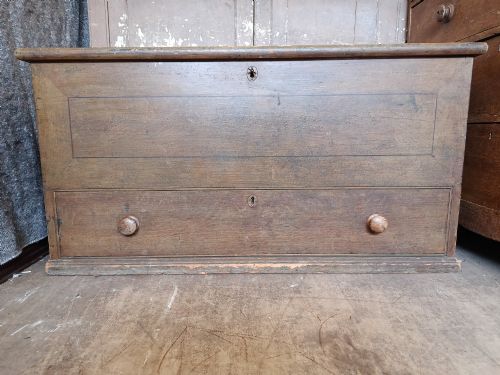
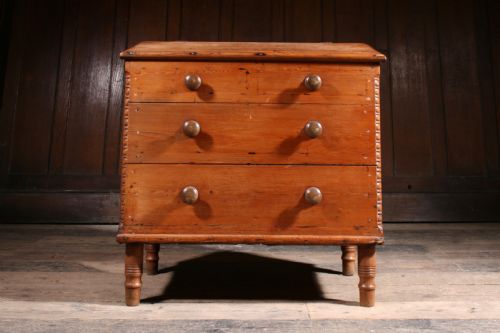


Antique Pine Mule Chest
An antique pine mule chest brings both generous storage and utilitarian character to a room, combining a traditional blanket box with one or more lower drawers.

What an antique pine mule chest is
An antique pine mule chest serves as a dual-purpose storage piece, featuring a hinged lid above one or more drawers built into the base. These timber chests bridge the gap between simple blanket boxes and fully fitted drawer chests, offering robust storage for household linens and garments.
The examples found here range from clean-lined Georgian designs to rustic farmhouse pieces and painted finishes. Most specimens hail from the Georgian period or the nineteenth century, reflecting utilitarian domestic storage across English and Welsh homes.
How they were made
Joiners constructed these chests primarily from solid pine, utilising pegged joints, panelled construction and dovetails for the drawer boxes. The secondary metals appear in functional brass or iron hardware, such as carrying handles, hinges and escutcheons.
Surfaces receive either a waxed finish to highlight the natural grain of the timber or an application of paint, with several pieces retaining original painted or cream finishes. These traditional treatments protect the softwood while developing a rich patina over decades of domestic use.
Retail Price Guide 2026
Typical UK retail prices for pine mule chest, calculated from the Sellingantiques database of over a million retail prices indexed since 2003. This retail price guide relies exclusively on Sellingantiques data; no external sources or auction records are used, so the figures do not describe the wider market.
Surfaces across these items range from waxed natural pine to folk art and original painted finishes in cream.
What varies in quality
The distinction between standard utility boxes and superior examples lies in the proportion, timber selection and joinery detail. Extra-wide proportions, early Georgian construction dates, and panelled fronts elevate a piece above simpler vernacular blanket boxes.
Surface preservation plays a major role in valuation, particularly where original paint or deeply waxed surfaces remain intact. Well-executed dovetailing on the lower drawers and robust original brass or iron hardware indicate careful workshop production.
The Antique Pine Mule Chest Glossary
- Mule chest
- A storage chest featuring a hinged lid at the top and one or more drawers fitted beneath the main compartment. This form evolved during the eighteenth century to provide easier access to items stored at the bottom.
- Blanket box
- A deep chest traditionally used for storing woollen blankets, textiles and linens. Unlike a mule chest, it lacks the lower drawer section.
- Dovetail
- A strong interlocking joint used to secure drawer corners, formed by interlocking wedge-shaped fingers. Fine dovetailing indicates skilled cabinetmaking.
- Escutcheon
- A protective metal plate surrounding a keyhole, usually fashioned from brass or iron. It prevents the soft pine around the lock from splitting with repeated use.
- Panelled
- A method of construction where a central timber board is set within a framed border to allow for wood movement. This technique prevents the wood from warping as humidity changes.
Frequently Asked Questions
What is an antique pine mule chest?
A mule chest is a traditional storage box that combines a top-opening blanket compartment with one or more drawers built into the base. The addition of drawers meant users no longer had to empty the entire contents to reach items at the bottom.
These pieces were essential household furniture in eighteenth and nineteenth-century homes, constructed primarily from durable pine for everyday domestic utility.
How do I date an antique pine mule chest?
Dating relies on examining construction methods, hardware, and stylistic details such as panel thickness and drawer dovetailing. Earlier Georgian examples often feature hand-cut joinery and pegged frames, while nineteenth-century pieces may display simpler construction or original painted finishes.
Comparing the timber patina and any surviving brass or iron fittings against known period styles helps narrow down the decade of manufacture.
Where should I place a mule chest?
These chests suit bedrooms as blanket boxes at the foot of a bed, or living areas where they double as coffee tables or window seats. Their generous proportions provide substantial concealed storage for bulky items while anchoring a room with rustic character.
Keep them away from direct heat sources and strong sunlight to protect the pine timber and preserve waxed or painted surfaces.
How do I care for waxed pine furniture?
Maintain waxed pine surfaces by dusting regularly with a soft, dry cloth and applying a quality beeswax periodically to nourish the timber. Avoid using wet cloths or chemical sprays, which can strip the traditional wax finish and dull the patina.
Gentle polishing enhances the natural grain and protects the softwood from everyday wear in a modern home.