
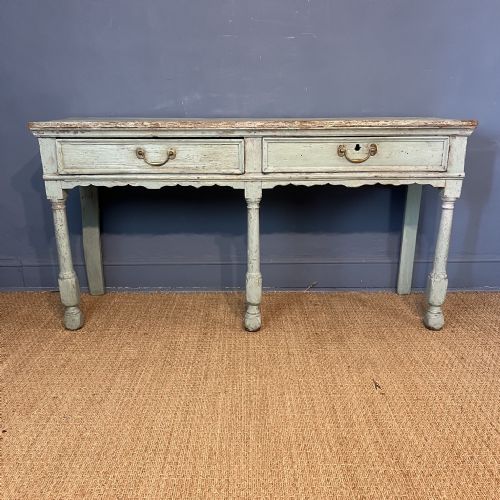
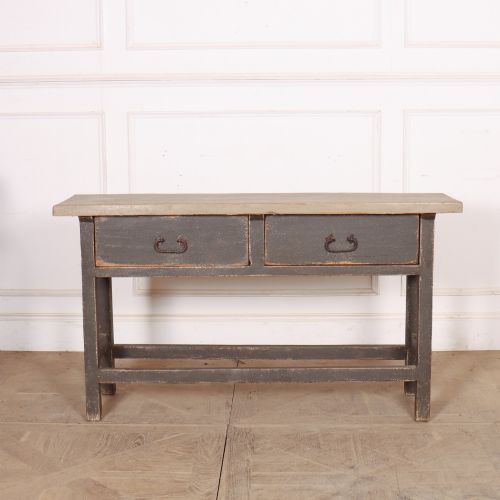
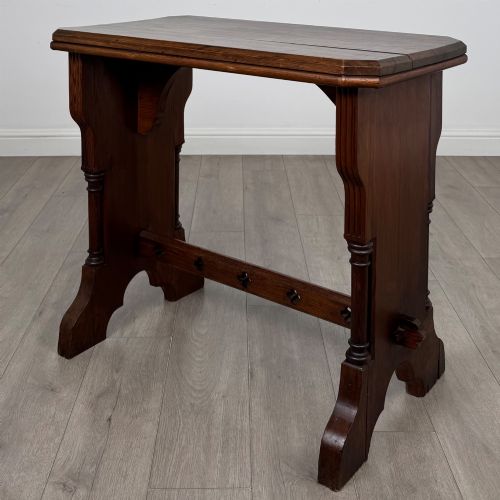
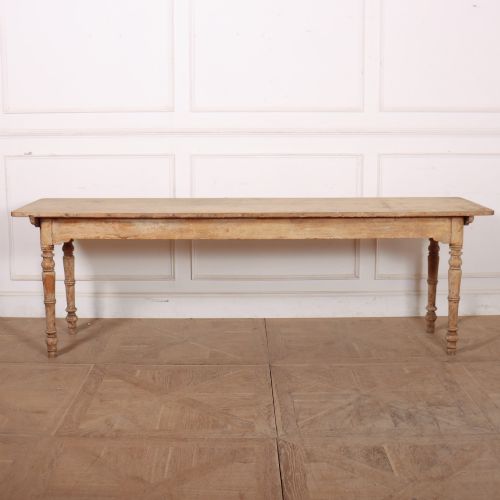
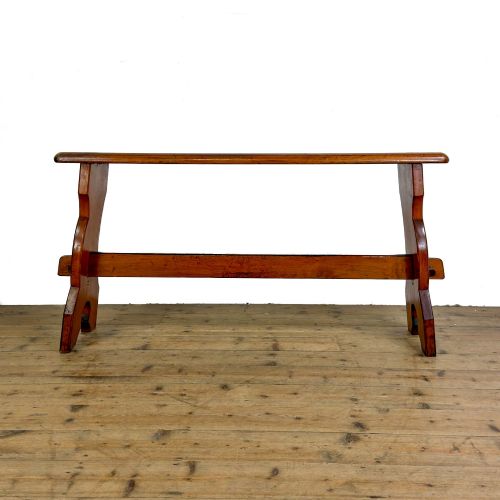
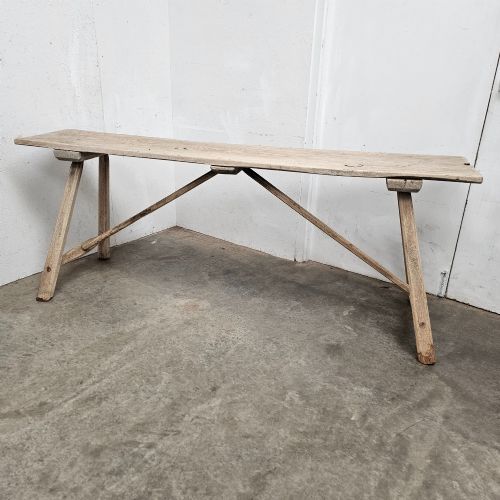
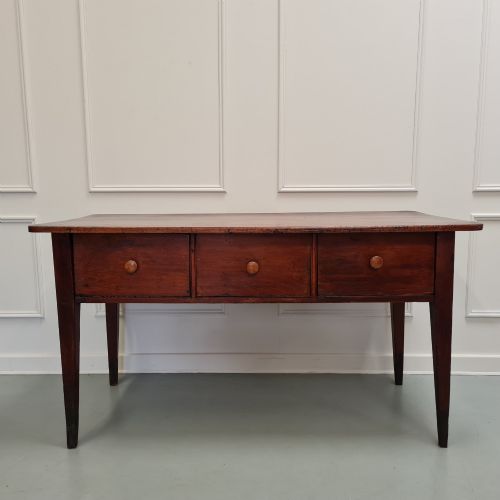
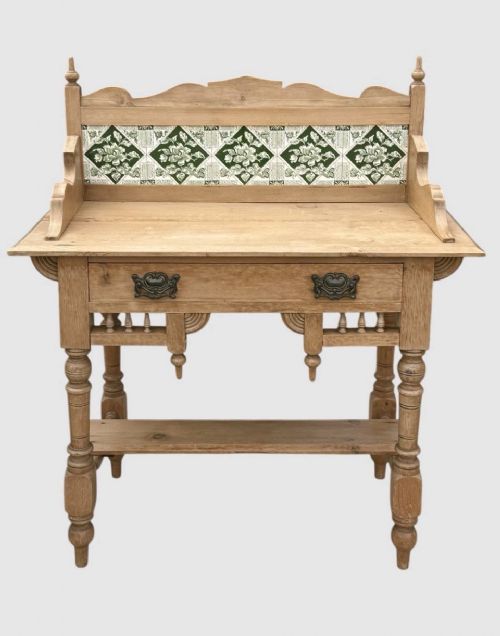
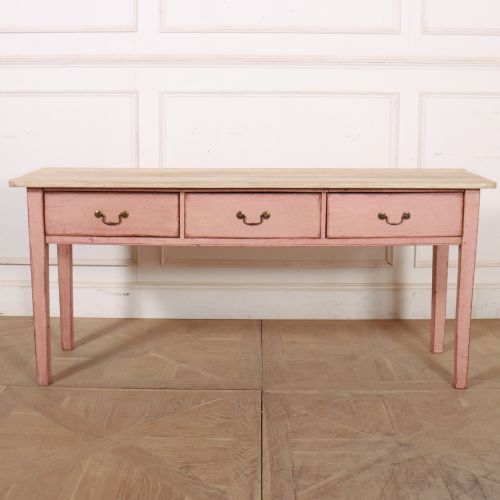

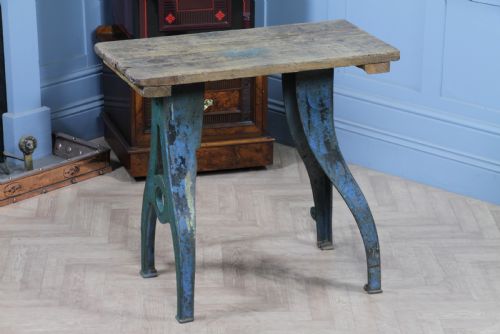
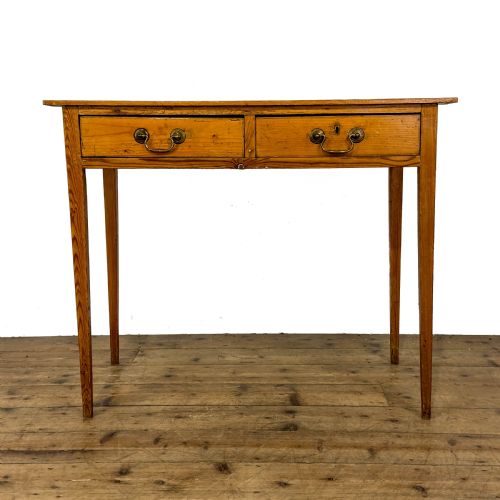
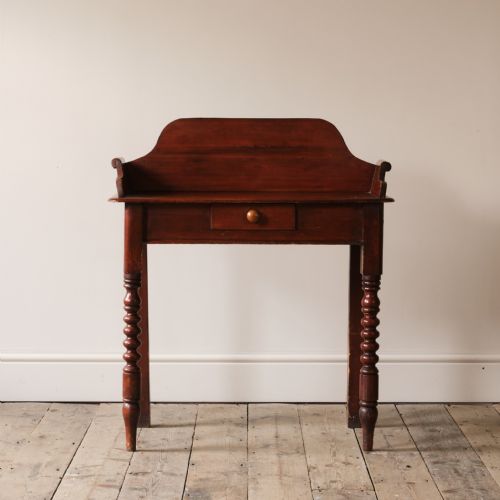


Antique Pine Hallway Table
An antique pine hallway table brings honest timber and utility to a threshold, offering surface space for post and keys with understated character.
Antique Pine Hallway Table
When you search for an antique pine hallway table, you are looking at narrow timber furniture built for domestic passages, though the inventory shows many pieces began life as servers, washstands, side tables or dairy tables rather than dedicated hallway furniture. These functional forms span the eighteenth, nineteenth and early twentieth centuries, drawing on English, French, Italian, Swedish and Dutch provincial traditions.
You are most likely to meet nineteenth-century examples and Victorian pieces on this page, often fashioned with scrubbed or painted surfaces suited to narrow spaces. Forms range from simple console tables and washstands to dresser bases and side tables in pitch pine or painted wood, providing practical depths for tight corridors.
How they were made
Carpenters relied primarily on solid pine and pitch pine, sometimes augmented with fruitwood, iron, brass or marble tops, constructing carcasses with traditional joinery suited to heavy daily use. Surfaces frequently received layers of paint, which over decades developed natural wear and patination through scrubbing and routine domestic labour.
Construction techniques reflect regional vernacular needs, from French trestle designs and scrubbed laundry tables to English Gothic pitch pine serving tables and Georgian bowfront sideboards. The timber was worked by hand, leaving tool marks and surface irregularities that record the original maker's hand.
Listings feature pieces spanning the eighteenth, nineteenth and early twentieth centuries, incorporating materials such as pine, pitch pine, paint, marble, brass and iron.
What varies in quality
Quality rests in the integrity of the timber and the honesty of the surface finish, distinguishing pieces that retain their original structural mass from those heavily altered or stripped down improperly. Finer examples display balanced proportions, undisturbed patination on painted or scrubbed pine surfaces, and well-preserved joinery.
The degree of wear tells a story of utility, separating items with genuine provincial service from those with fabricated age. Hardware, such as brass pulls or iron accents, and the retention of original structural elements like drawers or marble inserts further separate standard vernacular items from exceptional regional survivals.
The Antique Pine Hallway Table Glossary
- Console table
- A table designed to be fixed against a wall, frequently supported by brackets or legs that suit narrow hallways and passages.
- Pitch pine
- A durable, resinous softwood sourced primarily from North America and frequently utilised in nineteenth-century furniture for its distinct grain and strength.
- Scrubbed pine
- Timber surfaces cleaned repeatedly with water and coarse brushes, producing a pale, weathered texture characteristic of utility tables.
- Dresser base
- The lower section of a kitchen or dining dresser, featuring cupboards or drawers that provide substantial surface and storage capacity.
- Patina
- The surface sheen and colour acquired by wood and paint over decades of handling, exposure and natural ageing.
Antique Pine Hallway Table: Frequently Asked Questions
Can I use a washstand as a hallway table?
Washstands adapt well to narrow spaces because their original footprints were designed for compact rooms. Their built-up backs and shelf tiers offer practical perches for correspondence and small items.
Ensure the height matches your entryway proportions, as washstands can sometimes sit slightly lower than standard console tables.
How do I care for painted pine?
Painted pine surfaces respond best to dry dusting with a soft cloth to protect the underlying finish from moisture damage. Avoid harsh chemical cleaners that can lift historic paint layers.
Applying a microcrystalline wax can help preserve exposed wooden areas while maintaining the matte character of antique paint.
Are these tables sturdy enough for daily use?
Provincial and utility tables were constructed for demanding environments like dairies and laundries, making them inherently robust for domestic hallways. Their solid softwood frames absorb everyday knocks without structural failure.
Checking the joints and leg stability upon arrival ensures the piece remains reliable for holding keys, bags and post.
What is the difference between pitch pine and standard pine?
Pitch pine contains a higher resin content, which gives the wood a denser weight, darker reddish-brown grain patterns and greater durability. It was frequently chosen for architectural and heavy utility furniture.
Standard pine tends to be lighter in tone and weight, weathering to softer golden or scrubbed hues over time.