

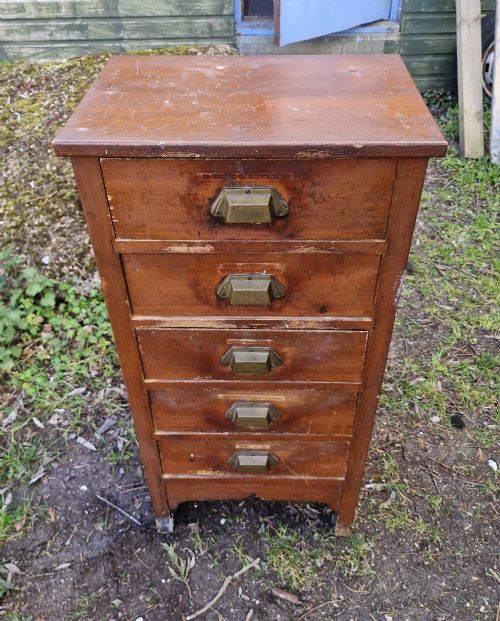


Antique Pine Chest Desk
These antique pine chest desk examples combine everyday storage with a fitted writing surface, offering practical workspaces built from solid timber.
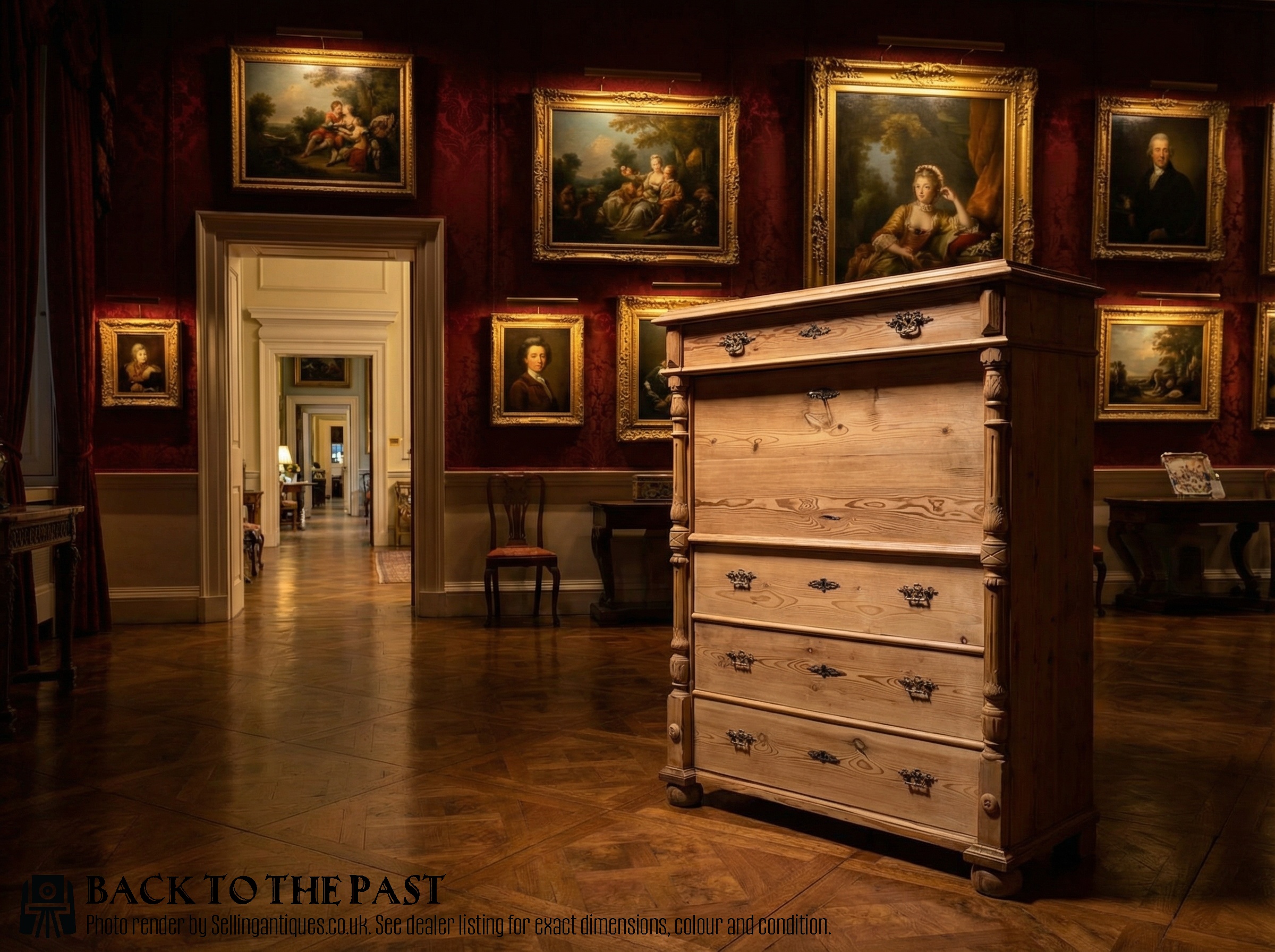
Antique Pine Chest Desk
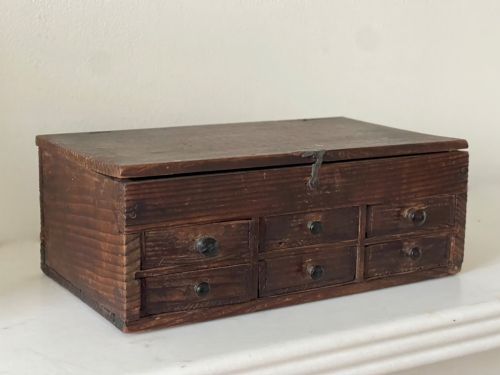
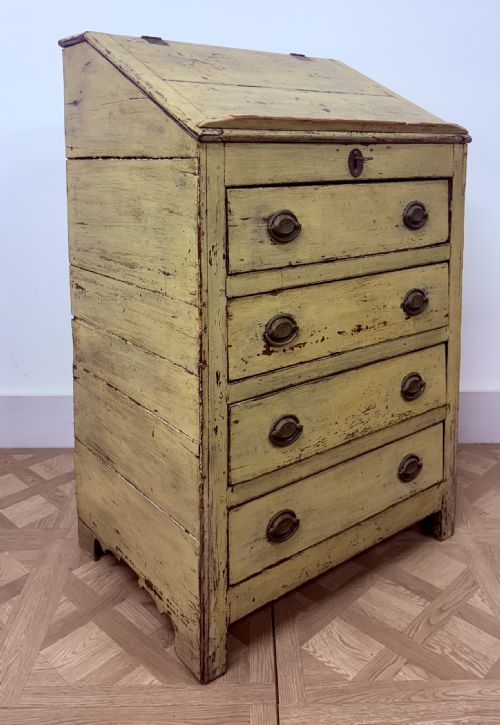
An antique pine chest desk brings together drawer storage and a writing surface, often taking the form of a secretaire bureau, a chest with a writing slope, or an escritoire. These pieces served dual purposes in homes and offices, hiding practical writing compartments behind functional drawer fronts or hinged lids.
You will most frequently encounter nineteenth-century and early twentieth-century examples on this page, spanning Georgian, Victorian, Edwardian, and later periods. The selection ranges from provincial English country pieces to Swedish painted furniture and industrial utility filing cabinets.
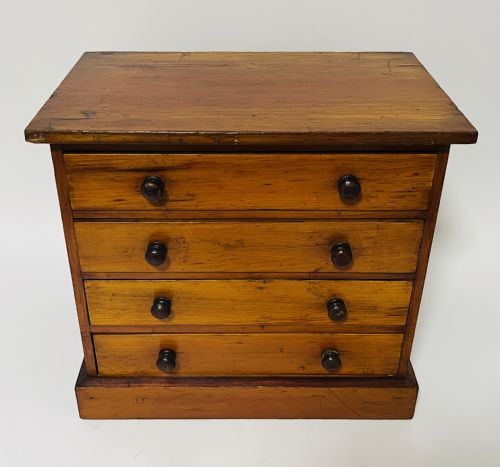
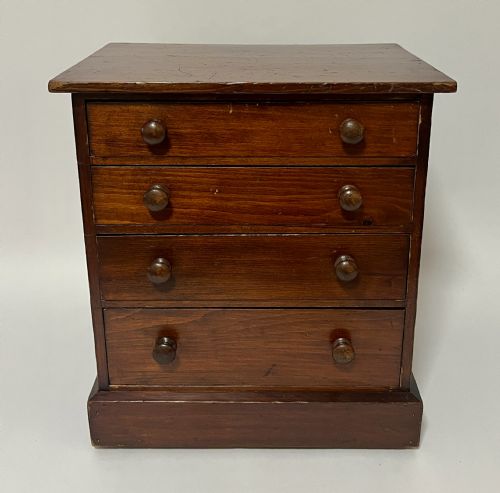
Forms vary from standard chests of drawers fitted with internal secret compartments and writing slopes to large glazed secretaires and specialised specimen or collectors cabinets. Regional variations include painted finishes, simulated pine, and straightforward stained timber surfaces.
How they were made
Construction relies primarily on solid pine, shaped into carcases, drawers, and writing slopes using traditional joinery techniques appropriate to each period. Workshops utilised local timber, applying stained finishes or hand-painted coats to protect the wood and alter its appearance.
Hardware details such as brass handles, iron fittings, and glass elements were integrated to secure drawers and cabinets. Painted wood surfaces often received decorative finishes, including simulated graining or provincial hand-painted designs.
Antique Pine Chest Desk Retail Price Guide 2026
Typical asking prices for pine chest desk among the pieces listed under this phrase on Sellingantiques today, from the lower quarter to the upper quarter. They describe what is for sale here now, not the wider market.
Listings feature pine, painted wood, brass, iron, and glass across Georgian, Victorian, Edwardian, and 1920s periods.
What varies in quality
Quality rests in the precision of the internal writing compartments, the cleverness of secret drawers, and the integrity of the structural timber. Superior pieces display thoughtful arrangement within the secretaire section, offering neatly divided pigeonholes and flush-fitting drawers.
The finish also determines the tier of the piece, distinguishing between straightforward utilitarian office cabinets and carefully painted or polished domestic furniture. Original brass hardware and intact glass panels elevate the character of the construction.
The Antique Pine Chest Desk Glossary
- Secretaire
- A desk disguised as a chest of drawers or cabinet, featuring a drop-down front that reveals a writing surface and pigeonholes. This form kept writing materials concealed when not in use.
- Writing slope
- An inclined surface hinged to provide a comfortable angle for handwriting. It frequently lifts to reveal storage space underneath for paper and ink.
- Escritoire
- A tall writing cabinet with a fall-front desk section. These pieces combine vertical storage with a fold-down writing surface.
- Specimen cabinet
- A specialised piece of furniture with multiple shallow drawers designed to hold natural history collections or small objects. They share similar multi-drawer construction with office and filing cabinets.
- Simulated pine
- A painted finish applied to cheaper woods to mimic the appearance of pine or more expensive timbers. Artisans used this technique during the Regency and Victorian eras to achieve a specific aesthetic.
Antique Pine Chest Desk: Frequently Asked Questions
What is an antique pine chest desk?
An antique pine chest desk is a piece of furniture that combines traditional drawer storage with an integrated writing surface or fold-down secretaire compartment. These versatile items were used for household administration and correspondence.
They appear in various forms across the Georgian, Victorian, and Edwardian periods, ranging from provincial painted English pieces to Swedish escritoires.
How do secretaire drawers work?
Secretaire drawers look like standard drawer fronts from the outside, but the top drawer pulls down on hinges to reveal a fitted interior with small drawers and pigeonholes. This design conceals the writing desk when closed.
Many examples include secret compartments hidden behind the main pigeonholes for storing valuable documents.
What periods do these desks come from?
The listings span the late eighteenth century through the early twentieth century, including Georgian, Victorian, Edwardian, and 1920s pieces. Construction styles shift from early provincial hand-painted items to later office and utility cabinets.
Each period reflects different preferences in finish, from dark stains to painted wooden surfaces.
Are painted finishes original?
Painted finishes on these pieces often reflect regional traditions, such as Swedish painted furniture or English country pieces decorated by hand. Some items feature simulated pine finishes applied during the Regency period.
Distinguishing between original decorative paint and later applications involves examining wear patterns and the underlying timber preparation.