


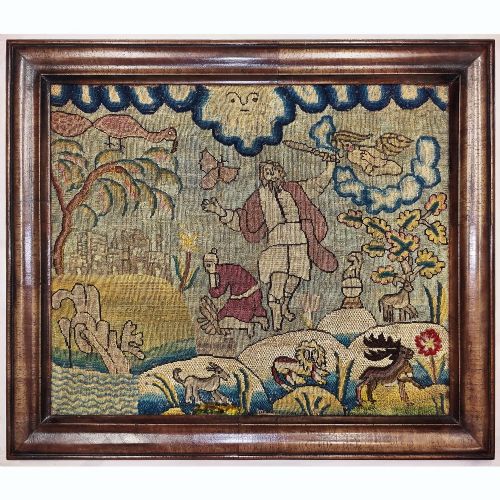


Antique Pictorial Tapestry
An antique pictorial tapestry brings narrative and texture to a room, telling stories through woven thread across centuries.
Antique Pictorial Tapestry
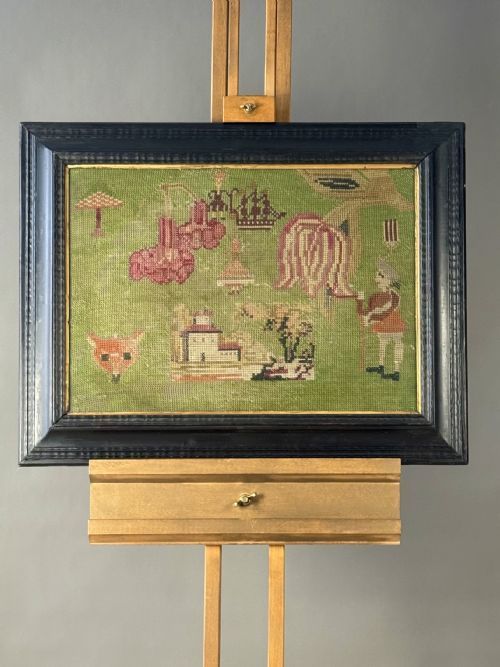
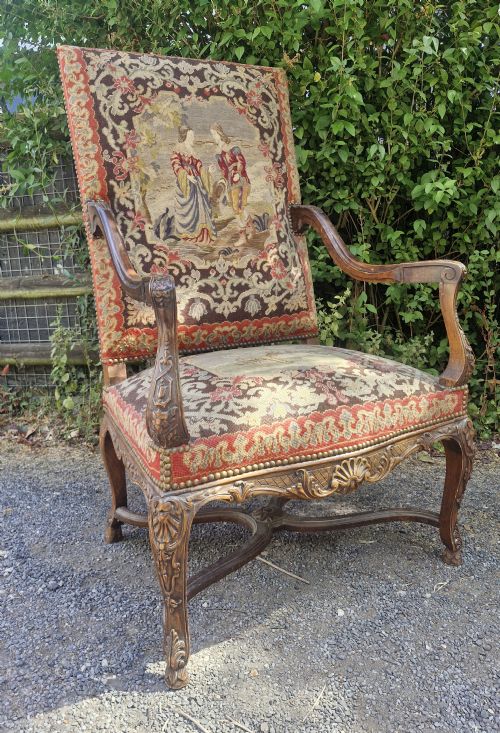
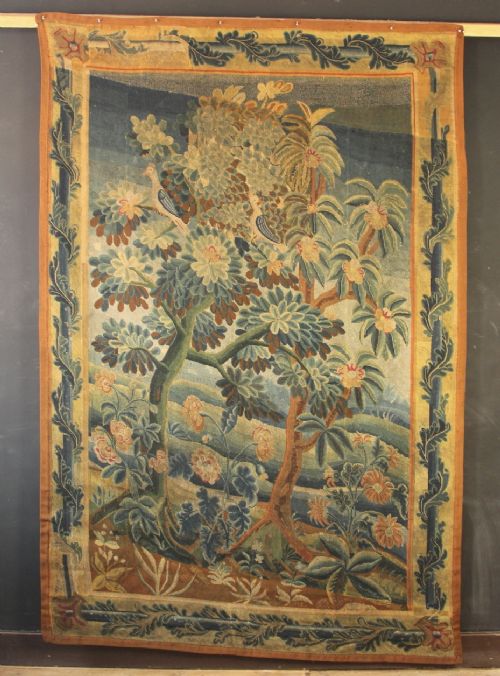
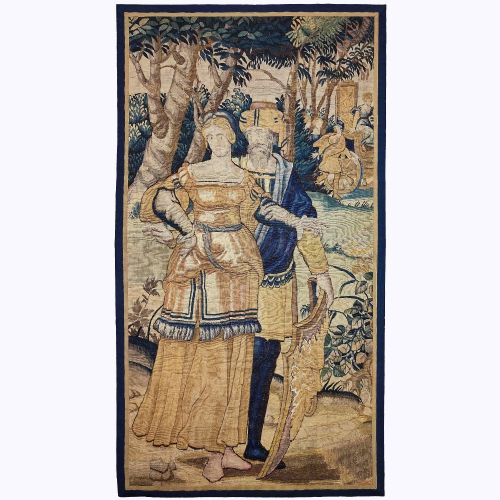
When you search for an antique pictorial tapestry, you encounter wall art, framed fragments, cushions, rugs, and upholstered furniture bearing figurative designs. The materials span wool, silk, linen, cotton, and metal thread, shaped into Flemish Renaissance panels, French Baroque scenes, and Persian pictorial rugs. Pieces range from the sixteenth century through the nineteenth century and into the early twentieth century, including Victorian samplers and Edwardian settees.
You are most likely to meet seventeenth-century and eighteenth-century European needlework panels or Flemish wall hangings, alongside nineteenth-century French Aubusson style works and Persian Kashan portrait rugs. These objects depict royal hunting scenes, classical figures, and portraits, mounted either as standalone wall hangings or integrated into period armchairs and cushion covers.
Materials and construction
These textiles rely on natural fibres, principally wool and silk, often combined with linen foundations and metal threads to catch the light. Artisans employed needlepoint, gros point, beadwork, and embroidery techniques to build complex pictorial surfaces by hand.
Larger wall hangings and rugs require dense warp and weft threading on looms, whilst smaller needlework pictures and cushion covers are worked painstakingly with a needle on canvas or fabric grounds.
The listings span wool, silk, linen, cotton, and metal thread across periods from the sixteenth century to the 1930s.
Factors determining quality
Quality rests upon the fineness of the stitch count and the complexity of the pictorial composition, where tighter needlework and intricate shading separate superior examples from simpler pieces. The integrity of the original fibres and the survival of fugitive silk or metal threads also dictate the standard of preservation.
The sophistication of the design, whether a detailed Flemish Renaissance landscape or a finely knotted Persian pictorial portrait, distinguishes workshop output. Original framing in materials like rosewood or carved wood further elevates the standing of textile fragments.
The Antique Pictorial Tapestry Glossary
- Tapisserie
- A form of textile art created by weaving or needlework to depict a pictorial scene. These panels were traditionally hung on stone walls to provide insulation and decoration.
- Gros point
- A coarse stitch used in needlework, often worked on canvas with wool yarn. It creates a durable, textured surface frequently found on nineteenth-century chair upholstery and wall art.
- Needlepoint
- A type of embroidery stitched onto a canvas mesh grid, allowing for precise pictorial detail. It differs from loom weaving by being built up stitch by stitch with a needle.
- Samplers
- Pieces of needlework produced to demonstrate skill in various stitches and patterns. Early examples often incorporate alphabets alongside pictorial motifs.
- Aubusson
- A style of tapestry originating from the French town of the same name, known for pastoral and floral pictorial designs. These works typically mirror the aesthetic of grand chateaux.
Antique Pictorial Tapestry: Frequently Asked Questions
How do I hang a tapestry safely?
Heavy wall hangings require even weight distribution along a wooden batten or hidden sleeve rather than direct nailing through the fabric.
Keep pieces away from direct sunlight and damp environments to protect delicate silk and wool fibres.
Can I use antique tapestries as rugs?
Only specific flat-woven pictorial rugs, such as Persian Kashan examples, are structurally suited for floor placement under light foot traffic.
Wall-hanging panels and delicate needlework pieces lack the dense foundation required for walking and must remain on walls or furniture.
How do I clean an old textile?
Surface dust can be gently removed using a low-suction vacuum through a protective mesh screen.
Water and chemical solvents cause irreparable shrinkage and dye bleeding, meaning professional textile conservators must handle deep cleaning.
What is the difference between Flemish and French pieces?
Sixteenth-century Flemish panels typically feature dense, crowded architectural or woodland backgrounds with deep historical or biblical narratives.
Later French Aubusson and Chateau pieces lean towards lighter pastoral palettes, courtly figures, and balanced floral borders.