




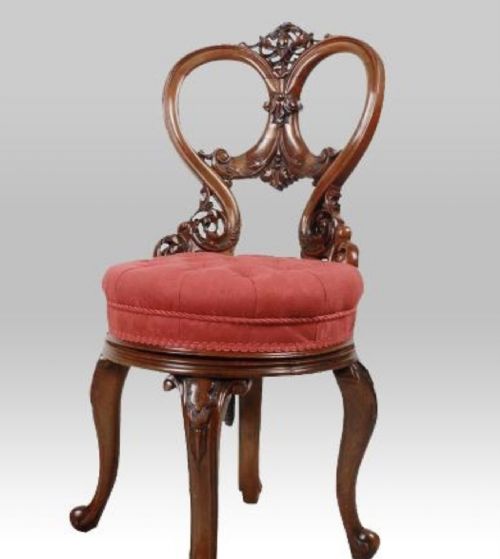


Antique Piano Chair Back
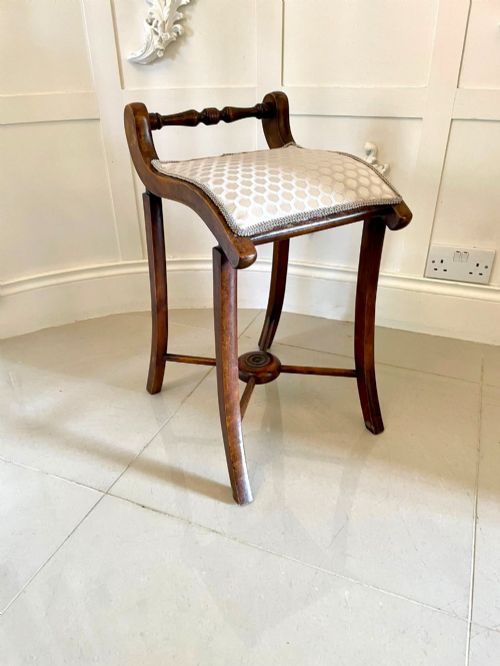
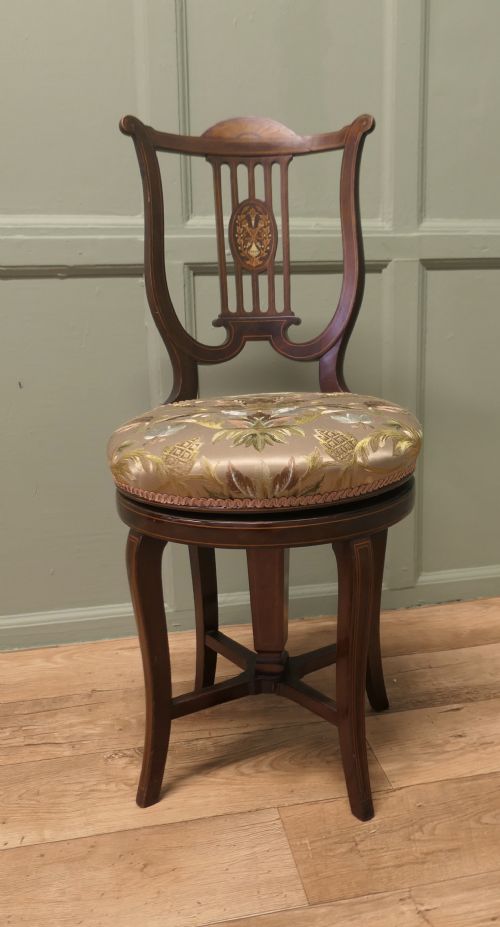
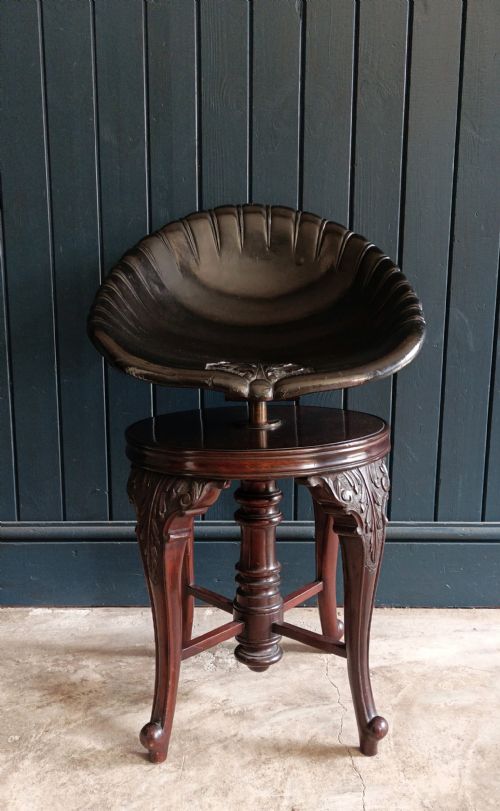
An antique piano chair back is the defining structural and ornamental feature of specialist seating designed for musicians.
Antique Piano Chair Back
When you search for an antique piano chair back, you are examining the upper support structures of specialist music seats, music stools, and harpist chairs. These components appear across the nineteenth century, Victorian, Edwardian, Regency, and William IV periods, alongside specific years like 1870, 1880, and 1900.
The pieces on this page display diverse stylistic influences including Sheraton Revival, Grand Regency, and Anglo-Burmese Colonial. Formats range from revolving music stools and dressing chairs to desk chairs and dedicated harpist or cello music chairs.
How they were made
Cabinetmakers utilised dense timbers such as mahogany, walnut, rosewood, and satinwood to construct these chair backs and supporting frames. Exotic woods like Burmese padouk also appear, reflecting broader colonial trade routes and material preferences of the period.
Decorative techniques include intricate marquetry inlay and painted or inlaid papier-mâché, particularly evident in pieces associated with notable makers like Jennens and Bettridge. Frames were joined using traditional cabinetmaking joints to withstand the rotational forces of a revolving music stool.
Upholstery materials such as fabric and velvet were integrated into the design of the backrests and seats. Metal components, predominantly brass, were utilised for the rise and fall adjustment mechanisms and swivel pivots.
Antique Piano Chair Back Retail Price Guide 2026
Typical asking prices for piano chair back among the pieces listed under this phrase on Sellingantiques today, from the lower quarter to the upper quarter. They describe what is for sale here now, not the wider market.
Listings feature timbers including mahogany, walnut, rosewood, padouk, and satinwood, alongside brass hardware and velvet upholstery.
What varies in quality
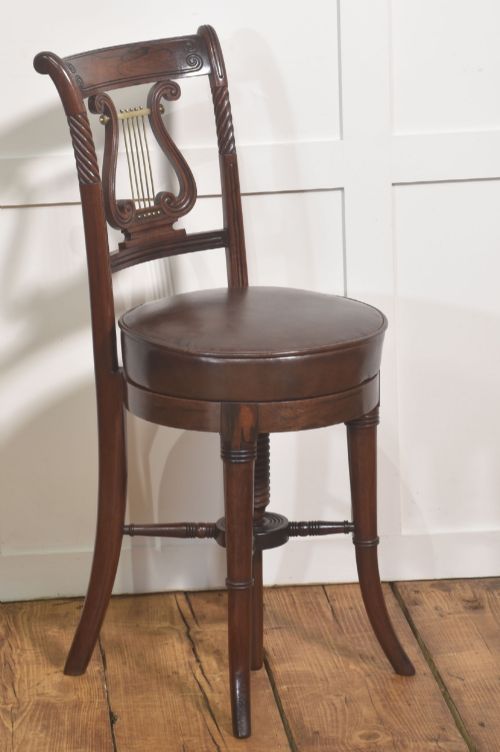
Quality rests in the precision of the timber selection and the complexity of the backrest carving, such as a finely formed lyre shape. Dense, well-figured mahogany or satinwood indicates a higher tier of production than plain secondary timbers.
The sophistication of the mechanical engineering separates standard utility seating from superior examples. Smooth operation in the revolving swivel and the rise and fall adjustment points to superior workshop execution.
The integrity of decorative flourishes, including marquetry inlay and papier-mâché surfaces, determines the distinction between ordinary production and top-tier craftsmanship.
Jennens and Bettridge
The Antique Piano Chair Back Glossary
- Lyre back
- A chair back shaped in the form of a classical lyre instrument, frequently found on music chairs and stools. This design was especially popular during the Regency and Victorian periods.
- Revolving
- A seating mechanism that allows the top of the stool or chair to turn in a complete circle. This movement assisted musicians in reaching instruments or sheet music.
- Rise and fall
- An adjustable height mechanism operated by a screw thread or ratchet system within the central pillar. It enabled players to set their exact seating elevation.
- Papier-mâché
- A composite material made of paper pulp or layers of paper bound with glue, pressed and dried. Makers painted and inlaid these surfaces with mother-of-pearl.
- Marquetry
- Decorative patterns created by fitting thin veneers of different coloured woods onto a structural surface. It appears on sophisticated nineteenth-century furniture backs and frames.
Antique Piano Chair Back: Frequently Asked Questions
What is a piano chair back?
An antique piano chair back forms the upper structural and decorative support of a specialist music seat. These components were engineered to support musicians while offering distinct stylistic motifs.
They appear across various nineteenth-century and Edwardian forms, including revolving stools and harpist chairs.
How do revolving music chairs work?
Revolving music chairs utilise a central wooden or metal pivot mechanism that allows the seat to turn freely. This mobility helped musicians shift their position while playing.
Many examples also incorporate a rise and fall screw action to adjust the height.
What woods were used for these chairs?
Cabinetmakers employed a variety of dense hardwoods including mahogany, walnut, rosewood, and satinwood. Exotic options such as Burmese padouk also feature in specific colonial pieces.
Papier-mâché mixed with timber formed the basis of certain decorative Victorian stools.
What is a harpist chair?
A harpist chair is a specialist music seat designed without arms to allow a harpist or cellist unhindered movement while performing. These chairs often feature a distinctive lyre-shaped backrest.
They share the revolving and adjustable mechanisms common to standard piano stools.