
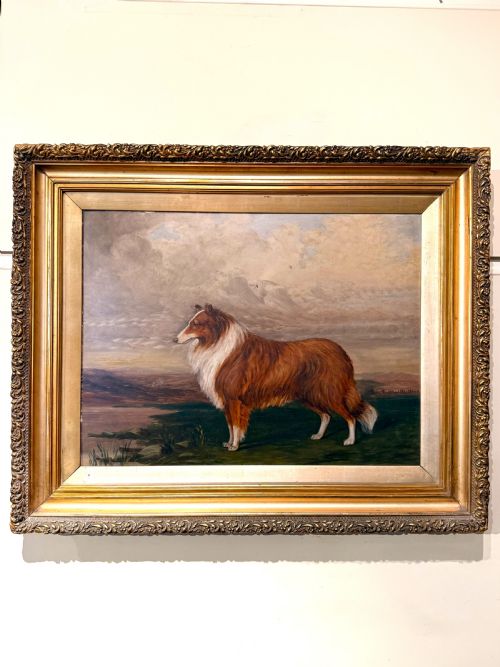
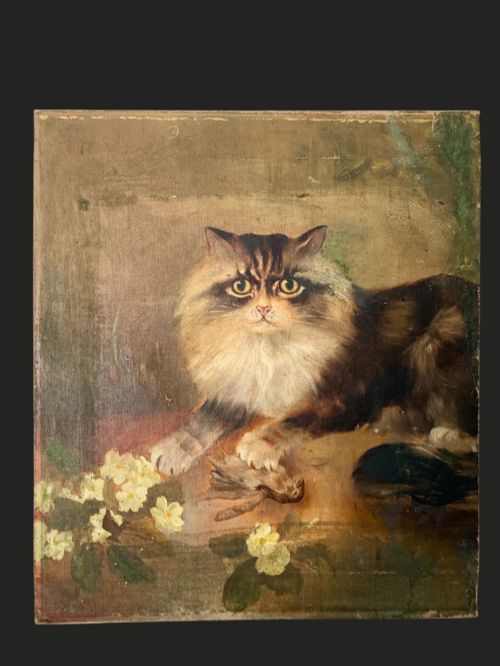
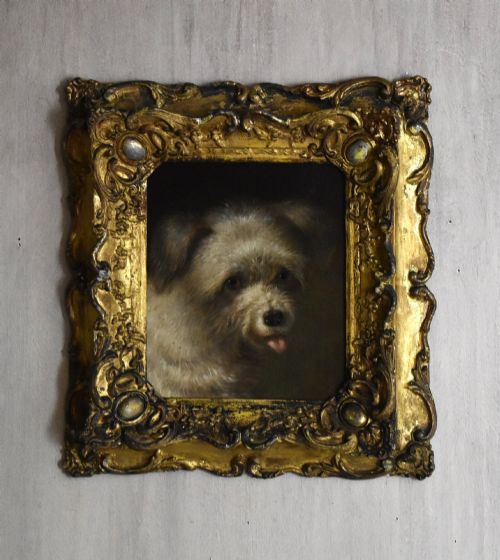
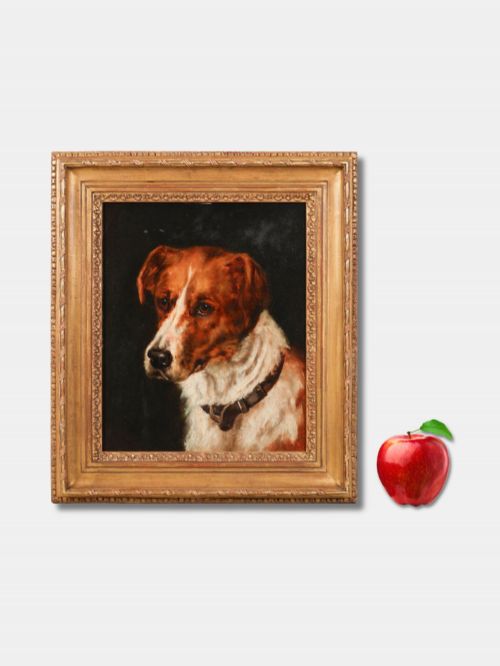


Antique Pet Oil Painting
An antique pet oil painting captures the enduring bond between owners and animals, offering centuries of canine, feline and avian portraiture on canvas and board.
Antique Pet Oil Painting
An antique pet oil painting represents cherished animals, ranging from prized greyhounds and terrier studies to Persian kittens and domestic birds. These works capture specific companions or grouped subjects in domestic interiors, courtyards, or pastoral landscapes.
The pieces available span from the eighteenth century through the Victorian era and into the interwar period. Surviving examples include naive school depictions, formal commissions of named champions, and intimate family studies executed on canvas, panel, or board.
How they were made
Artists applied oil paint to stretched canvas, wooden panels, or rigid boards, building up layers to render animal coats, feather textures, and interior lighting. Many works retain period wooden frames enriched with gesso and gold leaf detailing.
Techniques range from the polished academic precision of nineteenth-century realism to looser naive and provincial brushwork. Painters utilised oil mediums for rich colour depth, allowing subtle tonal shifts in fur and fabric.
Listings feature works spanning the eighteenth, nineteenth, and twentieth centuries, executed in oil on canvas, board, and panel.
What varies in quality
Quality rests upon the artist's anatomical precision and ability to convey the character and expression of the animal. Masterful brushwork distinguishes works by named academic painters from simpler provincial or naive school output.
Condition of the pigment layer, stability of the underlying board or canvas, and the preservation of the original gilt or gesso frame influence the overall integrity of the piece.
Martin Theodore Ward·LM Webb·William Barraud·Agnes Augusta Talboys·Christian Lindner·John Henry Dell·Valentine Thomas Garland·Florence Mabel Hollams·Philip Eustace Stretton·Francisco Jose Domingo y Marques·Samuel John Carter·Frank Owen Salisbury·Benedict Angell Hyland·Jules Le Roy
The Antique Pet Oil Painting Glossary
- Oil on Canvas
- Pigment mixed with drying oil applied to a woven fabric stretched across a wooden frame. This primary support provides a flexible and durable surface favoured by academic portraitists.
- Oil on Board
- Paint applied directly to a rigid wooden or composition board. This format often appears in smaller studies and provincial works.
- Naive School
- Art produced by painters with little or no formal academic training. These works feature charming perspective and direct observation.
- Gesso
- A plaster-like mixture applied to wooden frames before gilding. It provides a smooth base for gold leaf application.
- Canvas Panel
- A thin artist board covered with primed canvas fabric. It offers the texture of canvas with the rigidity of a panel.
Antique Pet Oil Painting: Frequently Asked Questions
How do I identify the period of an antique pet painting?
Dating relies upon stylistic markers, costume details of any human figures present, framing methods, and stretcher construction. Pigment analysis and artist signatures provide further chronological confirmation.
Comparing the handling of the subject against dated comparative examples helps narrow the decade of creation.
Were these paintings usually commissioned?
Many works, particularly those depicting named champion dogs or family pets, originated as private commissions from affluent owners. Other paintings reflected popular Victorian genre scenes or the artist's own household animals.
Provincial and naive examples often recorded working farm dogs or beloved companion animals without formal patronage.
How should I display an oil painting at home?
Hang paintings away from direct sunlight, high humidity sources, and rapid temperature fluctuations to protect the oil pigments and wooden supports. Adequate wall anchoring ensures the heavy gilt frames remain secure.
Pairing these historic works with traditional interiors or contrasting them against modern minimalist spaces highlights their textural warmth.
What subjects besides dogs and cats appear in these paintings?
While canine and feline portraits dominate the selection, artists also recorded pet rabbits, kid goats, birds, and horses. These animals frequently appeared alongside children in domestic interior settings or pastoral landscapes.
Such compositions celebrate the broader Victorian and Georgian fascination with domestic animal companionship.