
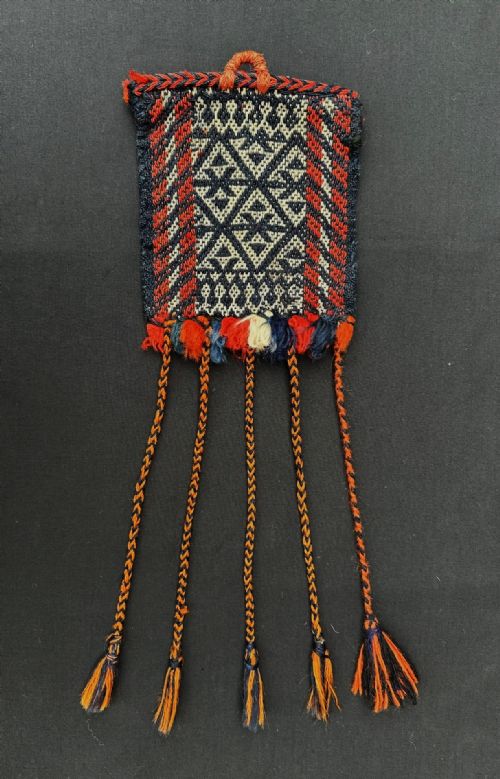
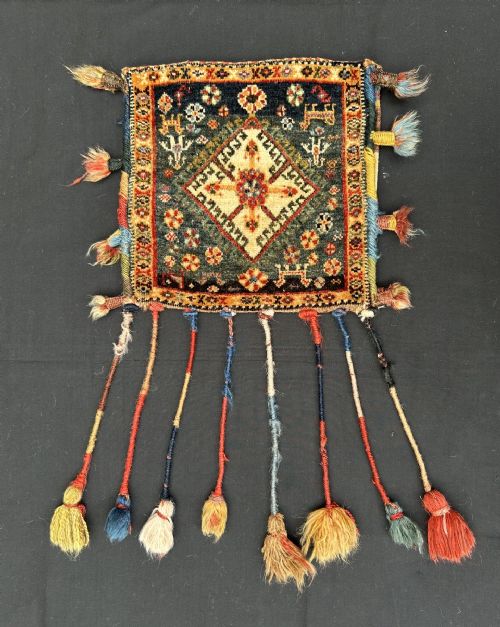
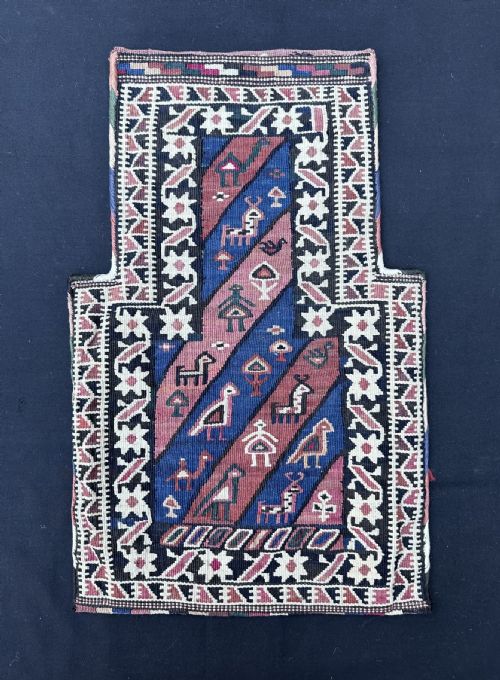
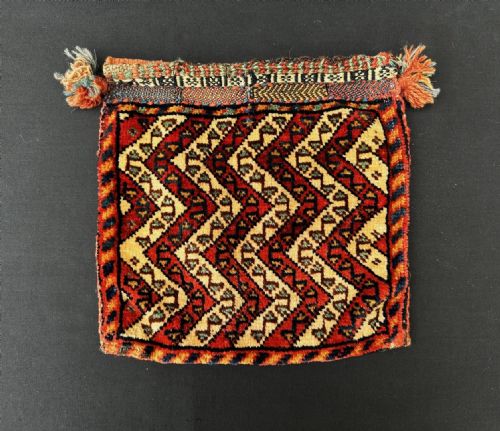






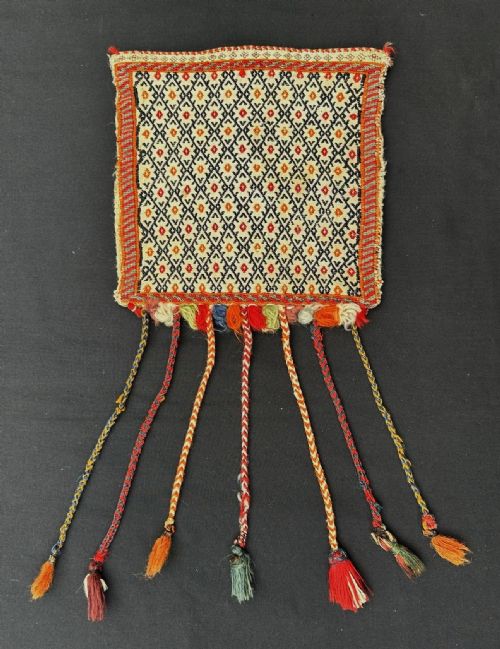
Antique Persian Pouch
An antique persian pouch represents woven tribal artistry, offering tactile history and portable utility through traditional nomadic containers.
Antique Persian Pouch
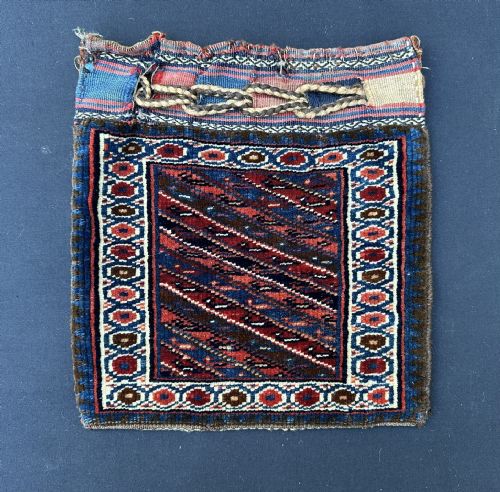
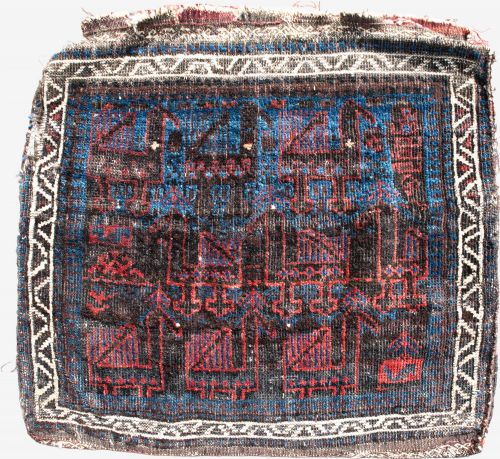
The pieces on this page originate from tribal groupings such as the Afshar, Qashqa'i, Baluch, Kurdish, and Shahsavan. They span periods from the mid-nineteenth century through the early twentieth century.
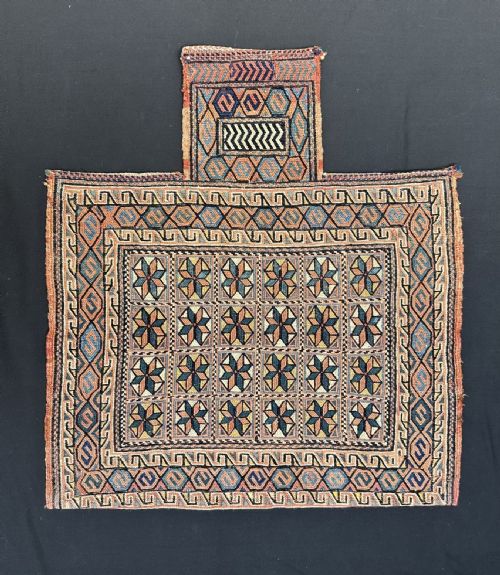
Forms vary from single face display bags to complete saddle bags and double sided storage pieces. Each item reflects the specific regional weaving traditions of provinces like Kerman, Fars, and Khorassan.
How they were made
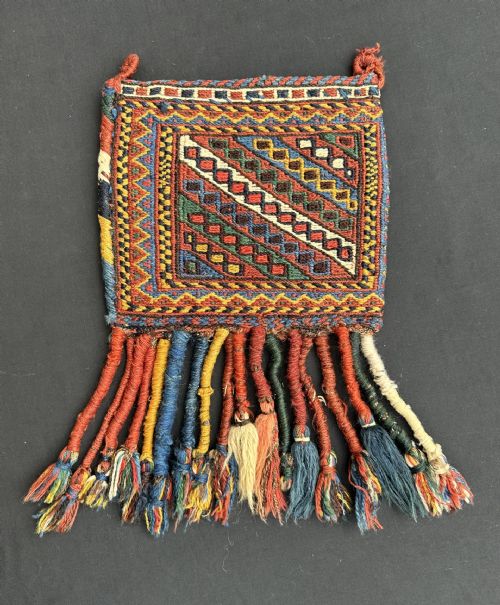
These textiles utilise hand spun wool and cotton foundations, combined with natural dyes to create enduring patterns. Artisans employed flatweave techniques, soumak work, and banded weft designs.
Nomadic weavers incorporated decorative elements like cowrie shells onto the structured textile surfaces. The construction balances structural durability with intricate tribal iconography.
Several bags retain original cowrie shell adornments, once believed to ward off the evil eye during nomadic travels.
What varies in quality
Quality rests in the precision of the weave and the complexity of the regional design palette. Tighter structures and sophisticated natural dye saturation distinguish superior examples from simpler utilitarian objects.
The survival of original backs, closures, and supplementary decorations such as cowrie shells elevates an individual piece. The integrity of the tribal iconography and structural preservation dictate the standing of the work.
The Antique Persian Pouch Glossary
- Chanteh
- A traditional tribal personal bag or small carrier woven by Persian nomads. These miniature containers often served practical vanity or carrying purposes.
- Namakdan
- A specialised container woven for holding salt within nomadic households. These salt bags typically feature narrow necks and wide bases.
- Soumak
- A flatweave technique involving wrapping weft threads over warps to produce a textured surface. This method offers durability and distinct visual clarity.
- Kilim
- A tapestry woven textile lacking a pile. Shahsavan and other tribal groups utilised this method for durable storage bags.
- Tubreh
- A general term used for a tribal bag or sack. These items functioned across various nomadic daily tasks.
Antique Persian Pouch: Frequently Asked Questions
What were Persian tribal bags used for?
Nomads utilised these woven containers for practical storage in daily camp life. Specific forms held salt, tobacco, vanity items, or personal possessions during travels.
Smaller pieces functioned as personal carriers, while larger formats accommodated household provisions or saddle transport.
How do I identify different tribal styles?
Distinctions emerge through regional motifs, colour palettes, and structural weaving techniques unique to specific confederacies. Afshar and Qashqa'i pieces display distinct regional patterns originating from southern provinces.
Baluch and Kurdish examples utilise characteristic colour schemes and borders tied to their respective geographic territories.
Are these pouches made with natural dyes?
The pieces in these listings utilise natural dye materials developed across regional workshops and nomadic camps. These colour sources produce rich, harmonious tones that age with stable patination.
Such traditional dyeing methods remain characteristic of nineteenth and early twentieth century tribal weaving.
How should I display a textile bag?
These flexible containers mount securely on walls using custom display rods or archival hanging systems. They also rest flat on surfaces as small decorative textile accents.
Protecting the wool and cotton surfaces from direct sunlight preserves the natural dye integrity.