


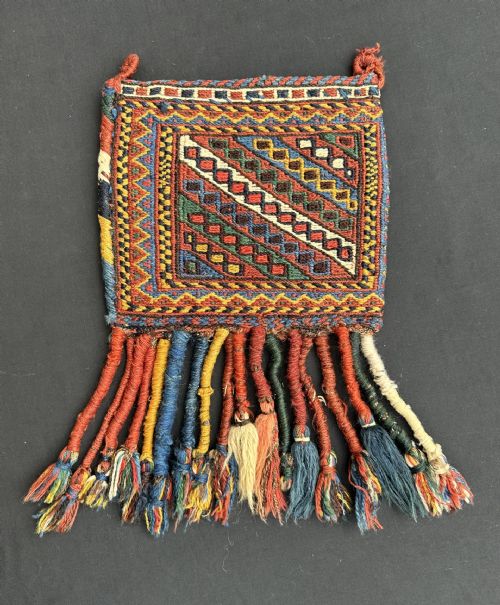


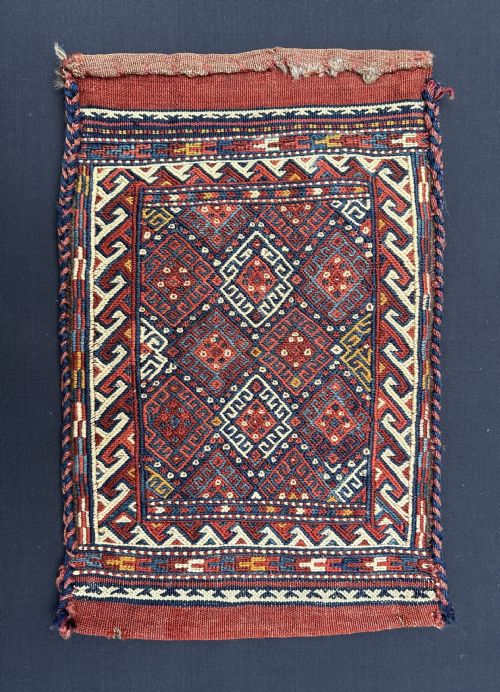
Geometric Woven Pouch
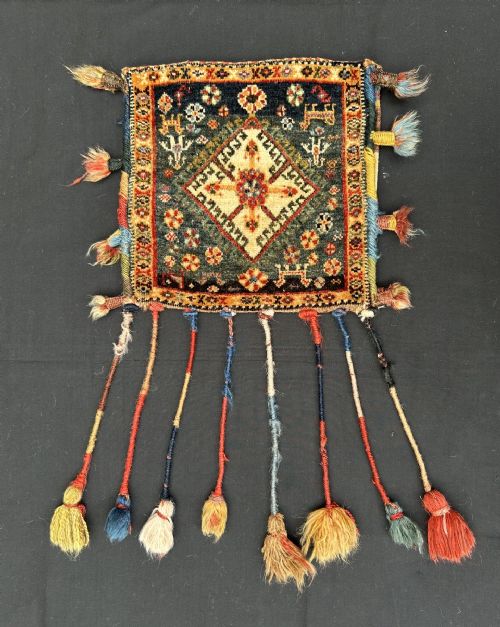
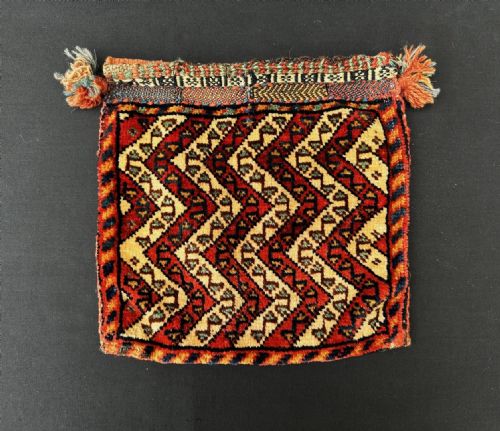
These geometric woven pouch examples are tribal bags carrying centuries of nomadic craft and utility, prized by collectors for their bold patterns and rich wools.
Geometric Woven Pouch
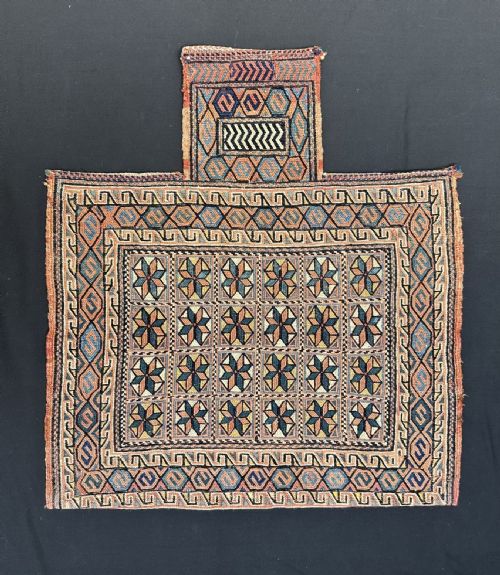
A geometric woven pouch is a utilitarian tribal textile created by nomadic groups across Persia, ranging from salt bags and vanity bags to pipe bags and mini saddle-bags. These practical containers served daily nomadic needs for storage and personal transport while showcasing the distinct aesthetic traditions of tribes such as the Afshar, Qashqa'i, Shahsevan, and Baluch.
The pieces on this page originate predominantly from the late nineteenth century and the early twentieth century, spanning decades of traditional tribal weaving. Collectors encounter varied regional formats, including storage pouches from Khorassan, Azerbaijan, and Fars Province, each displaying characteristic patterns rooted in tribal life.
How They Were Made
Weavers utilised hand-spun wool dyed with natural dyes to create durable structures capable of withstanding the rigours of nomadic existence. The reliance on locally sourced materials produced deep, stable colours that soften gracefully over time.
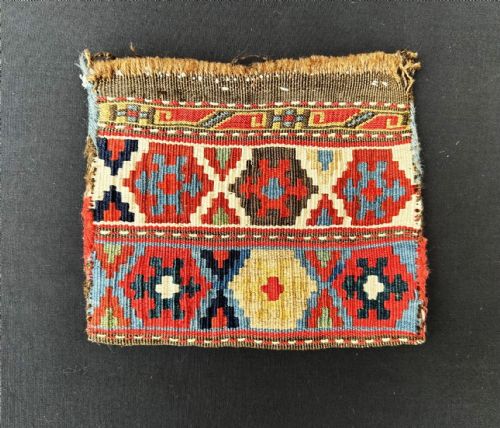
Techniques such as soumak work and banded weft work provided both structural integrity and a flat, resilient surface for intricate patterns. These methods allowed makers to embed complex motifs directly into the fabric while maintaining the pouch's practical function.
The listings span the late nineteenth century to 1910, featuring wool and natural dyes across tribal storage pouches.
What Varies in Quality
The standard of a geometric woven pouch rests on the clarity of its tribal design and the fineness of the wool preparation. Tighter spinning and precise handling of soumak or weft-faced structures yield a firmer fabric with sharper graphic definition.
Preservation of original backs and structural completeness elevate an example, demonstrating how well the piece survived its working life. The depth and saturation of natural dye palettes also distinguish finer examples from simpler utilitarian objects.
The Geometric Woven Pouch Glossary
- Soumak
- A flat-weave technique where pattern wefts are wrapped over the warp threads before passing back, creating a textured surface resembling braids. This method provides extra durability and a distinct raised pattern.
- Salt-bag
- A utilitarian container traditionally used by nomads for storing and transporting salt. These smaller bags often feature concentrated geometric patterns.
- Vanity-bag
- A small personal pouch used by nomads for carrying personal items and small belongings. They frequently exhibit refined weaving and careful attention to tribal motifs.
- Natural Dyes
- Colourants derived from plants, insects, and minerals rather than synthetic compounds. They produce rich, nuanced tones that age with a characteristic patina.
- Hand-spun Wool
- Fleece spun into yarn by hand rather than by industrial machinery. This traditional method creates yarn with subtle irregularities and lasting strength.
Geometric Woven Pouch: Frequently Asked Questions
What is a geometric woven pouch used for?
These pouches served specific practical purposes within nomadic communities, functioning as salt bags, tobacco and pipe bags, or personal vanity bags. Nomads utilised them for storage during migrations and daily life.
Over time, their durability and portable nature made them essential items for household organisation within tents and camps.
How do I care for a tribal pouch?
Protect the wool and natural dyes by keeping the pouch out of direct sunlight to prevent fading. Gentle vacuuming through a mesh screen helps remove dust without damaging the weave.
Avoid hanging heavy objects inside the pouch, as historical textiles perform best when supported evenly or displayed flat.
How can I tell different tribal designs apart?
Different tribal confederacies, such as the Shahsevan, Qashqa'i, and Afshar, relied on distinct colour palettes and structural techniques. Azerbaijan pieces often display different layout characteristics compared to those from Fars or Kerman Province.
Examining the specific weave, such as soumak work or banded weft work, offers further clues to the regional origin of the maker.
Are these pieces truly antique?
The pieces recorded here date from the late nineteenth century and the early twentieth century. Their materials, natural dyes, and traditional hand-spun wool reflect historical methods of nomadic production.
Each pouch carries the distinct characteristics of tribal manufacture from periods prior to modern commercial standardisation.