




Antique Pendule Clock
An antique pendule clock brings the sculptural presence of nineteenth-century France into a room, uniting precision timekeeping with gilt bronze and marble.
Antique Pendule Clock
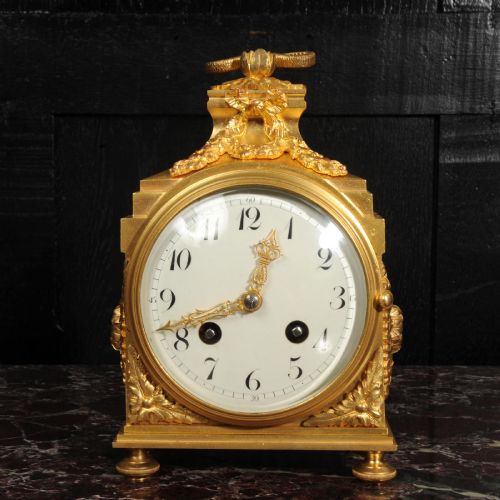
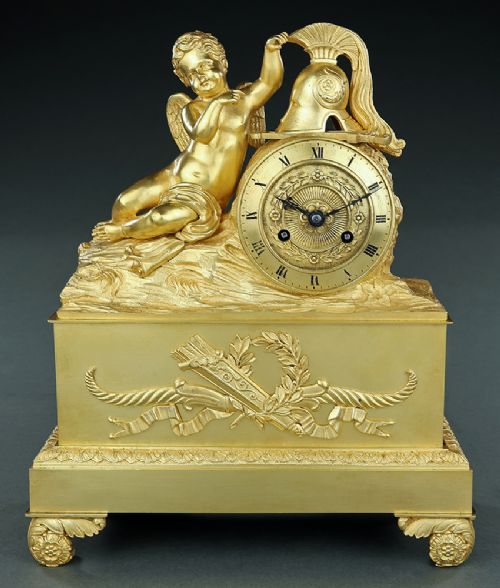
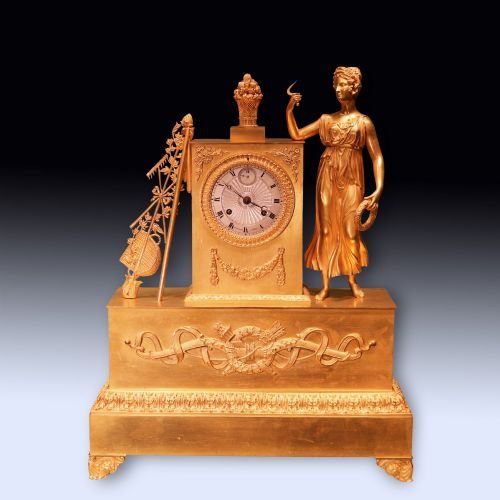
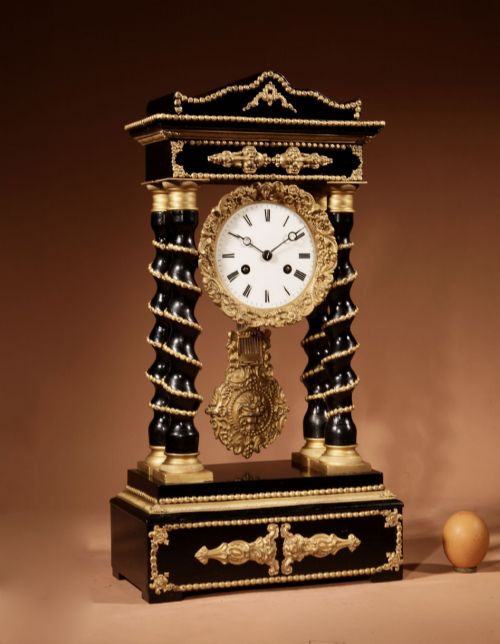
When you search for an antique pendule clock, you encounter domestic timepieces largely rooted in nineteenth-century France, spanning periods from the early eighteen-hundreds through to the Victorian era. These objects primarily take the form of mantel clocks, table clocks, and portico clocks designed to sit centrally in a reception room.
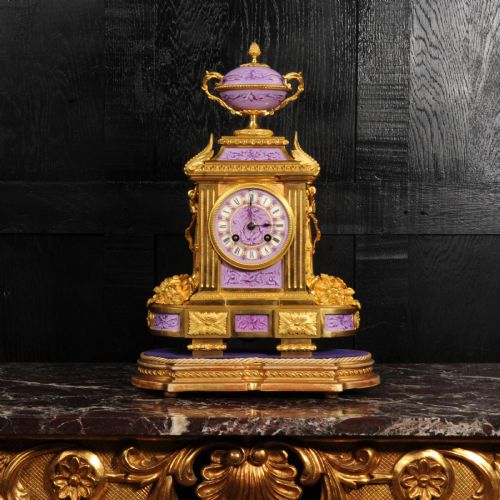
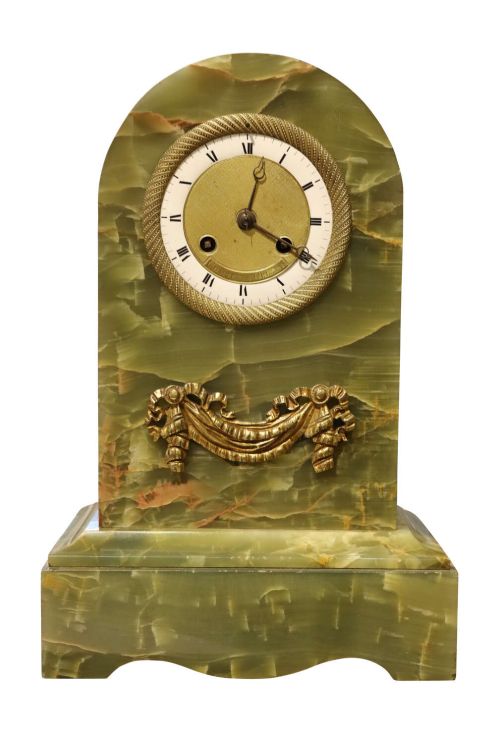
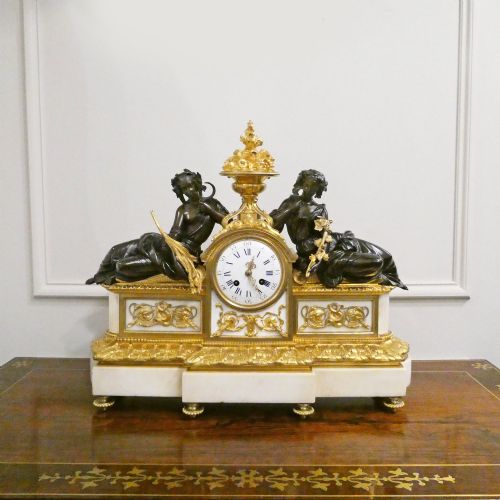
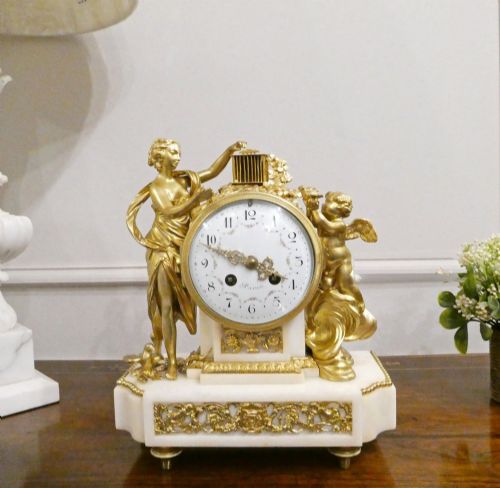
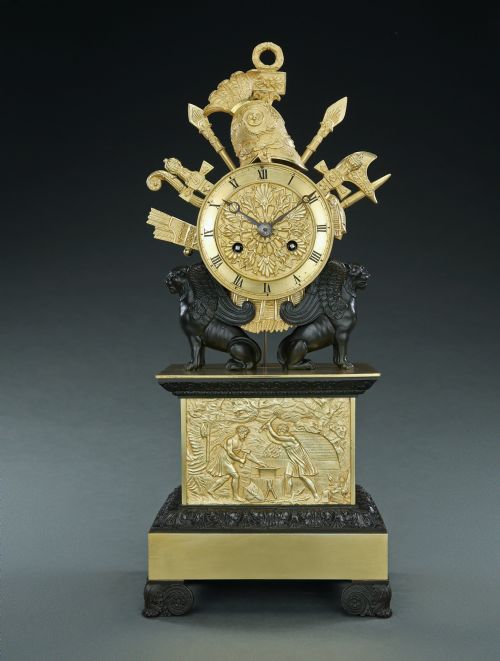
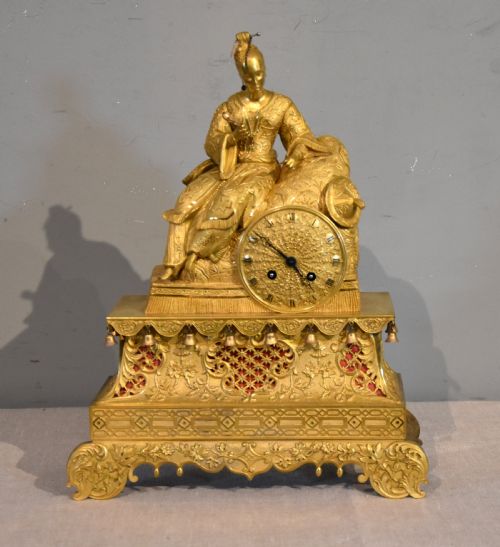
The most common versions on this page combine cast metals with natural stone, showing distinct French aesthetic movements such as Empire, Louis XVI, and Rococo Revival. Makers housed their movements within cases shaped as architectural porticos, figural groups, or classical pedestals.
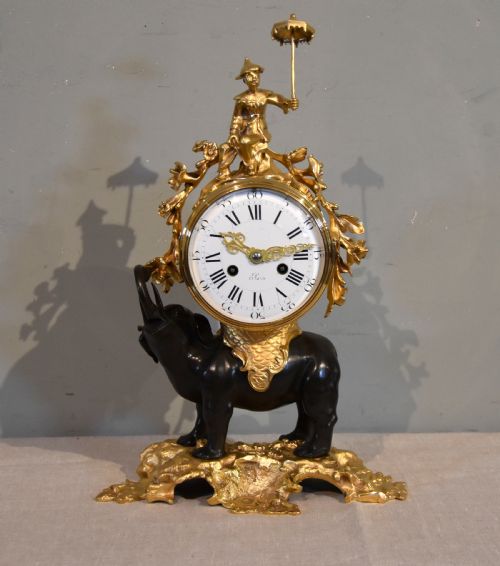
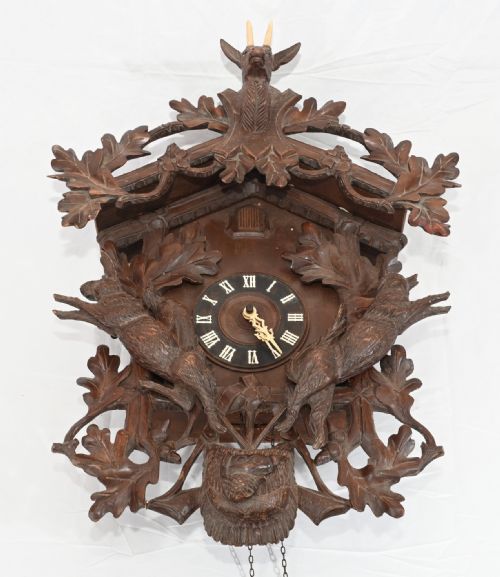
Alongside standard mantel pieces, collectors also find specialised formats including wall clocks, carriage-style pendule d'officier models, and sculptural variants featuring animals, trophies, or mythological subjects.
How They Were Made
Clockmakers and bronze-workers utilised fire-gilding and mercury or galvanic processes to coat cast bronze, creating the durable ormolu finishes seen across these cases. Cases combined this gilded metal with white or green marble, onyx, and hand-painted Sèvres porcelain panels.
Enamel dials with delicate painted numerals were fitted behind glass bezels, driven by brass mechanical movements produced by established Parisian workshops and movement makers.
Elephants and lions occasionally serve as the structural base for French time, carrying bronze clock movements upon their backs.
What Varies in Quality
The sophistication of the bronze casting and the crispness of the chasing separate standard production from exceptional examples, distinguishing sharp, hand-tooled leaf work from softer, mass-produced contours. The integration of materials also dictates standing, where harmonious combinations of gilt bronze, porcelain plaques, and undamaged marble indicate higher ambition.
The association of a recognised clockmaker signature on the dial or movement elevates a piece, marking the distinction between a generic workshop assembly and a documented horological creation.
Achille Brocot·Charles à Orléans·Vincenti·Canaillor of Paris·Henry Dasson·Berger Paris·Leroy Paris·Henri Marc of Paris·Japy Freres·PH Mourey·Samuel Marti·Paul Garnier·Charpentier Paris·Pons de Paul
The Antique Pendule Clock Glossary
- Ormolu
- Gilded bronze produced by applying a mixture of gold and mercury to a bronze base and heating it. This technique produced a rich, enduring golden surface common in French decorative arts.
- Portico clock
- A mantel clock featuring a tall architectural case supported by four columns. This symmetrical form often housed a suspended pendulum swinging within the central void.
- Champlevé
- An enamelling technique where troughs are dug into a metal surface and filled with vitreous enamel powder before firing. It creates colourful patterned ornamentation on clock bezels and cases.
- Pendule d'officier
- A portable clock housed in a brass or gilt case with a handle, derived from military timepieces. These compact pieces were designed for travel while retaining refined decorative details.
Antique Pendule Clock: Frequently Asked Questions
What is an antique pendule clock?
An antique pendule clock is a nineteenth-century timepiece, typically originating in France, designed to stand on a mantelpiece or table as both a functional clock and a decorative sculpture.
These pieces use mechanical brass movements enclosed within cases made from ormolu, bronze, marble, porcelain, and wood.
How do I wind an antique mantel clock?
Winding involves inserting a matching key into the winding arbors on the enamel dial and turning it gently until resistance is met. Care must be taken not to overwind the mainspring.
Most nineteenth-century movements require attention approximately once a week, depending on whether they are eight-day models.
Where should I place a portico clock?
A portico clock requires a stable, level surface such as a mantelpiece, sideboard, or sturdy table where vibrations are minimal. Because these clocks rely on a precise pendulum beat to keep time, an uneven surface will cause the movement to stop.
Keeping the clock away from direct sunlight and damp environments preserves the marble and gilt bronze surfaces.
How do I identify a Louis XVI style clock?
Louis XVI style clocks are characterised by classical symmetry, straight architectural lines, urns, flaming torches, and restrained ornamentation derived from antiquity. They frequently combine white marble with chased gilt bronze mounts.
This aesthetic contrasts with the later, more asymmetrical curves of the Rococo Revival style.