





French Allegorical Figural Clock
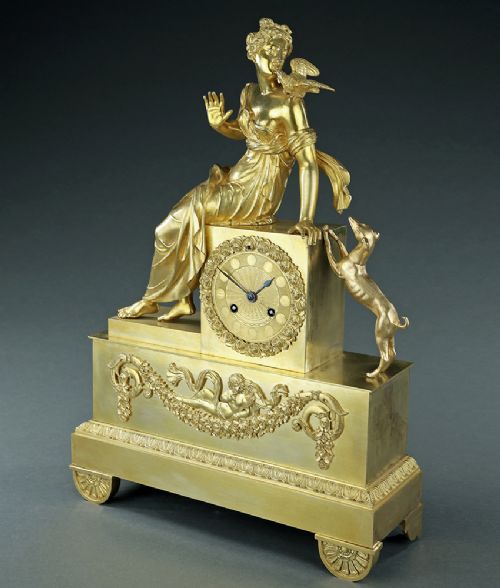
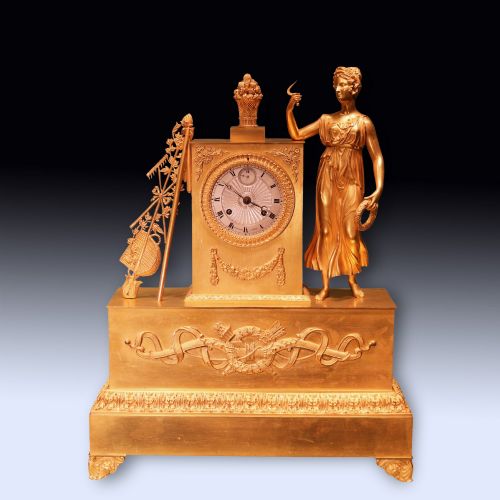
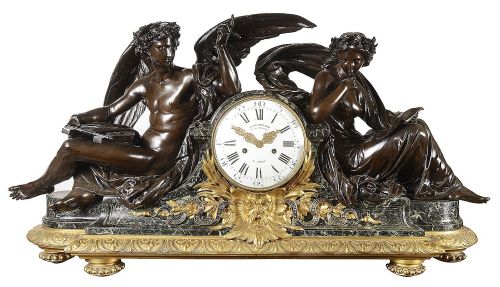
These french allegorical figural clock examples combine classical imagery and intricate casting, offering sculptural elegance for the mantelpiece.
French Allegorical Figural Clock
When you search for a french allegorical figural clock, you encounter sculptural timepieces rooted in classical mythology, romantic themes, or moral virtues. These pieces serve as both functional timekeepers and decorative centrepieces, drawing the eye with figurative narratives.
The versions most likely to appear here emerge from the nineteenth century, spanning distinct historical revivals. You will find objects shaped by French Empire, Louis XVI, Neoclassical, and Art Nouveau aesthetics, each bringing a different artistic vocabulary to the mantelpiece.
Forms range from single mantel clocks to complete clock garnitures accompanied by matching side ornaments. They integrate human figures representing concepts such as love, fidelity, chastity, or dawn into the structural bronze and marble case.
Materials and construction
The primary structural forms rely heavily on cast metals including gilt bronze, ormolu, and spelter. These figures and mounts are frequently combined with bases of rouge marble or glass components to create contrasting textures and heavy foundations.
Dials incorporate white enamel with painted numerals, protected behind glass bezels and driven by mechanical brass movements. Skilled founders cast the figural elements in sections before hand-chasing the surfaces and applying fire gilding or patination.
French Allegorical Figural Clock Retail Price Guide 2026
Typical asking prices for french allegorical figural clock among the pieces listed under this phrase on Sellingantiques today, from the lower quarter to the upper quarter. They describe what is for sale here now, not the wider market.
One female figure points accusingly at a font of holy water while time quietly marches on.
Distinctions in quality
The highest quality works display crispness in the bronze chasing and subtlety in the facial expressions of the figures. Lesser examples often feature softer casting details and simpler, mass-produced bases with minimal hand-finishing.
Signature marks from established founders or Parisian workshops elevate a piece, indicating superior metallurgical skill and movement precision. The weight of the metal and the depth of the gilding further separate standard production items from masterworks.
Canaillor of Paris·Deniere Et Fils·Victor Paillard
The French Allegorical Figural Clock Glossary
- Ormolu
- Gilded bronze produced through a mercury amalgamation process known as fire gilding. This technique imparts a rich, deep golden lustre that endures across centuries.
- Gilt bronze
- Metal cast from a copper and tin alloy then coated with a thin layer of gold. It forms the structural and decorative body of many figural timepieces.
- Spelter
- A zinc-based alloy utilised as an economical substitute for bronze in later nineteenth-century manufacturing. It accepts patination and metallic paint finishes to mimic heavier metals.
- Clock garniture
- A set comprising a central mantel clock accompanied by matching decorative side pieces such as urns or candelabra. These matched suites create a balanced display on a mantelpiece.
- Enamel
- Fused glass powder applied to a metal dial surface and fired at high temperatures. It provides a smooth, bright white background for painted clock numerals.
French Allegorical Figural Clock: Frequently Asked Questions
What is an allegorical clock?
An allegorical clock is a timepiece featuring human figures or symbols that represent abstract concepts like love, fidelity, or dawn. These narratives were popular in French design to communicate moral or romantic stories.
The sculptural figures interact directly with the clock housing, turning a functional object into a piece of fine art.
How do I wind the clock?
Most of these mechanical clocks utilise a key inserted into winding holes on the enamel dial to tension the springs. You turn the key gently until resistance is felt, avoiding overwinding.
Pendulum regulation at the back helps keep accurate time once the clock rests on a level surface.
Are these clocks loud?
The mechanical movement produces a rhythmic ticking sound as the escapement operates. Many feature a bell or gong strike on the hours and halves.
Sound volume depends on the resonance of the marble or bronze case and whether the movement is enclosed behind a glass door.
How do I date these clocks?
Dating relies on stylistic clues, founder signatures, and the type of materials used in the case. Empire and Neoclassical designs point to earlier periods, whilst flowing botanical lines indicate Art Nouveau creation.
Movement stamps and registry numbers can sometimes narrow the production window further.