
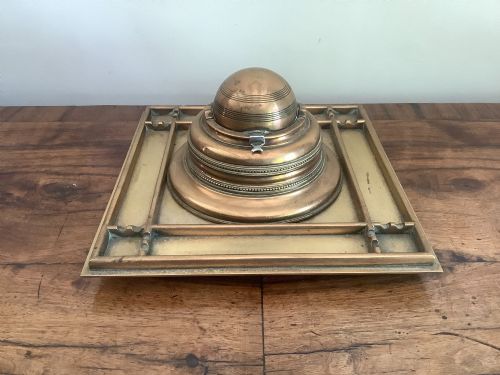


Antique Pen Rest Inkwell
These pieces of antique pen rest inkwell combine a practical desk accessory for writing instruments with an integrated channel for holding pens, spanning Victorian, Edwardian and Art Deco periods.
Antique Pen Rest Inkwell
An antique pen rest inkwell unites an ink reservoir with a dedicated channel or support to lay a dip pen across the desk stand. These items served as functional desk accessories in offices and libraries during the nineteenth and early twentieth centuries.
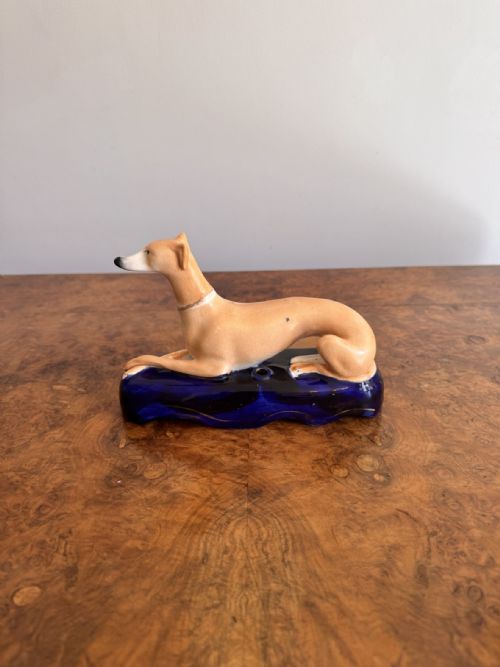
The selection ranges from simple oak and glass stands to elaborate figural desk tidies and multi-pot inkstands made during the Victorian and Edwardian eras. Buyers encounter pieces configured for single, double or triple ink pots alongside integrated clock compartments or novelty animal motifs.
Originating across England, Scotland, France, Austria and Germany, these desk stands reflect the design shifts from ornate Victorian revival styles towards organic Art Nouveau and geometric Art Deco forms.
How they were made
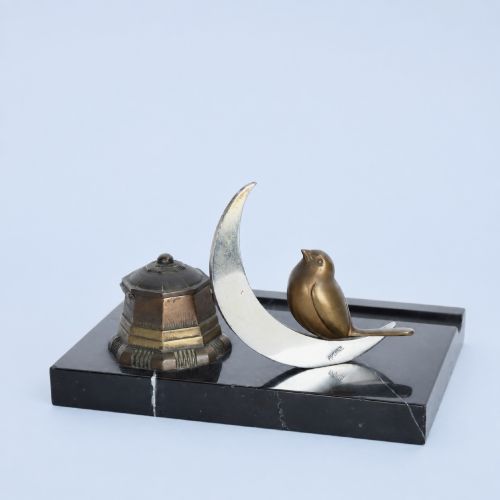
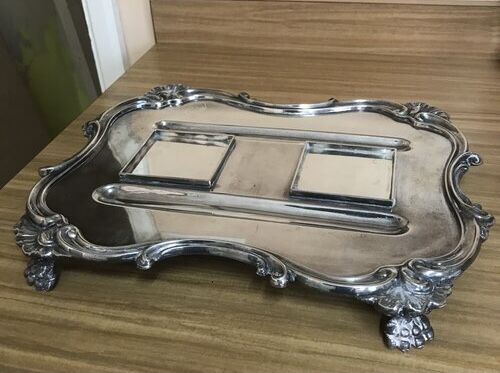
Metal components utilise cast brass, bronze, copper and silver plate, often enhanced through gilding or silvering techniques. Ormolu and patinated bronze feature heavily in French and Austrian figural models depicting animals or geometric motifs.
Natural materials include carved Black Forest wood, Scottish oak and solid horn, paired frequently with cut crystal or glass ink pots. Stonework such as black marble, onyx and lapis lazuli provides heavy, durable bases for desk sets.
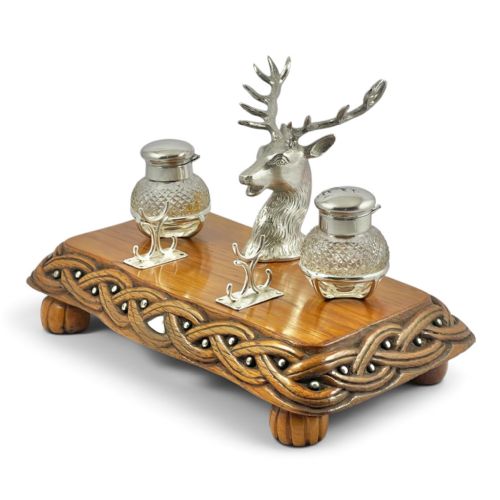
Silversmiths incorporated sterling silver mounts and hinged lids bearing hallmarks that record assay offices and production dates. Novelty models integrate glass eyes and hand-tooled metal elements to render dogs, stags, elephants and jockey caps.
Several desk models feature glass eyes staring back from miniature stags, frogs, cats, bulldogs and capering jockeys.
What varies in quality
The standard of modeling separates ordinary desk accessories from exceptional figural pieces, particularly in cast bronzes by recognised makers where anatomical detail and chasing remain sharp. Heavier gauge metals, substantial marble bases and complete original glass or crystal ink pots elevate a desk stand.
The integration of materials determines visual merit, seen where horn, silver mounts and carved wood fit cleanly together without gaps. Finer pieces retain original silver plating, crisp hallmarks, functioning hinged lids and intact glass eyes on animal subjects.
Harrods·Zimmermann·Maurice Dufrene·Bergmann·Ernest Louis ADNIN·Reed and Barton
The Antique Pen Rest Inkwell Glossary
- Inkstand
- A complete desk stand holding one or more inkwells alongside pen rests and sometimes a sander or taper holder.
- Capstan
- A desk inkwell shaped in the tapered profile of a maritime capstan drum, commonly fashioned in sterling silver.
- Desk tidy
- An expanded desk accessory featuring compartments for stationery, stamps and pens in addition to the ink reservoir.
- Ormolu
- Gilded bronze or brass applied to decorative mounts and figural desk sets, popular during the nineteenth century.
- Black Forest
- Carved wood items originating from Central Europe, frequently depicting animals such as dogs, cats or stags with glass eyes.
Antique Pen Rest Inkwell: Frequently Asked Questions
What is an antique pen rest inkwell?
An antique pen rest inkwell is a desk accessory that combines an ink pot with a built-in channel or support to lay a pen across.
These items were placed on writing desks to keep ink and writing instruments organised together.
How were these inkwells used?
Users dipped their metal or quill pen nibs into the central ink reservoir while writing letters or documents.
Between writing lines, the pen rested securely in the attached groove to prevent ink from staining desk surfaces.
How do I date these desk sets?
Dating relies on stylistic shifts from ornate Victorian revival forms to organic Art Nouveau lines and geometric Art Deco shapes.
Silver mounts often bear town hallmarks, date letters and maker marks that pinpoint the exact year of manufacture.
How do I care for antique metals and wood?
Bronze, brass and silver components require gentle dusting with a soft cloth rather than abrasive metal cleaners that remove historic patina.
Wood and marble bases benefit from being kept away from direct heat sources to prevent cracking or warping.