



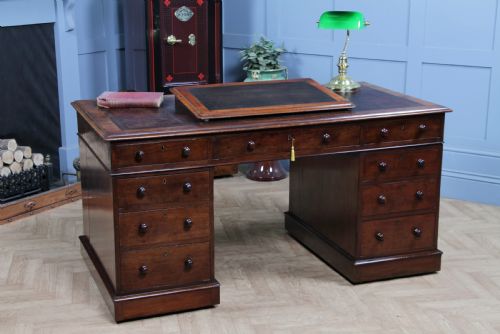


Antique Pedestal Writing Slope
An antique pedestal writing slope offers a sturdy partner for correspondence, bringing substantial Victorian timber and fitted drawers into daily use.
Antique Pedestal Writing Slope
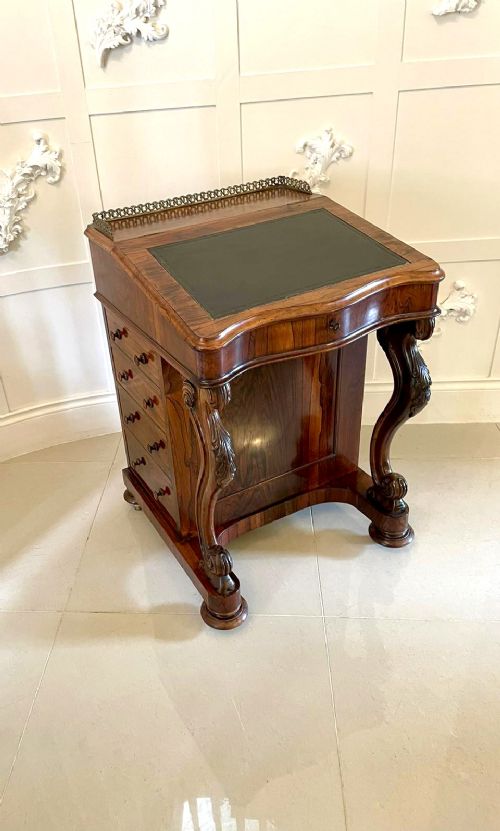
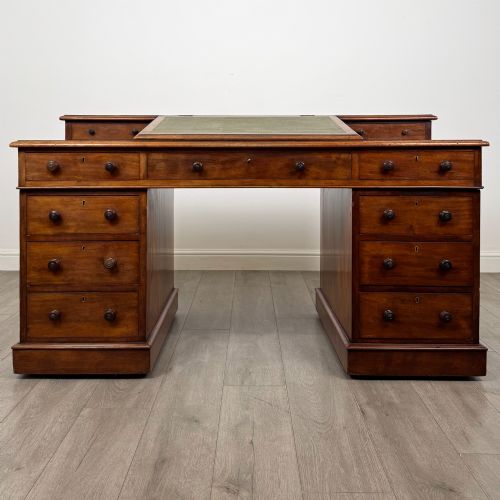
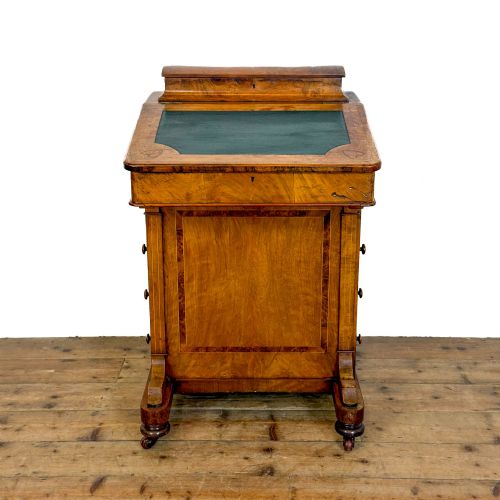
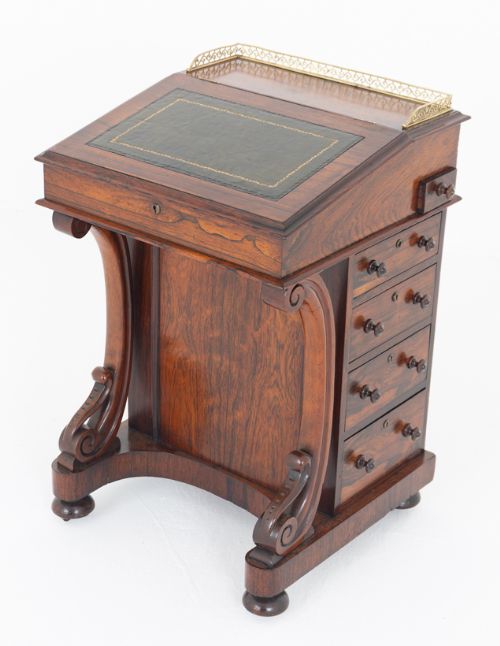
When you search for an antique pedestal writing slope, you encounter substantial writing furniture designed to command a study or library. The selection on this page consists predominantly of Victorian Davenport desks, Dickens desks, and larger pedestal writing tables from the nineteenth century.
Most pieces combine a standing or seated pedestal base with an inclined writing surface, frequently housing drawers and stationary compartments within. Examples range from compact Davenport desks in burr walnut and rosewood to large partners desks and clerks desks in solid mahogany and oak.
Origins span the nineteenth century, with Victorian examples most common, alongside Regency, William IV, and Edwardian interpretations. You will also discover specialised forms such as campaign desks and Anglo-Indian writing furniture among the listings.

Materials and Construction
Cabinetmakers utilised dense hardwoods such as mahogany, walnut, burr walnut, and rosewood, often selecting timber with striking flame figures or rich grain patterns. Secondary woods like oak and maple provide structural integrity to the interior framing and drawer linings.
Surfaces frequently feature inset leather writing panels, sometimes bordered with blind or gilt tooling, paired with boxwood inlay, brass fittings, and carved details. Specialised forms incorporate ebonised finishes, satinwood, pollard oak, or elaborate wood carvings.
Construction methods rely on robust joinery designed to support heavy use, integrating pigeonholes, secret compartments, and multi-drawer arrangements within pedestal carcases and sloping desk tops.
One cheerful Victorian oak desk arrives complete with a hand-carved Green Man peering out from the woodwork to supervise your correspondence.
Distinctions in Quality
The choice of veneer and timber selection dictates visual merit, with burr walnut and figured mahogany setting a higher standard than plain domestic woods. Superior items display meticulous book-matching on sloping lids and drawer fronts.
Intricacy of interior organisation and hardware integration separate standard production from superior cabinet work. High-grade examples feature original brass locks, finely tuned stationery compartments, and integrated pen trays that operate smoothly.
Carved ornament and secondary details, such as boxwood inlay or specialised galleries, reflect the ambition of the original maker. Well-preserved surfaces retain depth of colour through traditional polish rather than heavy modern intervention.
Gillows of Lancaster·Thomas Turner·Maple and Co
The Antique Pedestal Writing Slope Glossary
- Davenport desk
- A compact Victorian writing desk featuring a sloping top hinged over a pedestal of drawers. The design typically incorporates side drawers and a small superstructure for stationery.
- Dickens desk
- A large pedestal desk featuring a sloped writing surface flanked by banks of small drawers and pigeonholes above the main desktop. These were favoured by clerks and offices for extensive correspondence.
- Partners desk
- A large double-sided pedestal desk designed for two people to work opposite one another. Drawers and cupboards are duplicated on both sides of the carcase.
- Crossbanding
- A border technique where thin strips of veneer are laid running perpendicular to the main grain. This creates a framed effect around drawer fronts and desk lids.
- Gallery
- A low decorative railing or fretwork border fitted to the top edge of a desk. It prevents books or inkwells from sliding off the surface.
Antique Pedestal Writing Slope: Frequently Asked Questions
What is a Davenport desk?
A Davenport is a compact form of writing furniture featuring a sloping, hinged desktop positioned above a pedestal of side drawers. They gained popularity during the Victorian era for boudoirs and smaller studies.
Interior compartments usually hold stationery, while the pedestal provides concealed storage accessed from the side rather than the front.
How do I use a Dickens desk?
A Dickens desk functions as an executive writing station with built-in desktop organisation. The raised back section contains rows of pigeonholes and small drawers for filing papers.
The central sloping surface provides an angled writing platform, often lined with leather for smooth pen work.
Are these desks suitable for daily laptop use?
Many Victorian pedestal desks offer sufficient surface area and knee clearance for modern writing tasks. However, the sloped lids of Davenport desks suit paper correspondence better than flat electronic equipment.
Larger pedestal and partners desks provide ample flat workspace for computers while retaining traditional drawer storage.
How do I identify a Victorian piece?
Victorian writing furniture typically utilises dense hardwoods like mahogany, walnut, or rosewood, often featuring deep hand-polished finishes. Stylistic clues include boxwood inlay, turned knobs, and brass hardware.
Construction details such as hand-cut dovetails in the drawer linings help confirm nineteenth-century origin.