

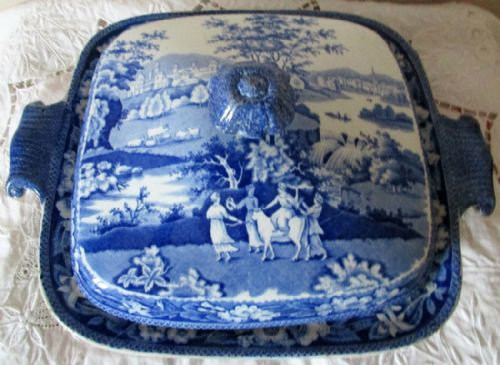


Antique Pearlware Dish
An antique pearlware dish brings refined blue and white transfer printing and warm earthenware bodies straight to a table.
Antique Pearlware Dish
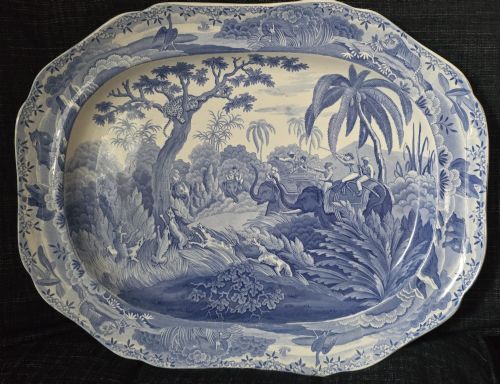
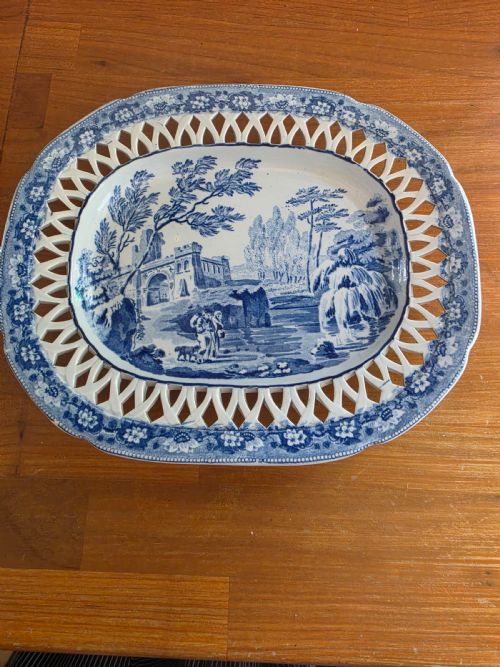
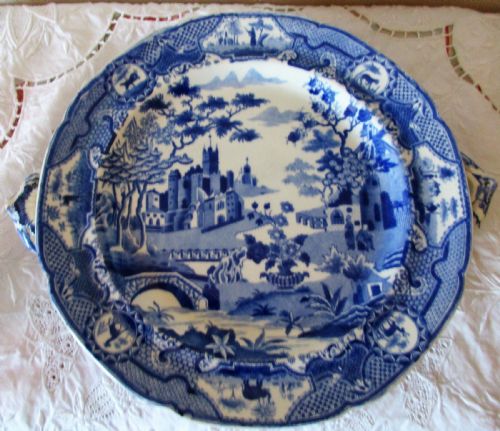
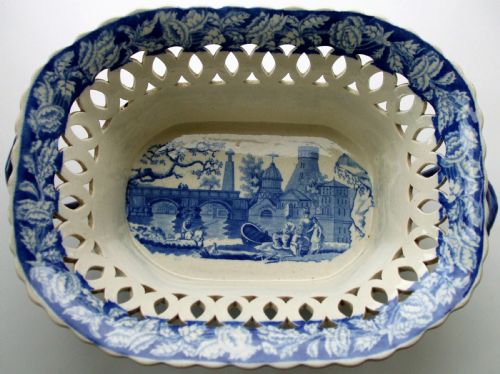
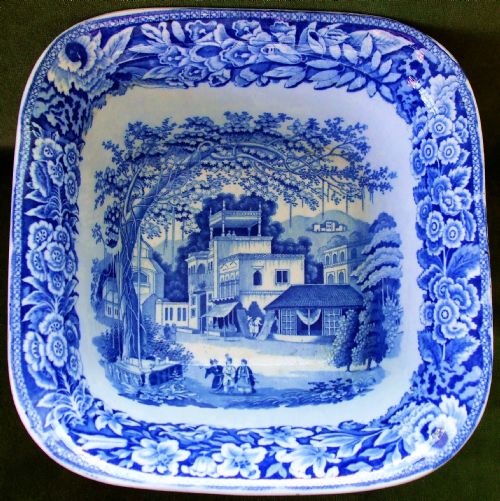
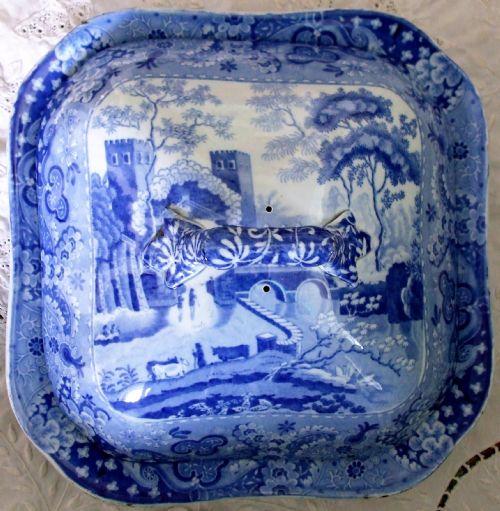
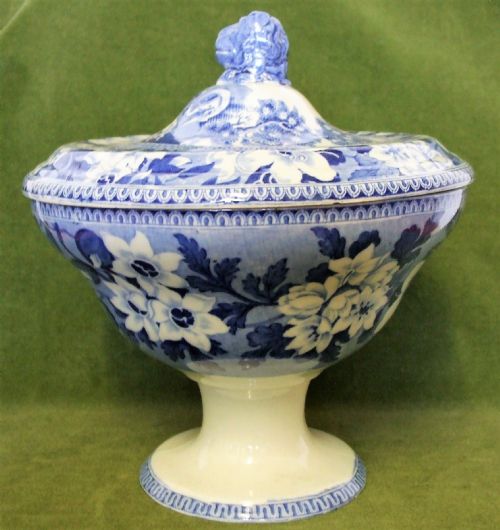
Every antique pearlware dish on this page represents early ceramic production spanning the Georgian, Regency and Victorian periods. Buyers encounter a diverse selection of forms, ranging from serving platters and vegetable tureens to botanical sauce tureens and decorative plates.
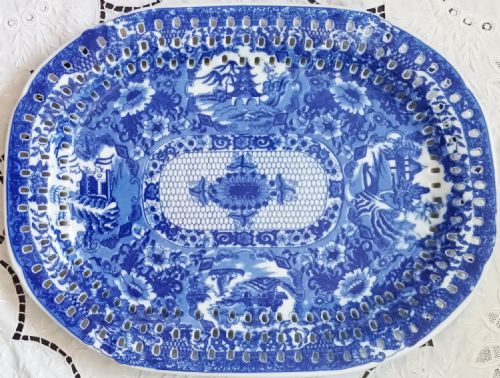
The most frequent examples found here showcase blue and white transfer printed scenes, including classical ruins, Chinoiserie landscapes, and British topographical views. Potters also decorated these earthenware vessels with hand-painted polychrome enamel highlights, feather edging, and subtle blue tinted glazes.
Originating largely from English potteries during the late eighteenth and early nineteenth centuries, these items served both utilitarian dining functions and decorative display. The surviving forms reveal the domestic habits of past households through specialised pieces like spoon trays, chestnut baskets and hot-water plates.
Materials and Craftsmanship
Potters shaped these vessels using refined earthenware and ceramic bodies coated in a characteristic glaze containing a small amount of cobalt to neutralize the natural yellowish tint of the fired clay. This subtle blueish pooling near rims and crevices defines the surface appearance.
Makers applied intricate patterns through copper-plate transfer printing, transferring detailed ink designs onto the absorbent biscuit pottery before firing. Artisans frequently enhanced these monochrome transfer prints with hand-applied cobalt pigment or polychrome enamel colours.
Some nineteenth century platters included built-in reservoirs to catch meat juices, keeping dining tables tidy during hearty roasts.
Assessing Quality and Execution
Quality rests upon the crispness of the transfer printing and the balance of the composition across complex shapes like pierced platters and scalloped dishes. Finer examples display sharp, deep impressions without blurring or smudging in the cobalt glaze.
The sophistication of the painted or printed subject matter, from complex topographical views to delicate botanical studies, separates standard utility items from superior studio output. Potteries achieved greater refinement through careful preparation of the ceramic body and controlled kiln firing.
Davenport·Swansea·Spode·J. & R. Clews·J. & R. Riley·John Rogers & Son·Stubbs·Pettys and Co. Leeds·William Adams·Thomas Lakin·Brameld & Co.
The Antique Pearlware Dish Glossary
- Pearlware
- A refined type of earthenware developed by Josiah Wedgwood and adopted by other potteries, featuring a thin glaze with a slight bluish tinge. This glaze distinguishes the ceramic from earlier creamware.
- Transfer printing
- A decoration technique where an engraved copper plate transfers a design onto tissue paper, which is then applied to the unglazed ceramic surface. This process allowed intricate pictorial scenes to be produced rapidly.
- Tureen
- A deep serving dish with a cover, used historically for soups, sauces or vegetables. Examples in this category often include matching stands or platters.
- Comport
- A raised decorative dish or bowl used for serving fruit or sweetmeats at the table. These pieces stand upon a pedestal base.
- Feather edge
- A painted border decoration resembling the barbs of a feather, typically applied in blue or green around the rim of a plate. It was a popular method of finishing utilitarian tableware.
Antique Pearlware Dish: Frequently Asked Questions
How do I date an antique pearlware dish?
Dating relies primarily on stylistic markers, pottery marks, and the specific shade of the blue glaze. Pieces from the late eighteenth and early nineteenth centuries often exhibit a pronounced blue pooling in the glaze crevices.
Registry marks or maker names stamped on the reverse offer more precise chronological placement. Comparing the transfer printed patterns to documented factory archives helps narrow down the production window.
Are these dishes safe for daily use?
While structurally sound, these historic ceramics require careful handling due to their age and delicate earthenware bodies. Modern dishwashers and microwaves can damage the historic glaze and ceramic structure.
Collectors generally wash them by hand in lukewarm water using mild soap. Gentle care preserves both the transfer print and the underlying pearlware body.
What caused the blue tint on pearlware?
Potters added small amounts of cobalt oxide to the lead glaze formulation to counteract the creamy yellow colour of the fired earthenware. This created a whiter appearance that successfully imitated Chinese export porcelain.
Over time, this clever chemical adjustment produced the signature pale blue pools characteristic of genuine period pieces. It remains the primary diagnostic feature for identifying this ceramic type.
How were these dishes used historically?
These vessels functioned primarily as tableware for serving meals in prosperous Georgian and Regency households. Platters held large joints of meat, while tureens kept soups and vegetables warm at the table.
Smaller items like spoon trays and hot-water plates served specialised dining rituals. Over time, many transitioned into decorative display objects within domestic interiors.