


Antique Paste Pin
An antique paste pin brings together hand-cut glass and precious metals, offering the sparkle of diamonds and gemstones without the royal price tag.
Antique Paste Pin
An antique paste pin is a decorative fastening worn on clothing, hats, or hair, featuring faceted glass stones set in metal mounts. These pieces span from the Georgian era through the Victorian, Edwardian, and Art Deco periods, capturing the changing tastes of centuries in miniature form.
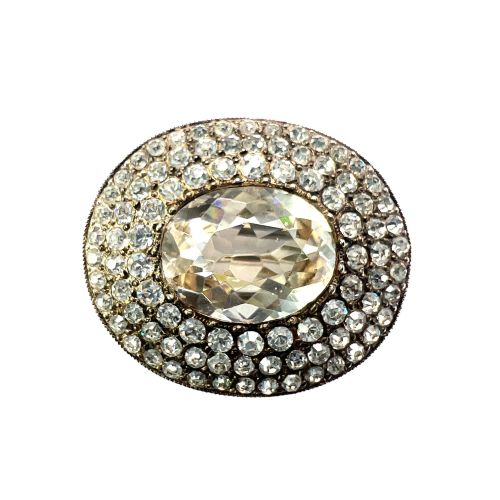
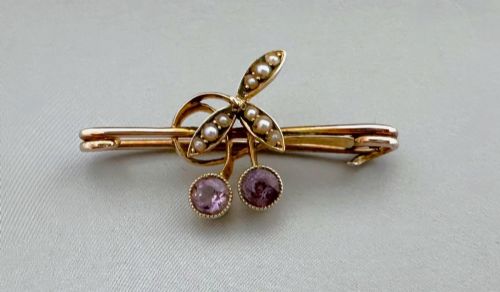
On this page, the visitor encounters a wide variety of brooches and pins alongside related items such as stick pins and hair accessories. Silver and sterling silver dominate the settings, frequently accompanied by 9ct gold or silver gilt.
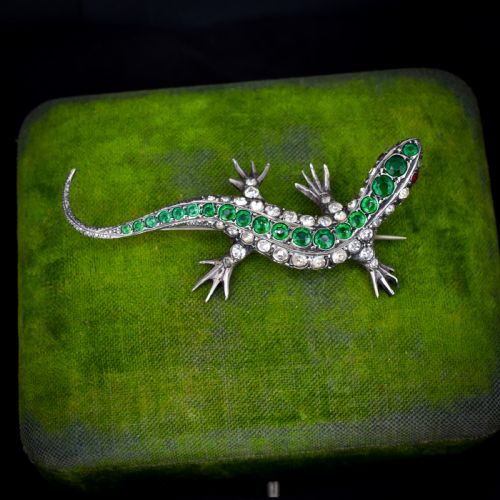
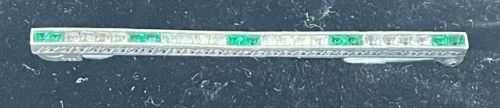
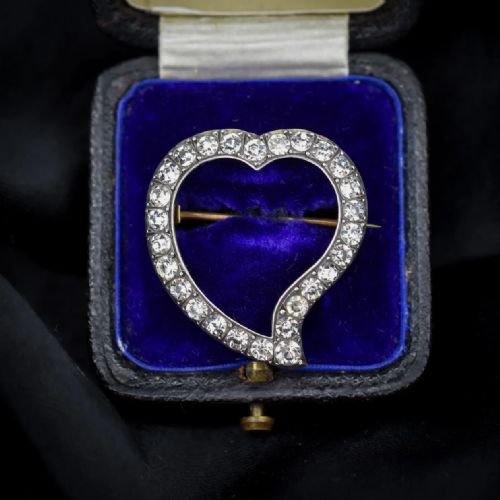
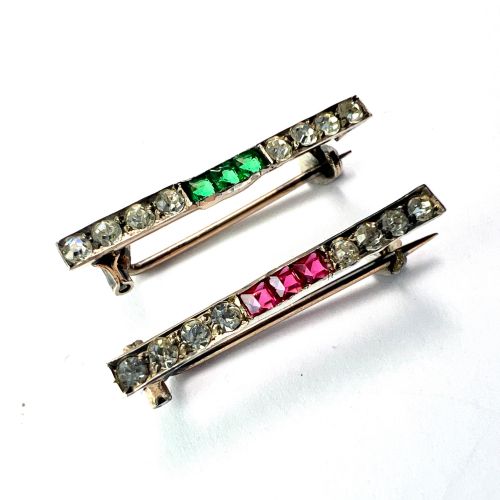
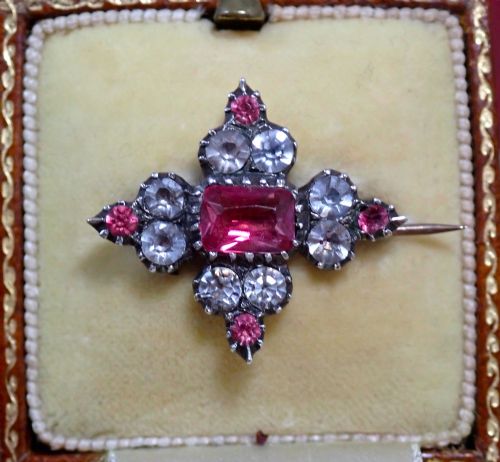
The stones themselves mimic diamonds, emeralds, rubies, garnets, and sapphires in clear and vibrant colours. Forms range from naturalistic lizards and flowers to hearts, bows, and geometric bar brooches.
Materials and construction methods
Makers set lead glass stones, known as paste, by hand into mounts of silver, gold, or mixed metals. Early Georgian and Victorian examples often utilise silver backed with gold or closed-back foils to enhance the light reflecting through the coloured glass.
Art Deco and Edwardian pieces lean towards crisp sterling silver settings that hold old-cut and calibre-cut stones in geometric or flowing arrangements. Artisans shaped metal through casting, repoussé, and fine wirework, occasionally adding pearls, tortoise shell, or porcelain elements to complete the design.
Lizards encrusted in green paste climb across Victorian shoulders, proving that past generations enjoyed wearing small reptiles just as much as we do.
Factors of distinction
Quality rests upon the precision of the stone cutting and the integrity of the setting. Hand-cut and polished paste exhibits sharp facets and deep internal refraction, whereas lesser pieces rely on moulded glass with softer edges and duller light return.
The artistry of the metalwork separates ordinary production from superior examples. Finely chased silver mounts, secure prong or collet settings, and well-preserved gilding or original backings indicate a higher grade of craftsmanship from the workshop.
Charles Horner
The Antique Paste Pin Glossary
- Giardinetti
- Little garden motif depicting a basket or vase of flowers and foliage. This design appears frequently in Georgian and Victorian silver work.
- Collet setting
- A flat strip of metal wrapped around the perimeter of a stone to hold it in place. This technique is common in early Georgian pieces.
- Jabot pin
- A long decorative pin designed to secure the folds of a jabot or necktie. They gained popularity during the Edwardian era.
- Witches heart
- A heart motif with a twisted tail, symbolising love that catches the viewer off guard. Jewellers often paired this shape with paste stones.
Antique Paste Pin: Frequently Asked Questions
How do I date an antique paste pin?
Dating relies on the style of the metalwork, the cut of the stones, and the overall construction of the pin mechanism. Georgian pieces often feature closed-back settings and foiled stones, while Victorian examples show heavier silver or gold work with naturalistic motifs like lizards and flowers.
Later Edwardian and Art Deco pieces introduce lighter open-back sterling settings and geometric lines. Comparing the pin stem and clasp to known period examples also helps narrow down the decade of manufacture.
Are paste stones real gemstones?
Paste stones are not natural gemstones, but rather a specialised form of high-lead glass created by skilled artisans. They were produced to simulate the fire and brilliance of diamonds, emeralds, and rubies for high-society wear.
Historic paste holds significant value in its own right due to the intensive labour required to hand-cut and polish each individual piece of glass.
How should I wear an antique brooch?
These brooches look striking pinned to the lapel of a tailored coat, the collar of a blouse, or fastened onto a heavy wool scarf. They also serve to anchor a cravat or dress fabric securely.
When attaching the pin, ensure the fabric is thick enough to support the weight of the metal and stones without pulling or tearing the material.