


Antique Parlour Settee
An antique parlour settee brings formal Victorian and Edwardian drawing rooms to life with carved timber frames and deep upholstery.
Antique Parlour Settee
An antique parlour settee is a seating piece designed for formal reception rooms, spanning periods from the Regency era through the Victorian years and into the Edwardian age.
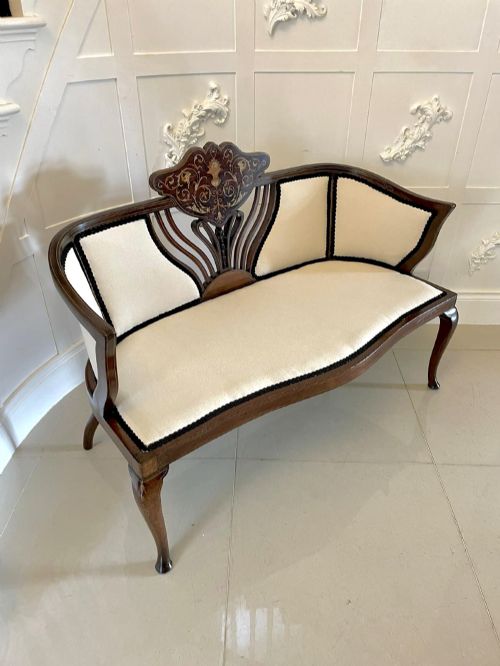
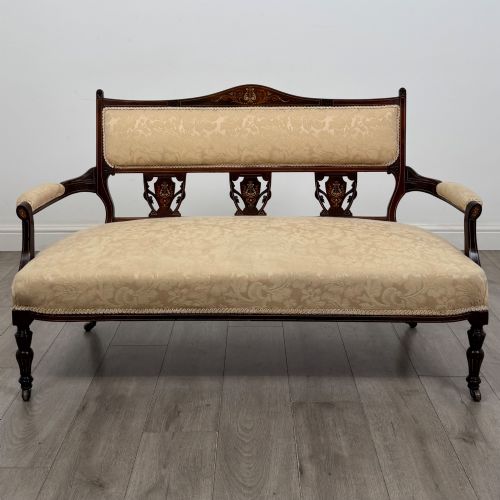
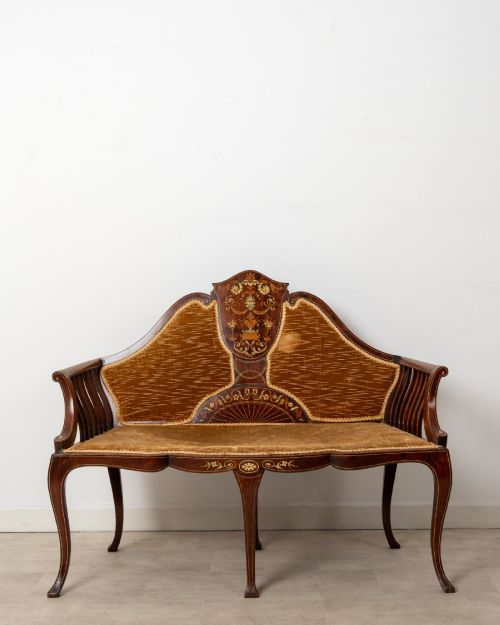
Buyers meet forms ranging from double ended sofas and cameo back walnut designs to inlaid mahogany settees and larger salon suites.
Origins stretch across British workshops and continental European makers, incorporating styles such as Rococo Revival, Louis XVI, and Art Nouveau.
How they were made
Frames rely on dense hardwoods including mahogany, walnut, rosewood, satinwood, and oak, often shaped with intricate carved details.
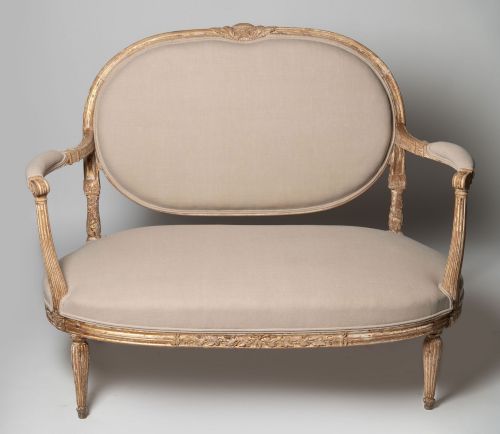
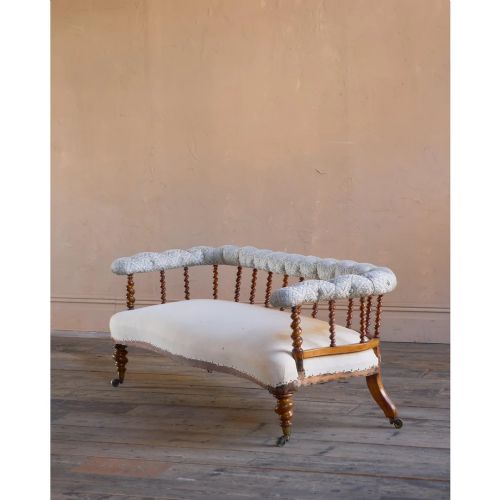
Decoration involves delicate inlaid wood marquetry, spindle backs, and painted or gilt finishes on French inspired pieces.
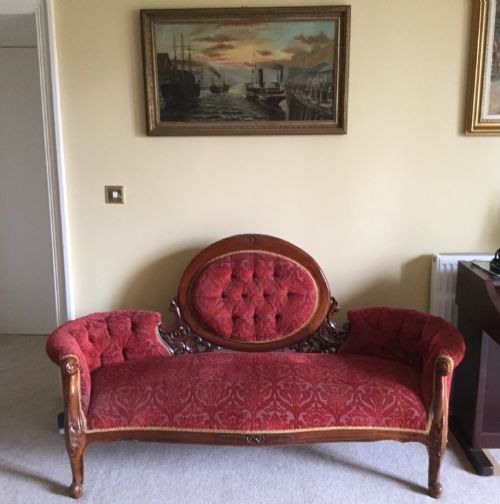
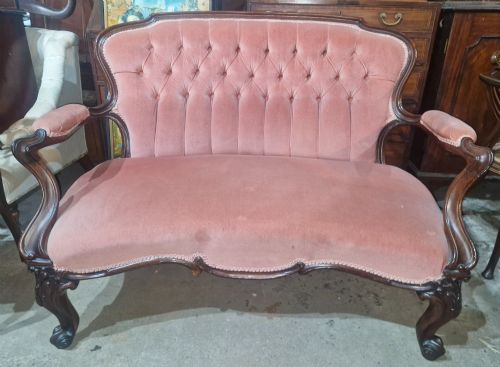
Seating utilises traditional sprung bases paired with upholstery fabric, velvet, brocade, and deep buttoning.
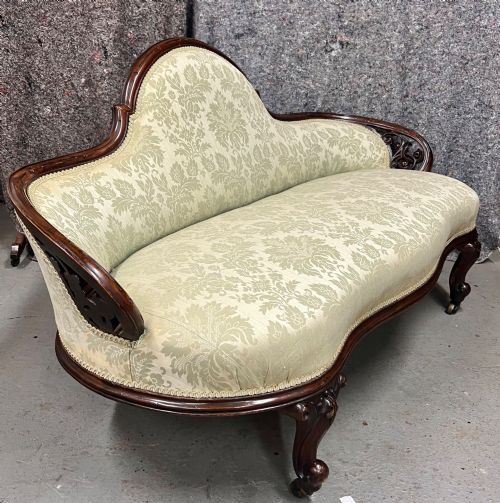
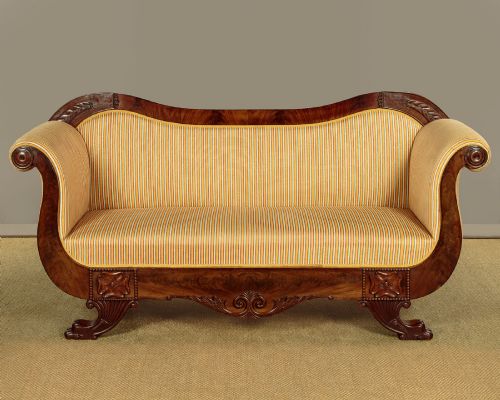
One settee comes ready for a nap with built-in double-ended scrolling for maximum lounging.
What varies in quality
Quality rests in the crispness of the timber carving and the subtlety of inlaid satinwood or contrasting veneers on the frame.
The integrity of the structural joinery and the selection of high grade upholstery fabrics dictate the distinction between standard room seating and finer salon pieces.
C. Hindley & Sons
The Antique Parlour Settee Glossary
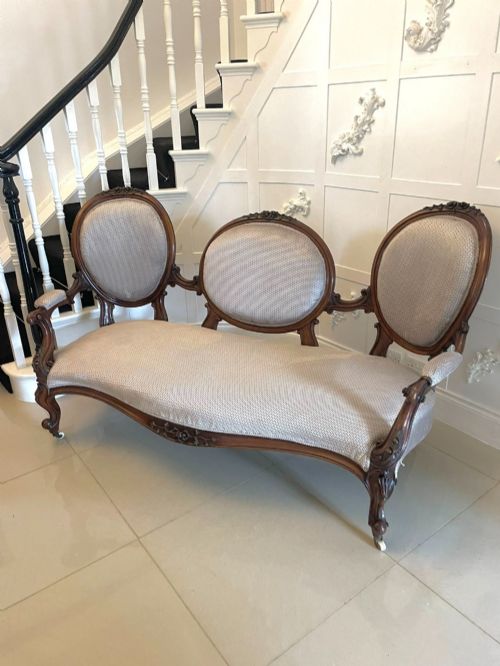
- Cameo back
- A chair or settee back shaped like a traditional oval cameo portrait, popular in mid-Victorian walnut seating. This design emphasises curved wooden frames around a padded central panel.
- Double ended sofa
- A couch with matching scrolled or raised ends that allow a person to recline comfortably from either direction. These forms appear frequently in nineteenth century mahogany and rosewood.
- Inlaid
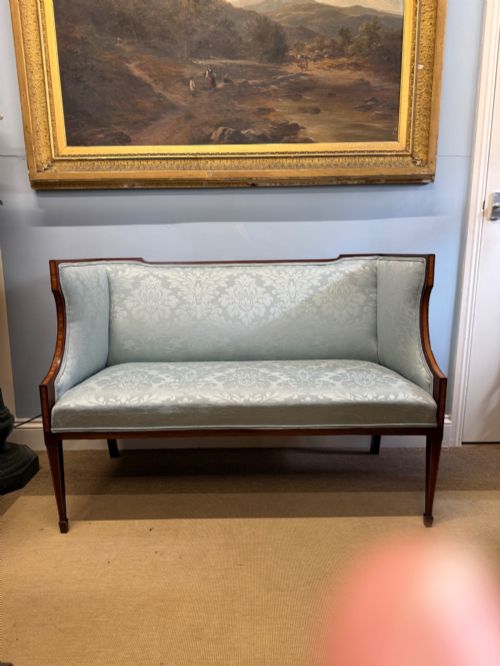
- A technique where contrasting woods or other materials are set flush into the timber surface to create decorative patterns. Edwardian and late Victorian pieces often use satinwood inlay on mahogany.
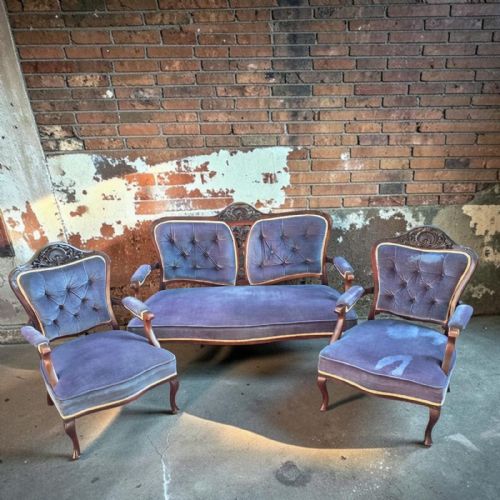
- Salon suite
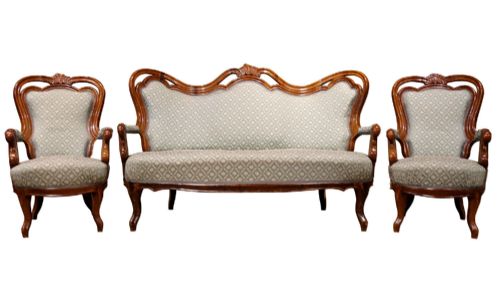
- A matched set of seating furniture comprising a settee and matching armchairs or side chairs. These collections furnished formal drawing rooms during the Victorian and Edwardian periods.
- Scroll end
- A sweeping, curved wooden or upholstered arm terminal resembling a rolled scroll. This shape defines the silhouette of Regency and Victorian couches.
Antique Parlour Settee: Frequently Asked Questions
What is an antique parlour settee?
An antique parlour settee is a formal two seater or multi seater sofa produced during the nineteenth or early twentieth century. These pieces served as the centrepiece for entertaining in Victorian and Edwardian drawing rooms.
They combine decorative timber frames in mahogany, walnut, or rosewood with upholstered seats and backs designed to match other salon chairs.
How do I date an antique parlour settee?
Dating relies on identifying the prevailing style, timber choices, and construction methods associated with specific decades. Regency pieces show scroll ends, while mid-Victorian examples often feature carved walnut and cameo backs.
Edwardian settees frequently display lighter mahogany frames with delicate satinwood inlay and Art Nouveau influences.
Were these settees part of larger sets?
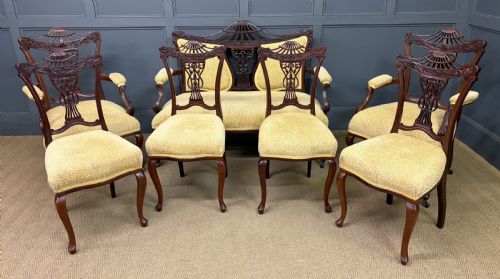
Many parlour settees formed part of larger matching salon suites that included armchairs, side chairs, and sometimes footstools. These suites ensured a unified decorative scheme for formal entertaining spaces.
Surviving examples range from three piece groups to extensive eleven piece drawing room collections.
What woods were used for these frames?
Cabinet makers utilised a variety of dense hardwoods to construct durable frames that could support intricate carving. Mahogany and walnut appear most frequently across Victorian and Edwardian examples.
Rosewood, satinwood, and oak also feature in specific regional designs and stylistic revivals.