


Antique Parlour Seating
Antique parlour seating comprises formal chairs, settees and suites designed for hosting guests, offering rich traditional timbers and period upholstery.
Antique Parlour Seating
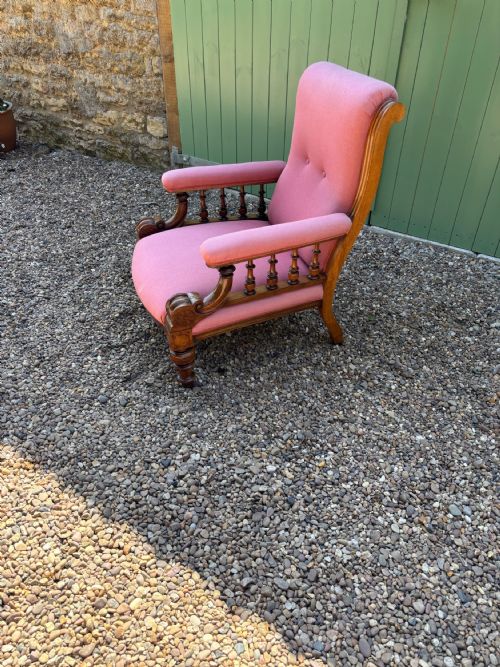
Antique parlour seating encompasses chairs, settees, sofas, and multi-piece suites intended for formal reception rooms. These items reflect the social habits of domestic life during the nineteenth and early twentieth centuries.
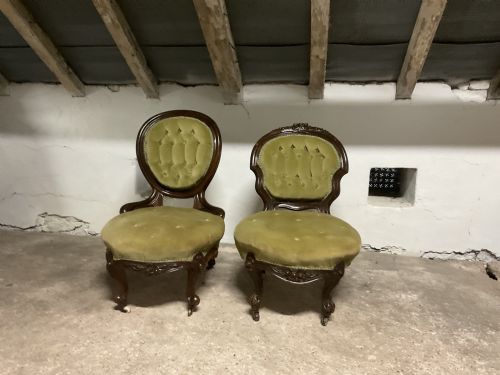
Origins span English workshops, continental European centres, and specific historic periods including the Regency and Victorian eras. Buyers encounter individual nursing chairs as well as matched seating suites.
Materials and Construction
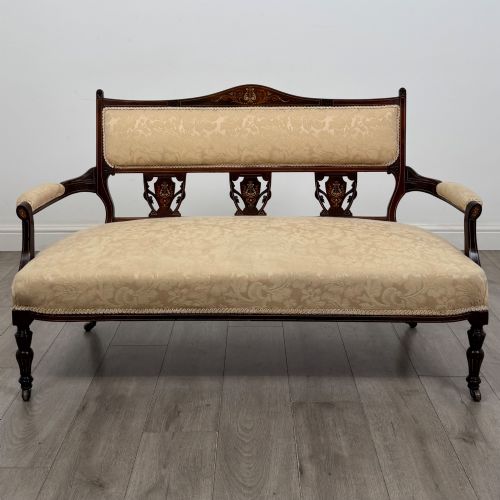
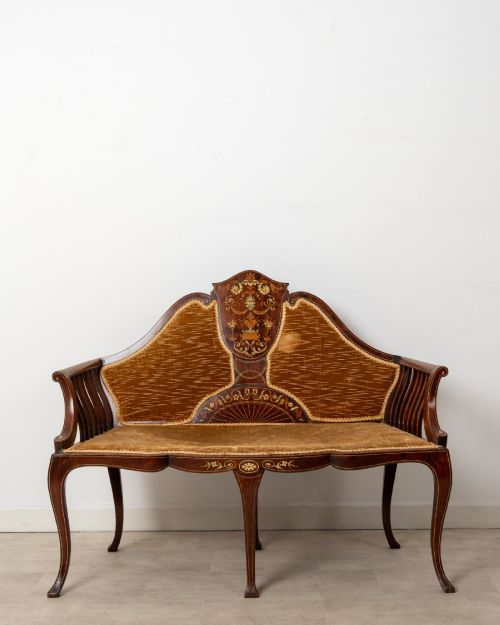
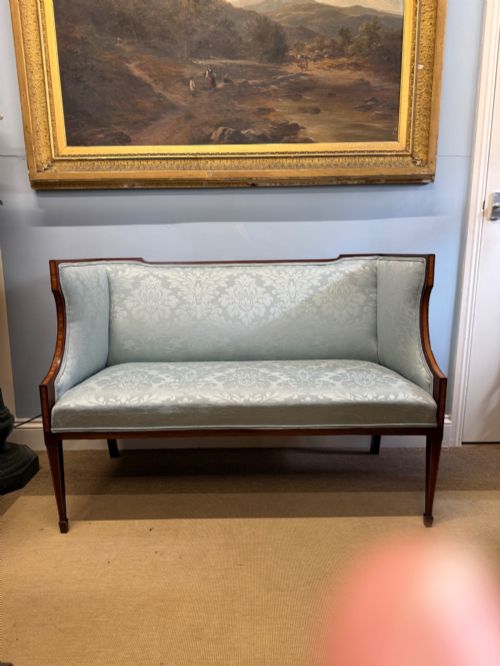
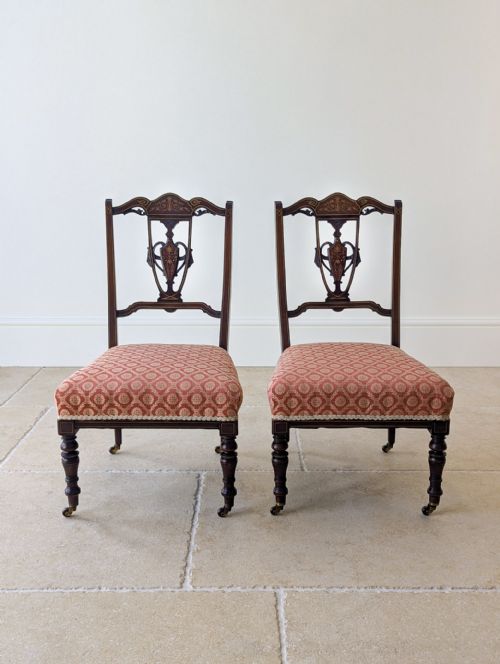
Frames rely on solid hardwoods like mahogany, walnut, rosewood, oak, and occasionally giltwood, shaped through carving, turning, and joinery. Inlaid decoration often incorporates contrasting timbers such as satinwood.
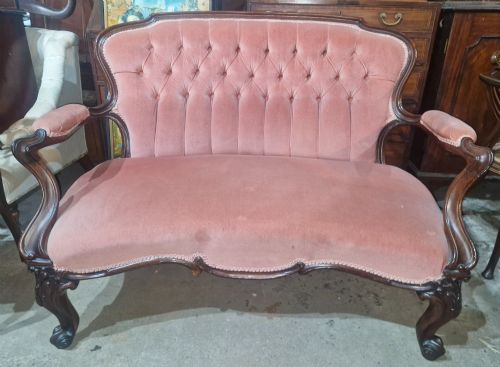
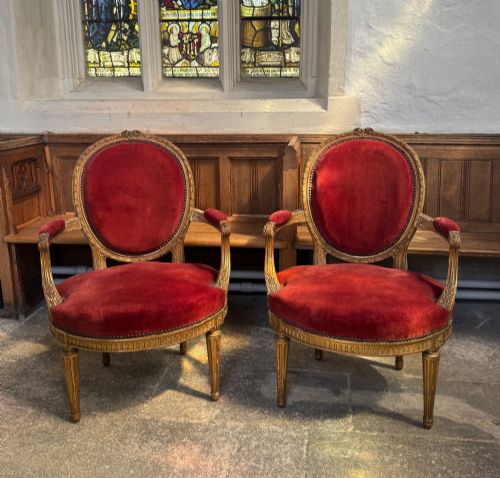
Upholstered surfaces utilise traditional fillings supported by fabric, velvet, or needlepoint textiles, sometimes secured with brass detailing. Structural integrity depends upon sturdy timber framing and pegged or glued joints.
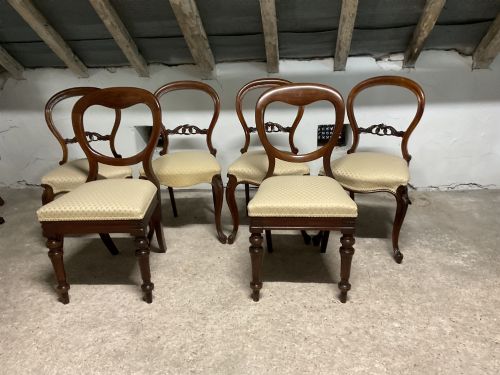
Some Victorian chairs secretly plotted against your posture by offering balloon backs designed solely for upright dignity.
Distinctions in Quality
Quality separates through the crispness of timber carving, the selection of figured veneers, and the sophistication of inlaid marquetry. Finer examples display meticulous attention to structural joinery and harmonious proportions.
The integrity of original upholstery materials and the presence of matching multi-piece suites elevate standard items to exhibition quality. Flimser framing and poorly executed later repairs diminish the value of a piece.
The Antique Parlour Seating Glossary
- Settee
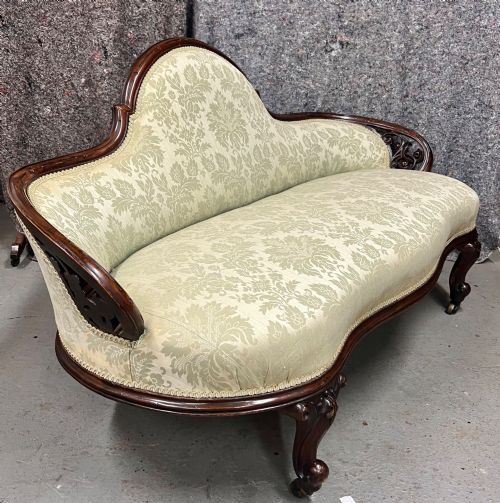
- A medium-sized upholstered seat with a back and arms, designed for multiple occupants. These pieces form a central component of many parlour seating arrangements.
- Salon Suite
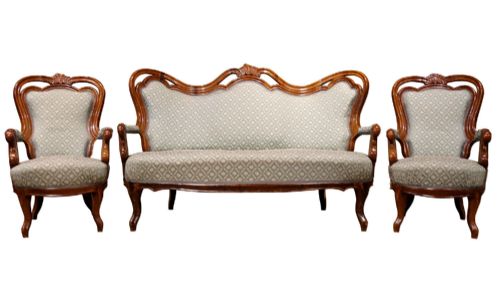
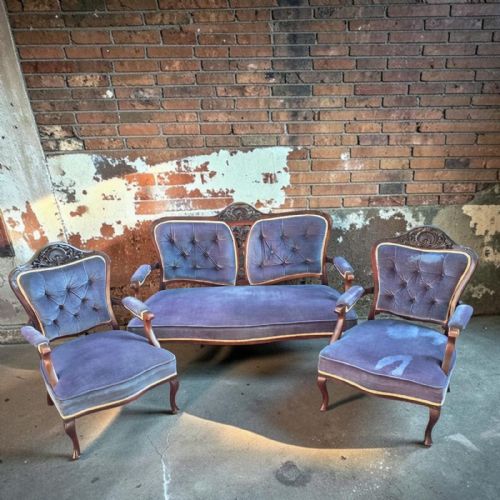
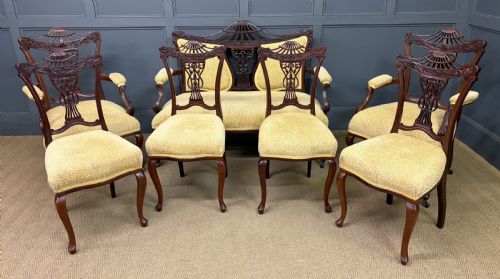
- A matched set of furniture comprising a settee and several matching armchairs or side chairs. Such suites provided a unified decorative scheme for formal entertaining.
- Balloon Back
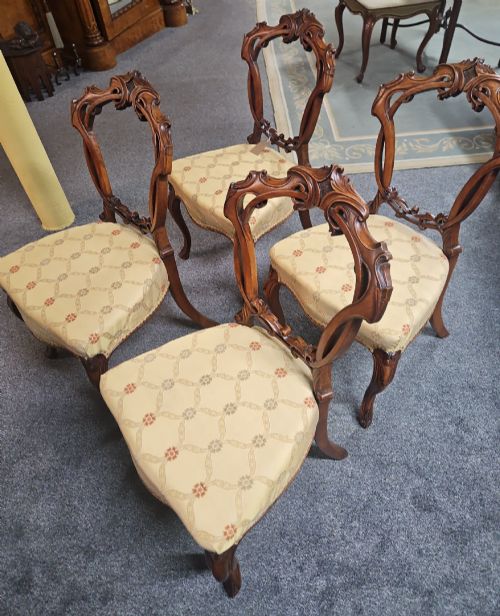
- A chair back shaped in a continuous oval or curved outline resembling a balloon. This silhouette is particularly common in Victorian walnut dining chairs.
- Inlay
- A technique where pieces of contrasting wood or other materials are inserted into depressions in the base wood to form decorative patterns. Satinwood is frequently utilised for this purpose within mahogany frames.
- Needlepoint
- A type of counted thread embroidery stitched onto a canvas mesh, frequently employed for chair seat coverings. These decorative textiles survive in various floral and geometric patterns.
Antique Parlour Seating: Frequently Asked Questions
What defines antique parlour seating?
Antique parlour seating includes chairs, settees, and multi-piece suites manufactured during the nineteenth and early twentieth centuries. These furnishings were specifically designed to equip formal reception rooms for the reception of guests.
They incorporate traditional hardwoods like mahogany, walnut, and rosewood, frequently accompanied by elaborate upholstery or carved detailing. The category spans diverse stylistic influences ranging from Regency to Edwardian.
How do I care for antique upholstery?
Preserving historic upholstery requires gentle vacuuming with a soft brush attachment to remove dust without damaging fragile textiles. Keep pieces away from direct sunlight and heat sources to prevent the fading and drying of fabrics.
Professional cleaning is advisable for delicate velvet, needlepoint, or silk coverings. Avoid harsh chemical treatments on both the fabric and the exposed wooden frames.
Can I mix different periods in one room?
Combining different eras within a single interior is common, as pieces from the Regency period often complement later Victorian or Edwardian items. Balance relies upon coordinating wood tones, upholstery colours, and the overall scale of the furniture.
Matching suites provide uniformity, whereas individual armchairs or side chairs introduce textural variety. Maintaining consistent craftsmanship standards helps disparate pieces sit comfortably together.
How do I identify a salon suite?
A salon suite consists of a matched grouping of seating furniture, typically featuring a settee paired with a matching collection of armchairs and side chairs. These sets share identical timber framing, carving motifs, and upholstery fabrics.
Such suites were produced as cohesive decorative ensembles for large drawing rooms. Finding an entire surviving suite remains less common than encountering individual chairs.