


Antique Parlor Footstool
An antique parlor footstool brings low Victorian seating and tactile upholstery into a room with warmth and proportion.

Antique Parlor Footstool
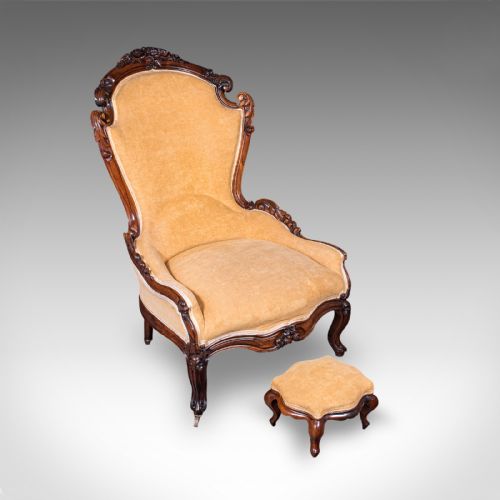
An antique parlor footstool provides low seating or leg support within a nineteenth-century interior. These pieces emerge primarily from the Victorian period, though earlier Georgian examples also appear alongside broader salon suites.
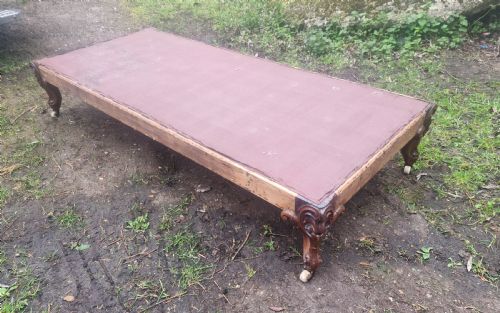
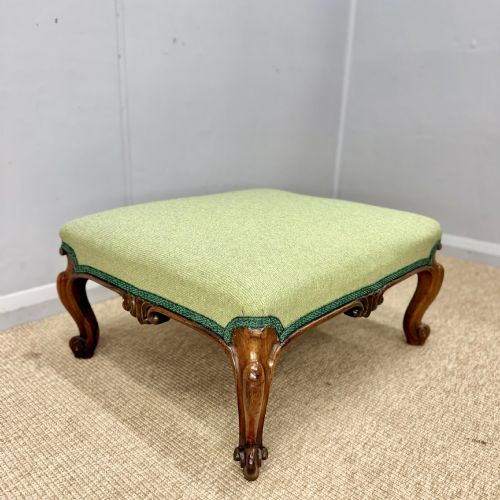
The forms span individual round stools, pairs of carved supports, and larger centre pieces designed for domestic drawing rooms. Many retain their original timber frames while others await or feature modern upholstery.
How they were made
Cabinetmakers shaped solid timbers such as rosewood, walnut, and mahogany into carved frames, sometimes incorporating intricate Tunbridge Ware inlay or geometric needlepoint tapestries. Artisans then fitted these structures with textile or fabric upholstery.
Framing techniques relied on substantial timber construction to bear weight, paired with detailed hand-carving characteristic of Victorian Rococo Revival and standard Victorian output.
Listings show footstools predominantly from the Victorian era, alongside Georgian examples, constructed in rosewood, walnut, and mahogany.
What varies in quality
The distinction between standard pieces and superior examples lies in the crispness of the timber carving and the complexity of the woodwork. Intricate detailing such as Tunbridge Ware marquetry elevates a piece well beyond plain turned legs.
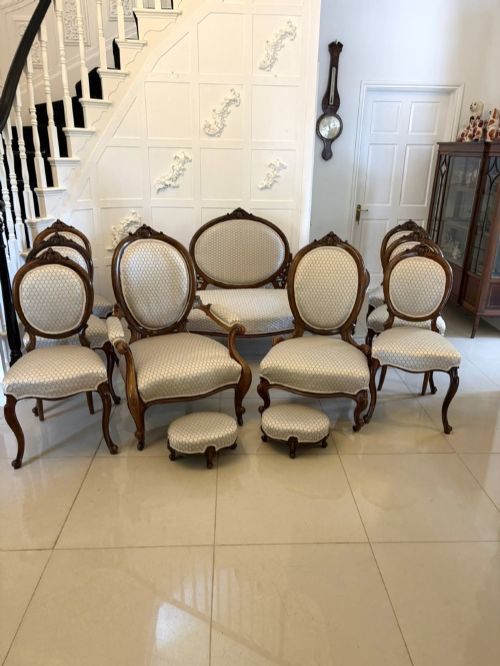
Presence within a matching salon suite or as a deliberate pair increases the coherence of the object. Condition of the underlying timber frame and the integrity of any needlepoint or tapestry work further determine the standing of each item.
The Antique Parlor Footstool Glossary
- Tunbridge Ware
- A form of woodworking originating from Kent involving small mosaic tiles of coloured wood to create geometric pictures. This technique often appears on the wooden bodies or borders of nineteenth-century small items.
- Rococo Revival
- A mid-nineteenth-century style drawing on eighteenth-century ornamentation with C-scrolls, asymmetric curves, and floral motifs. Furniture from this design movement displays deeply carved timber frames.
- Needlepoint
- A type of canvas work embroidery executed with yarn using a tent stitch. It frequently covers the top surface of nineteenth-century stools in geometric or floral patterns.
- Centre Stool
- A freestanding piece of furniture finished on all sides to stand away from the walls in the middle of a room. These larger stools often formed part of formal Victorian reception spaces.
- Salon Suite
- A matched set of seating furniture typically including a sofa, armchairs, side chairs, and footstools. These comprehensive groupings unified the decor of formal Victorian drawing rooms.
Antique Parlor Footstool: Frequently Asked Questions
How were parlor footstools used?
These stools served primarily for resting feet while seated on parlor armchairs or sofas. Larger centre stools also functioned as independent seats in the middle of Victorian drawing rooms.
Their sturdy timber construction allowed them to withstand daily domestic use while contributing to the coordinated textile display of a formal interior.
How do I date a footstool?
Dating relies on timber choices, stylistic markers, and construction details recorded in the piece. Victorian examples often display rich rosewood or walnut with revival carving.
Earlier Georgian pieces or mid-nineteenth-century variations show shifts in proportion and ornamentation, though exact years often depend on documented suite dates.
Are these stools sold with original upholstery?
Some footstools retain period needlepoint, tapestries, or fabric covers from the nineteenth century. Others are offered specifically for reupholstering to suit modern interiors.
Checking the listing details reveals whether the textile work is period original or a subsequent addition.