




Rococo Revival Ottoman
A rococo revival ottoman brings ornate curves and plush upholstery into a room, offering a functional seat with nineteenth-century flair.

Rococo Revival Ottoman
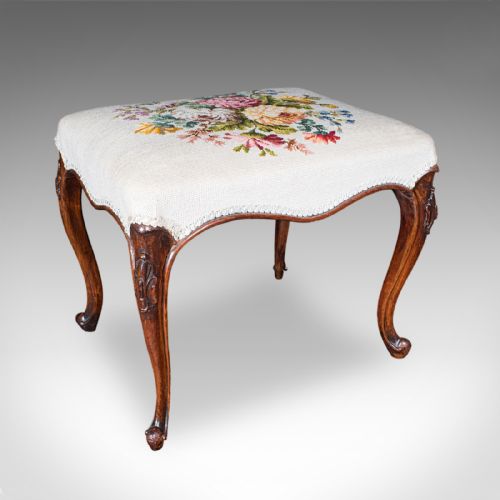
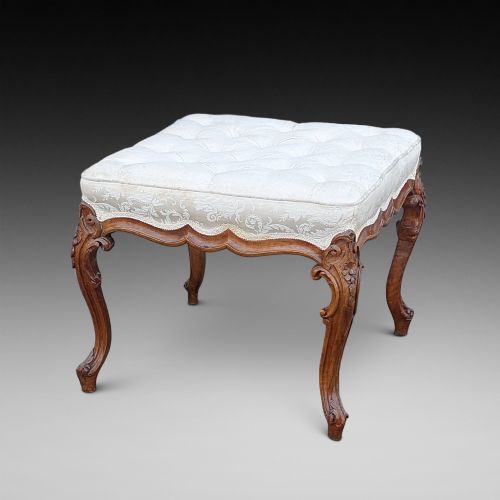
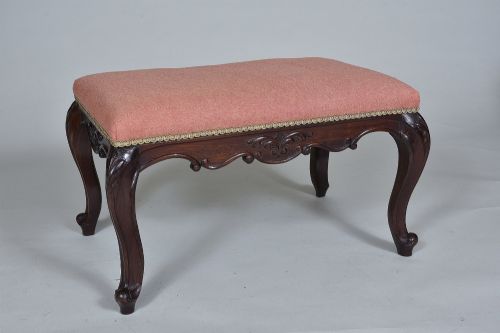
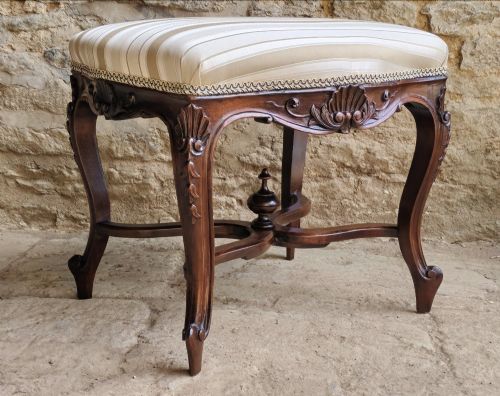
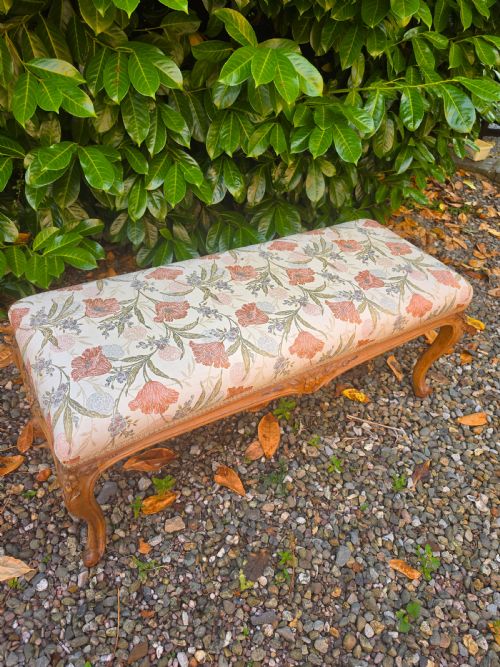
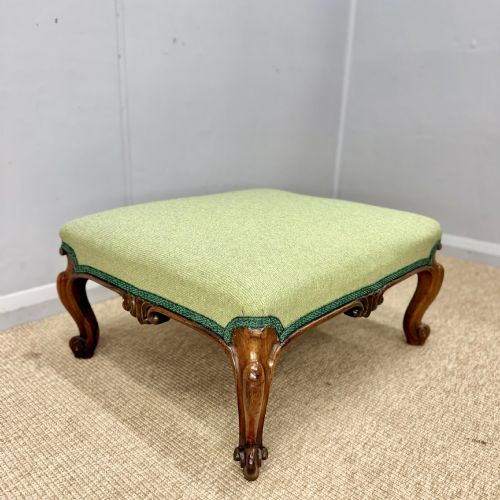
A rococo revival ottoman takes the form of a low stool, footstool, or centre stool designed during the Victorian period. These pieces originate mainly from the nineteenth century, drawing heavily on Louis XV style aesthetics.
Most examples found here appear in walnut, mahogany, or rosewood frames fitted with cabriole legs. They serve as fireside accessories, dressing stools, or freestanding salon seating.
Makers of this era favoured generous proportions and carved wooden frames. The typical piece combines robust timber structures with textile upholstery, often needlepoint or velvet.

Materials and construction
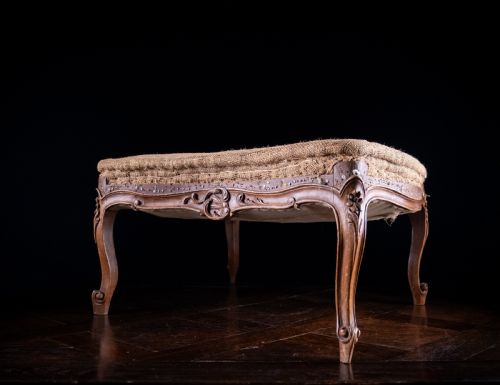
Carpenters shaped dense hardwoods like walnut, mahogany, and rosewood into flowing cabriole legs and scrolled frames. These timbers provided the structural strength required for heavily carved ornamentation.
Upholstery techniques involved textiles such as wool, velvet, and intricate needlepoint stretched over padded foundations. Brass details sometimes appeared in supporting elements or hardware.
One listed piece comes equipped with a rocking action, ensuring eighteenth-century French style could also accommodate nineteenth-century fidgeting.
Judging the execution
The distinction between ordinary and superior pieces rests on the depth and crispness of the timber carving. Master craftsmen created fluid, asymmetrical curves in walnut and rosewood that looked organic rather than stiff.
Frame integrity and the selection of timber grain dictate the upper tier of the range. Heavier, larger scale stools executed in finely figured mahogany or walnut represent the more ambitious workshop output.
The Rococo Revival Ottoman Glossary
- Cabriole leg
- A furniture leg that bends outward in a convex curve and tapers inward in a concave curve, ending in a pad or scroll foot. This shape is a defining characteristic of mid-nineteenth century revival seating.
- Centre stool
- A large freestanding stool designed to be viewed from all sides rather than pushed against a wall. These pieces often anchor the middle of a Victorian salon or drawing room.
- Needlepoint
- Hand-stitched canvas embroidery utilising wool or silk yarn to create dense geometric or floral patterns. It frequently covers the top surface of nineteenth-century fireside stools.
- Louis XV style
- A decorative design movement characterised by asymmetrical scrolls, naturalistic foliage, and C-scroll motifs. Nineteenth-century cabinet makers drew heavily on this French aesthetic for their revival pieces.
Rococo Revival Ottoman: Frequently Asked Questions
How were these stools used?
Nineteenth-century households placed these low seats by the fireside, in dressing rooms, or as freestanding centre pieces in the salon.
They functioned interchangeably as footrests, gout stools, or extra seating for guests during gatherings.
How do I date a piece?
Look to the primary timber, the style of the carving, and the turning of the cabriole legs to determine the era.
Victorian walnut and rosewood examples from the mid-nineteenth century display characteristic revival motifs that distinguish them from later reproductions.
Can I live with original upholstery?
Original needlepoint or textile covers carry the genuine patina of use, though many surviving pieces have undergone reupholstery over time.
Buyers often balance the historic value of surviving fabric against the practical need for sturdy, clean seating surfaces.
Are these pieces strictly English?
While many listings point to English workshops and domestic Victorian parlours, the design vocabulary is explicitly French in origin.
Cabinet makers across Britain adapted Louis XV aesthetics to suit local tastes using native and imported hardwoods.