



Antique Paraffin Desk Lamp
An antique paraffin desk lamp brings heavy brass, coloured glass and steady Victorian weight to a modern workspace.
Antique Paraffin Desk Lamp
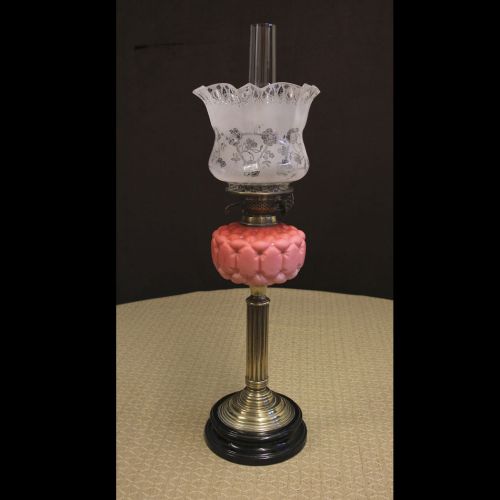
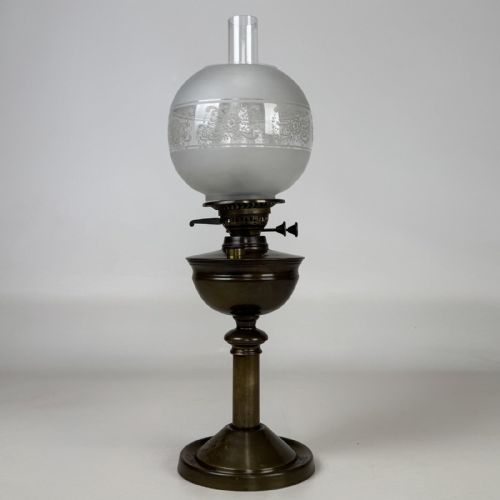
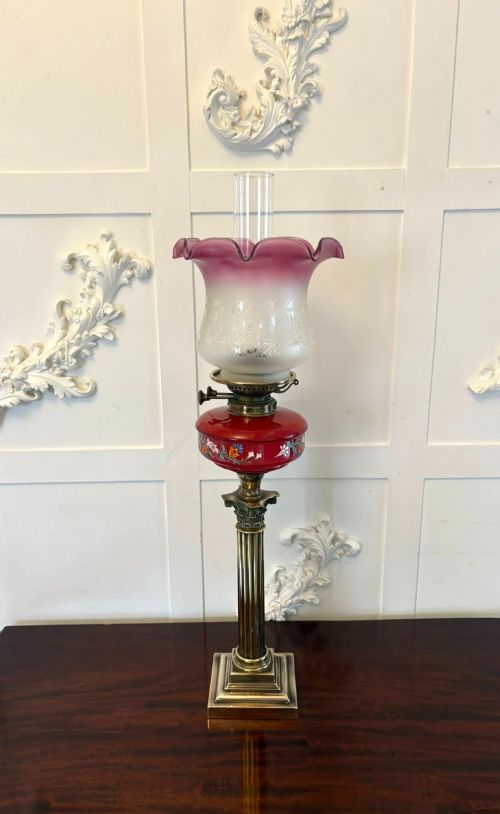
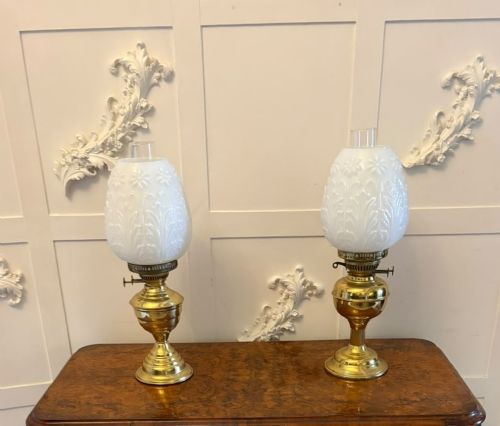
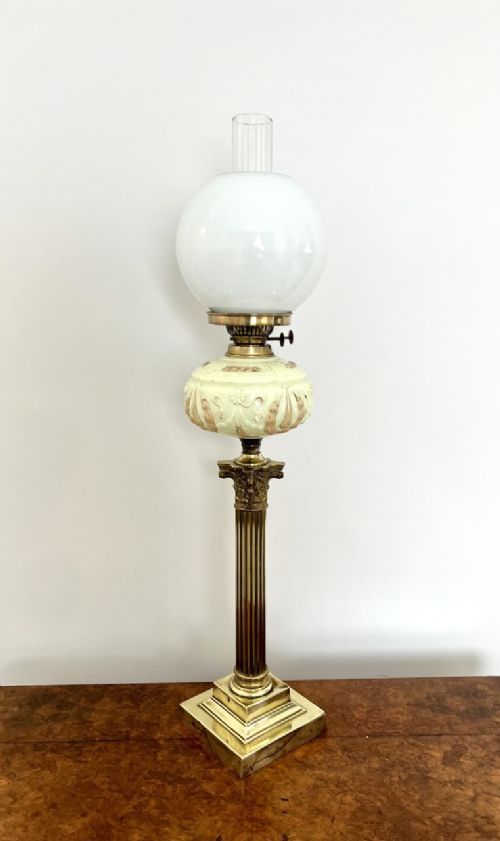
An antique paraffin desk lamp is a functional lighting piece adapted from nineteenth and early twentieth century oil lamps, built to sit on a desk or table. When you search for this phrase, you find heavy metal standards paired with glass fonts and matching shades, designed to burn liquid fuel before later conversions to electricity. The pieces available span the Victorian and Edwardian eras, running from simple brass columns to elaborate ceramic and bronze forms.
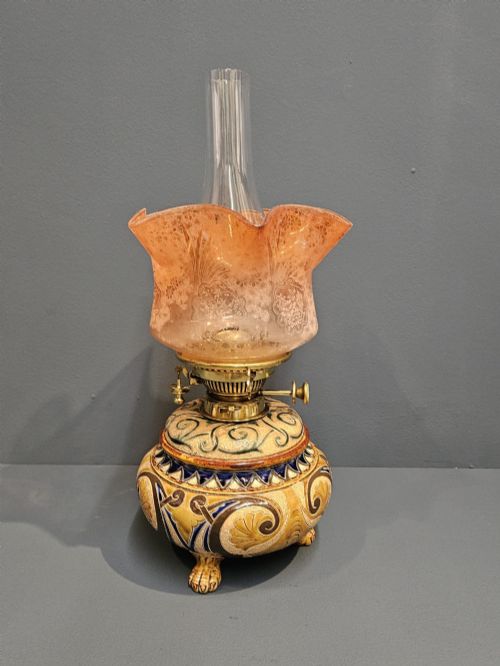
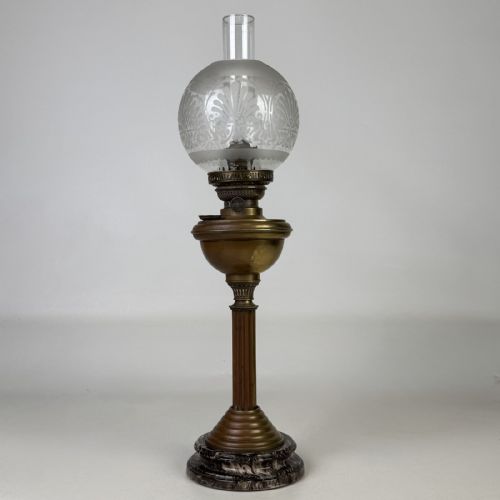
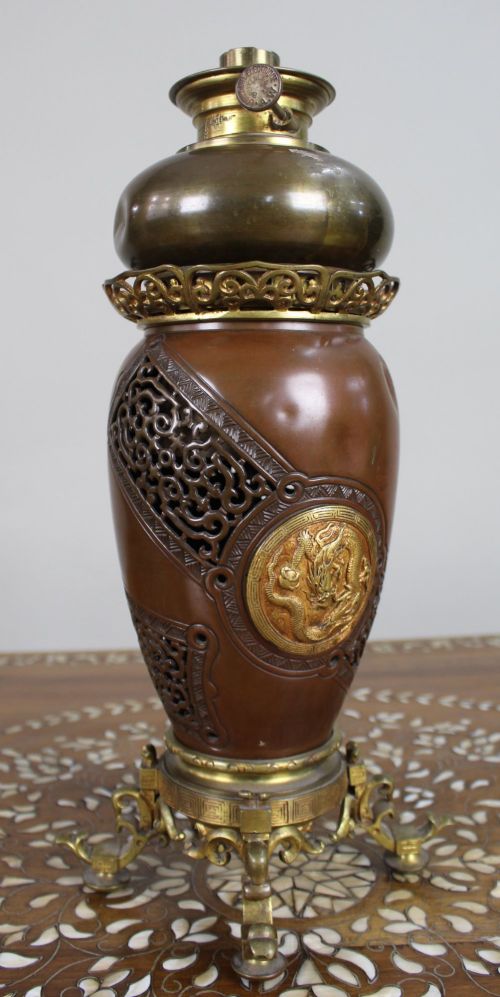
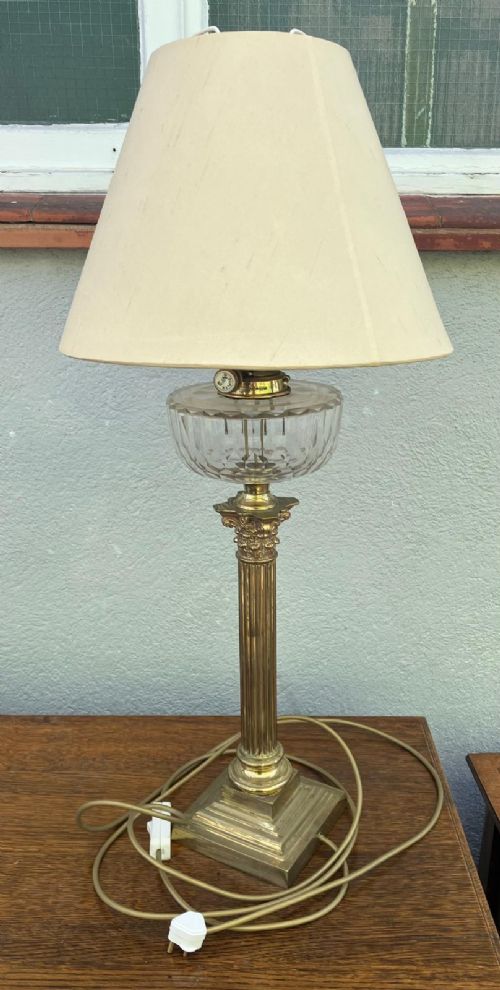
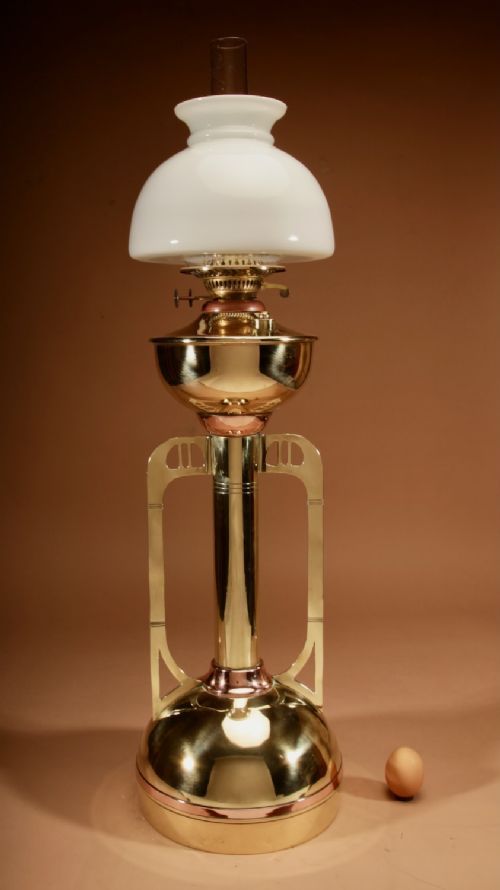
Most examples you meet on this page rely on brass bases paired with glass or ceramic fonts, frequently topped with frosted, opaline or cut glass shades. You will encounter classical architectural motifs like Corinthian columns alongside Japanese Meiji bronzes and Secessionist copper designs. While many retain their original burners by makers such as Wild and Wessel, a significant proportion arrive converted to modern electricity for safer daily use.
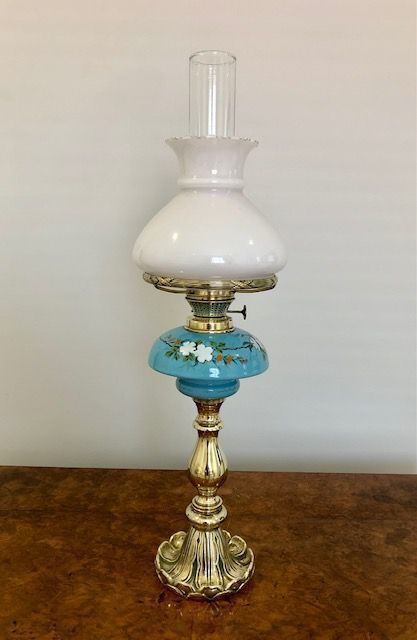
The regional variety stretches from English domestic brassware to French chateau metalwork and German workshop production. You see straightforward utilitarian table lamps sitting alongside decorative showpieces featuring hand-painted details or coloured glass globes. Each piece reflects the lighting technology of its decade, shifting from open wick combustion to sophisticated burner mechanisms.
Materials and making
Makers constructed these lamps primarily from cast and spun brass, copper, and bronze, often mounting them on weighted black glass or ceramic bases to ensure stability. Metal components were turned on lathes, chased by hand, or cast in sand moulds to achieve crisp fluting and classical column details. Repoussé work and applied metal ornaments added texture to French and Arts and Crafts examples.
Font and shade production relied heavily on skilled glassblowing and pressing techniques, yielding clear crystal, opaline glass, and vibrant cranberry or vaseline hues. Glass shades were frequently acid-etched, frosted, or hand-painted with floral motifs to diffuse the bright glare of the flame. Ceramic elements, including Doulton Lambeth salt-glazed stoneware, were thrown and fired separately before being mounted into metal collars.
Antique Paraffin Desk Lamp Retail Price Guide 2026
Typical asking prices for paraffin desk lamp among the pieces listed under this phrase on Sellingantiques today, from the lower quarter to the upper quarter. They describe what is for sale here now, not the wider market.
Listings feature periods spanning from the mid-nineteenth century Victorian era through Edwardian designs up to nineteen ten, utilising brass, bronze, copper, and various glass types.
Distinctions in quality
Quality reveals itself in the heft of the metal casting and the crispness of architectural details like fluted columns and acanthus capitals. Finer pieces employ heavy gauge brass and thick, resonant cut glass or flawless opaline fonts rather than thin, pressed sheet metal and lightweight components. The integration between metal collars and glass reservoirs demonstrates the precision of the original assembly.
The artistic ambition of the design sets superior examples apart from standard domestic lighting. Master workshops utilised specialised techniques such as complex patination on Japanese bronze or intricate copper repoussé work, paired with signed burner mechanisms like Vulcan or Wild and Wessel. The survival of matching original glass shades or specialised vaseline glass globes elevates the integrity of the whole object.
Doulton Lambeth·Gustave Serrurier Bovy·Wild and Wessel·Benson
The Antique Paraffin Desk Lamp Glossary
- Font
- The oil reservoir of the lamp, typically formed from coloured, cut, or opaline glass, or glazed ceramic. It sits atop the main column to hold the liquid fuel.
- Burner
- The mechanical assembly mounted atop the font that regulates the wick and air supply. Named makers such as Wild and Wessel often stamped their components.
- Opaline glass
- An opaque, milky white glass popular in Edwardian shades for diffusing light softly. It provides a striking contrast against polished brass columns.
- Vaseline glass
- A transparent yellow-green glass containing uranium dioxide that glows under ultraviolet light. It appears in high-end Edwardian lamp shades.
Antique Paraffin Desk Lamp: Frequently Asked Questions
Can I still burn paraffin in these lamps?
Many lamps retain their original burners and fonts, but most dealers and collectors recommend keeping them unlit or professionally tested for safety.
Because numerous pieces have been cleanly converted to electricity for modern interiors, burning paraffin requires careful inspection of the wick mechanism and seals.
How do I clean a brass lamp base?
Polishing brass depends entirely on whether you prefer an aged dark patina or a bright reflective shine. Use a soft cloth and a gentle, non-abrasive metal polish to remove tarnish without scrubbing away fine cast details.
Avoid getting chemical polishes onto glass fonts or ceramic sections, as they can stain or scratch delicate painted surfaces.
How do I date a brass column lamp?
Look closely at the proportions, base weighting materials, and burner stamps to determine the manufacturing decade. Victorian pieces frequently favour heavy neo-classical brass columns, whereas Edwardian examples often introduce softer opaline shades and lighter forms.
Maker stamps or patent numbers marked on the burner knob provide the most reliable chronological clues.