
Antique Paper Holder Stand
An antique paper holder stand organises folios, newspapers, and sheets with timeless utility and undeniable visual presence.
Antique Paper Holder Stand
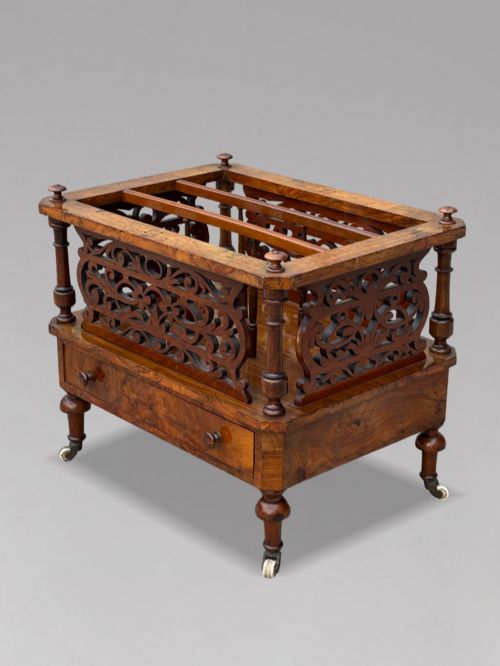
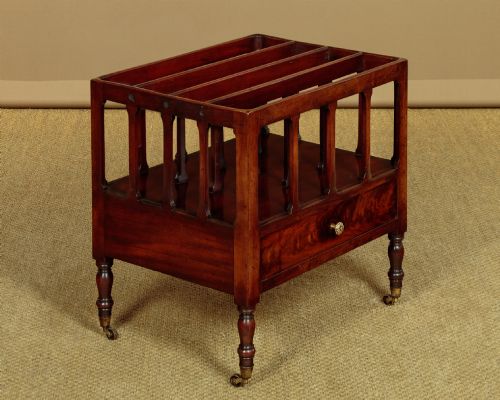
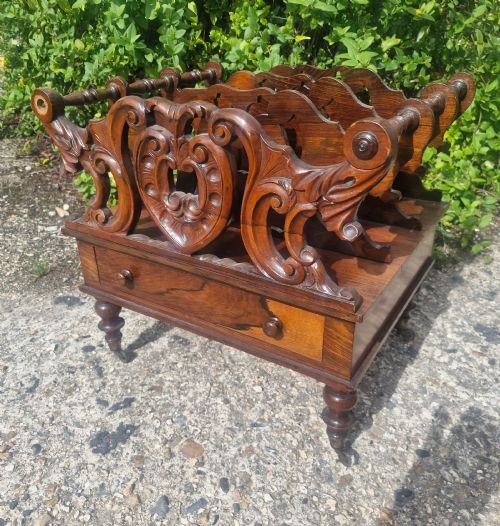
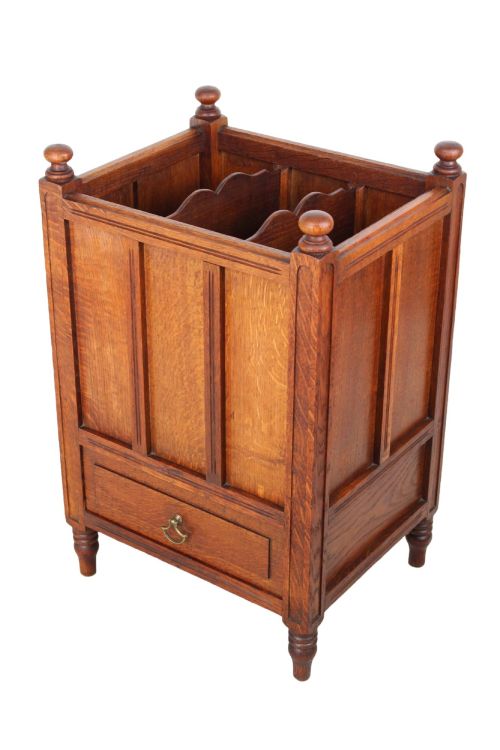
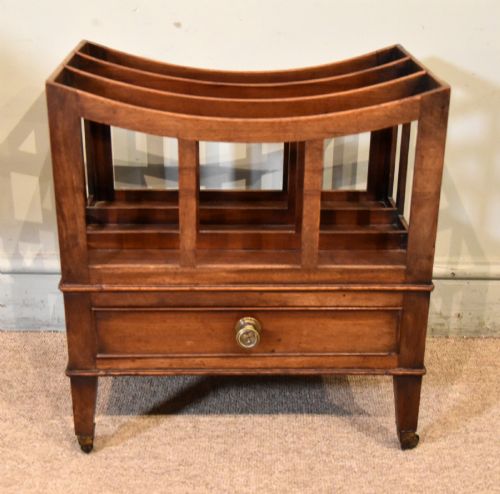
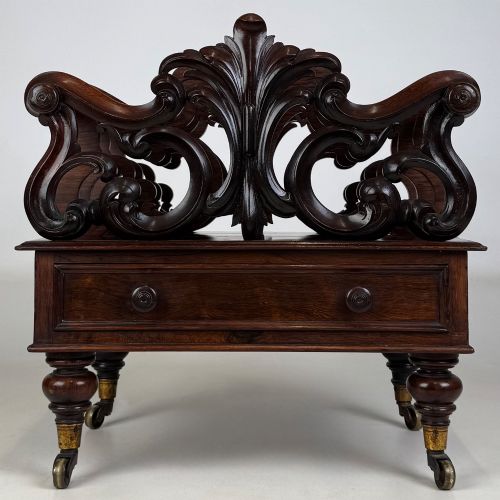
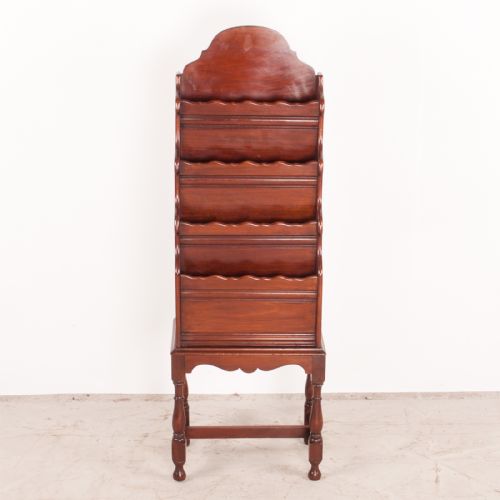
An antique paper holder stand encompasses traditional library and parlour furnishings designed to store periodicals, folios, and sheets. The term covers specific forms including canterburys, magazine racks, and desk accessories.
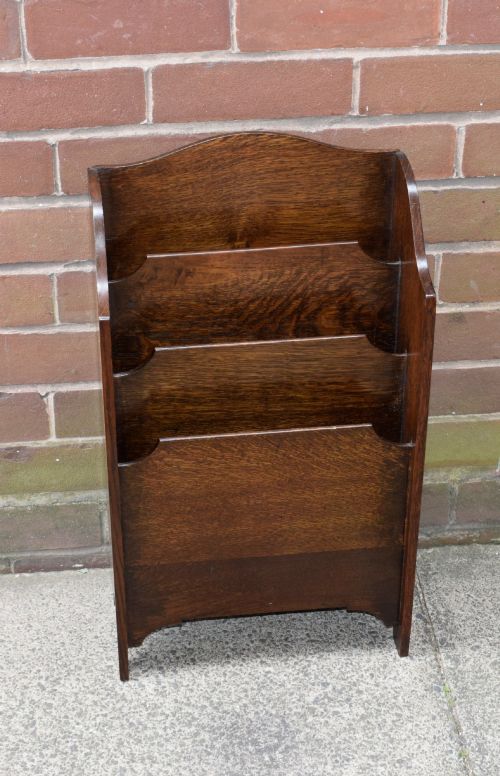
The pieces appearing on this page span the 18th century through to the early 20th century. Examples range from George III mahogany models to Edwardian oak versions and Arts and Crafts metalwork.
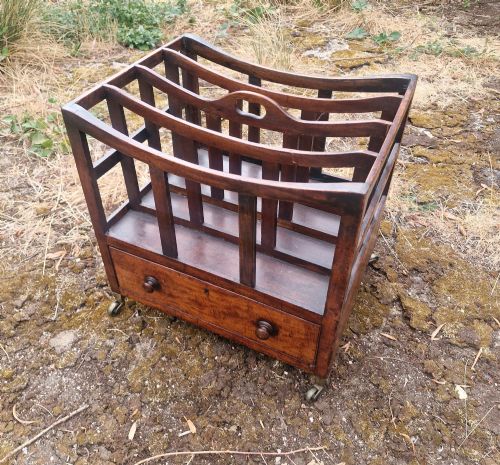
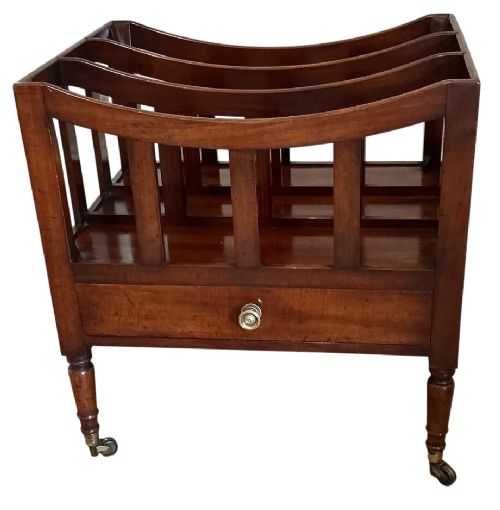
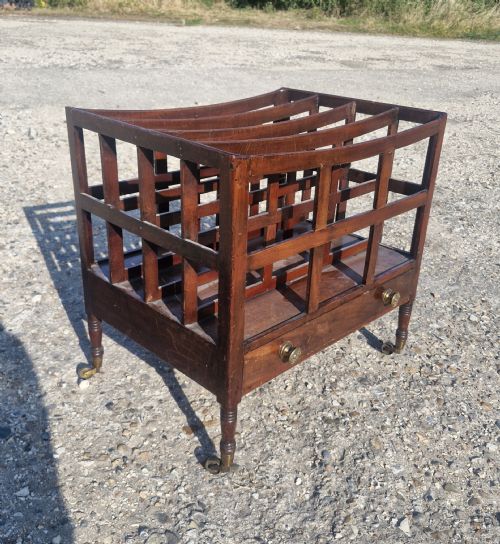
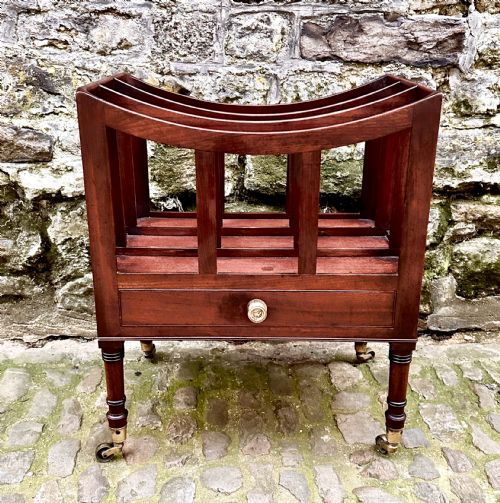
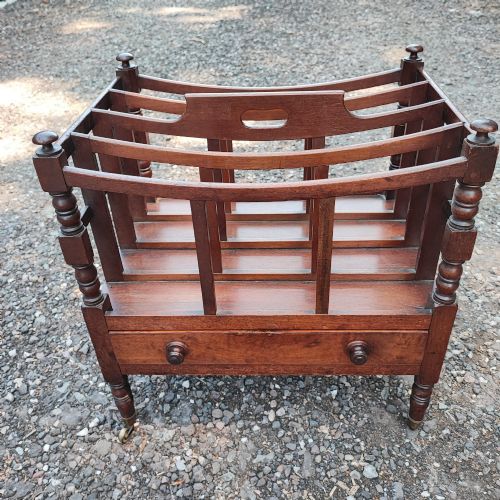
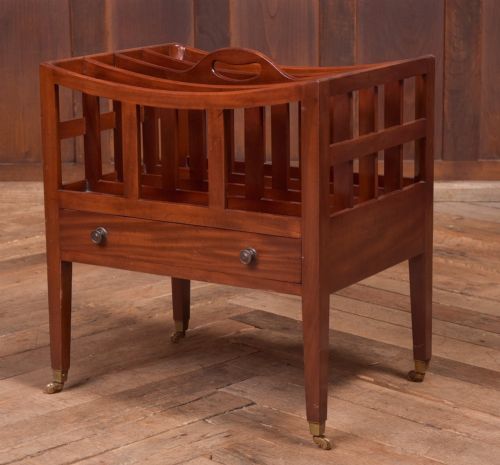
Canterburys represent the most common form encountered here, typically featuring partitioned lower sections and carrying handles. Other functional variants include revolving brass stands and countertop dispensers.
Materials and construction
Cabinetmakers utilised dense hardwoods such as mahogany, rosewood, walnut, and oak to construct sturdy framework and slatted partitions. Finer examples display figured veneers, burr walnut, and carved detailing including Prince of Wales feathers.
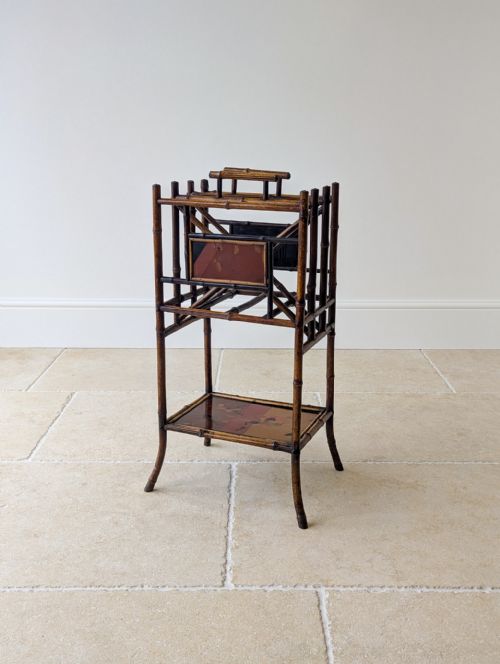
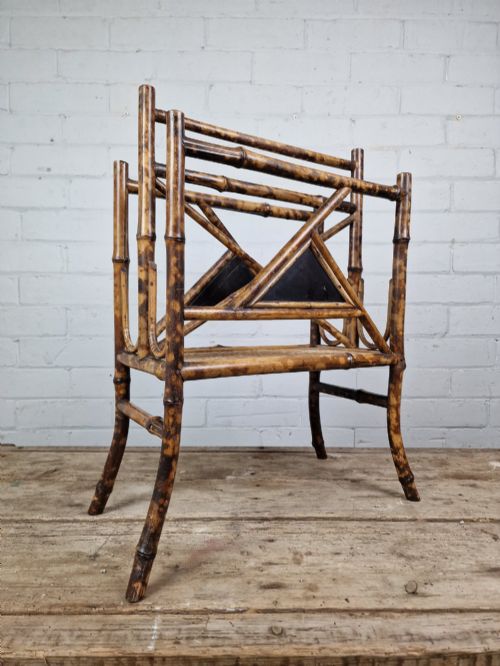
Alternative materials include bamboo, utilised during the Victorian Aesthetic Movement, alongside turned brass and copper. Metal components provide structural support and decorative contrast for specialised desk accessories and racks.
Some Victorian bamboo stands bring a touch of botanical eccentricity straight from the Victorian conservatory into the modern hallway.
Quality variations
The distinction between standard utility items and superior workshop output lies in the selection of timber and the execution of joinery. Figured grain, rich patination, and hand-carved elements elevate certain pieces above plain production models.
Hardware integrity and structural harmony also dictate merit. Finely turned spindles, robust plinth bases, and integrated drawer units demonstrate the original maker's skill and attention to daily utility.
The Antique Paper Holder Stand Glossary
- Canterbury
- A low stand with partitioned sections designed to hold sheet music, newspapers, or periodicals. Originating in the 18th century, these pieces frequently incorporate castors and a low drawer.
- Folio stand
- A piece of furniture intended for holding large books, maps, or unbound paper sheets. Grand scale examples often feature adjustable ledges.
- Aesthetic Movement
- A late 19th-century design style that emphasised visual beauty over narrative meaning. Pieces from this movement often utilise bamboo or exotic motifs.
- Veneer
- A thin layer of figured wood applied to a secondary timber base to create decorative surfaces. Burr walnut and mahogany veneers require precise cabinetmaking techniques.
Antique Paper Holder Stand: Frequently Asked Questions
What is an antique paper holder stand used for?
These stands serve to organise loose papers, newspapers, and periodicals within a study, library, or drawing room. Historically, they kept daily reading materials tidy and close to seating areas.
Today, they function practically for modern magazines and journals while adding period character to an interior space.
How do I identify a Regency period stand?
Regency pieces often display classical proportions, dark mahogany or rosewood timbers, and refined brass mounts. Look for precise turning and boat-shaped profiles.
Maker attributions and characteristic design motifs from the early 19th century further confirm this period.
Are bamboo stands stable?
Victorian bamboo stands utilise tightly bound joints and sturdy internal framing to support reading materials. They were popular during the Aesthetic Movement for lighter domestic settings.
Gentle placement prevents undue strain on the natural cane structure.
What wood types are most common?
Mahogany, walnut, and rosewood appear frequently across 18th and 19th-century examples. Oak and fruitwood also feature in regional or later designs.
Finer versions often showcase figured veneers and burr grain patterns.