
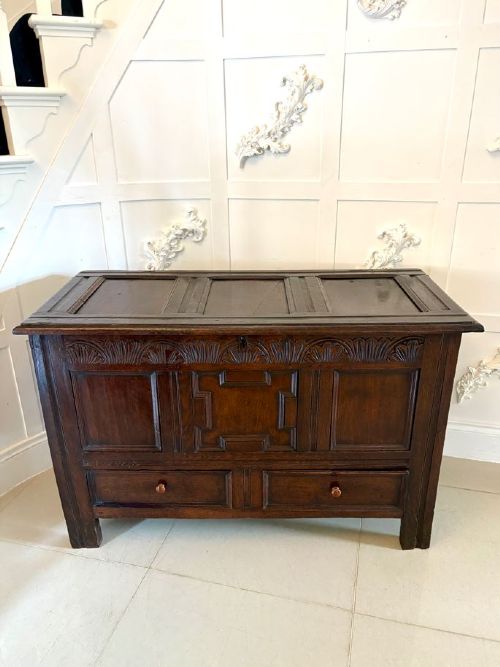
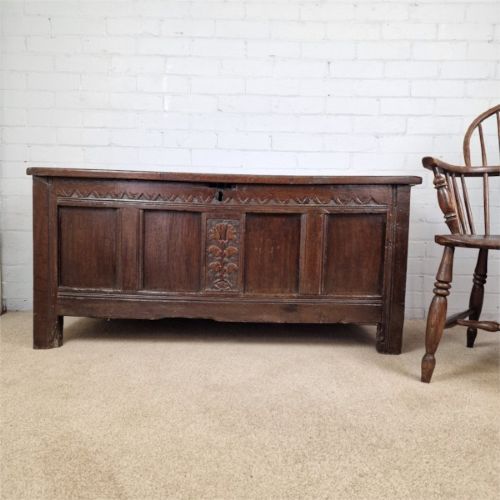
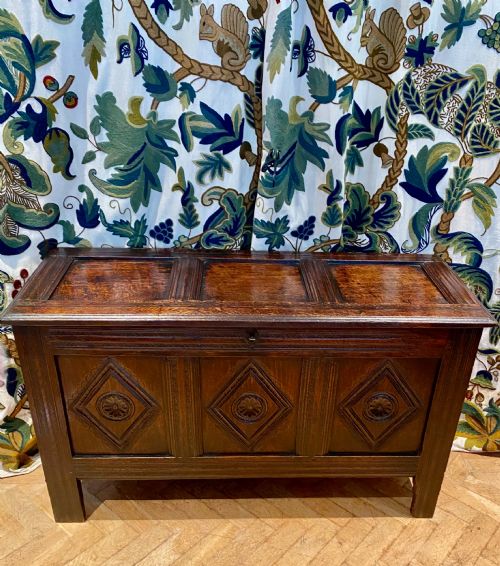
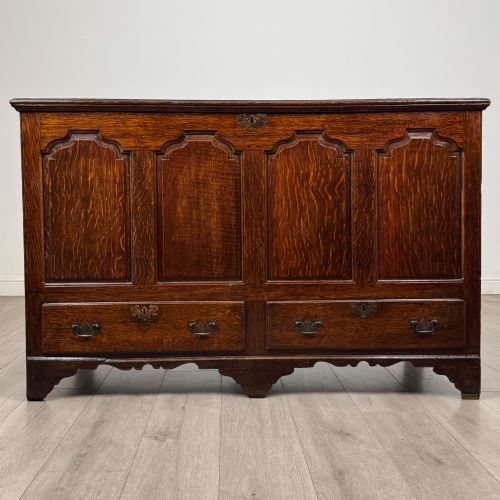
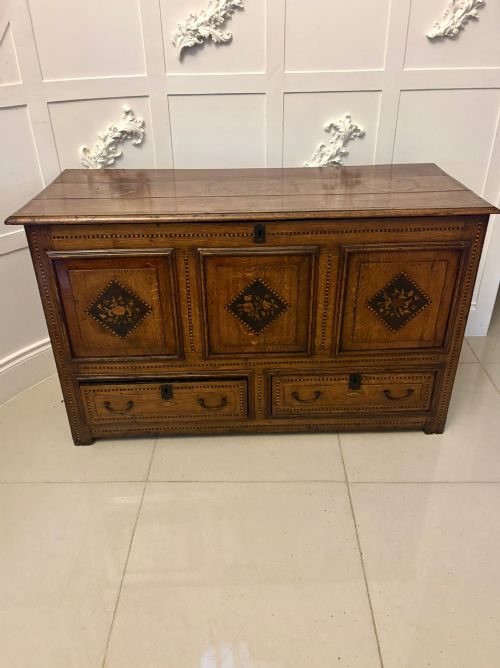
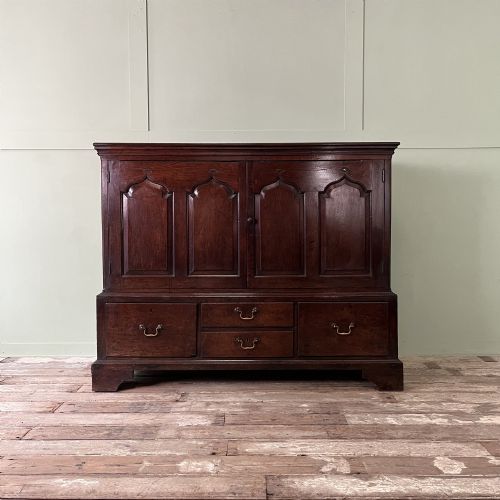

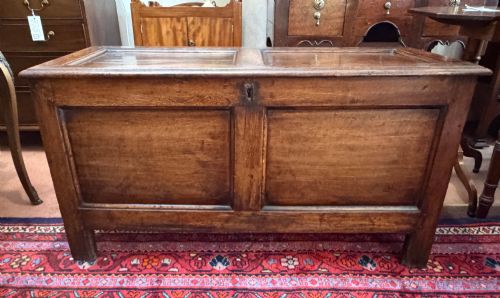
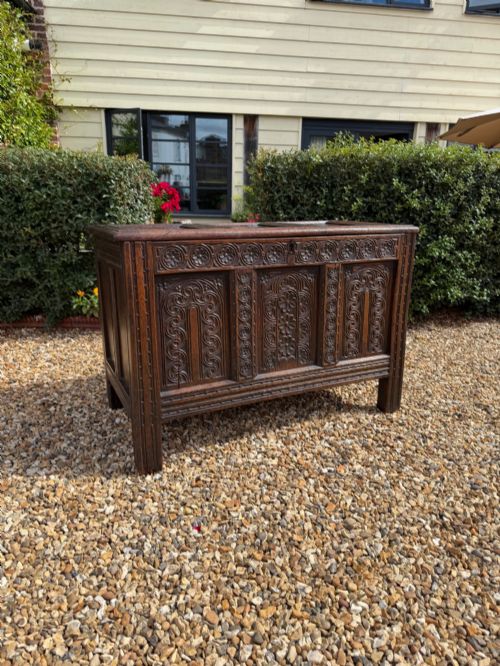
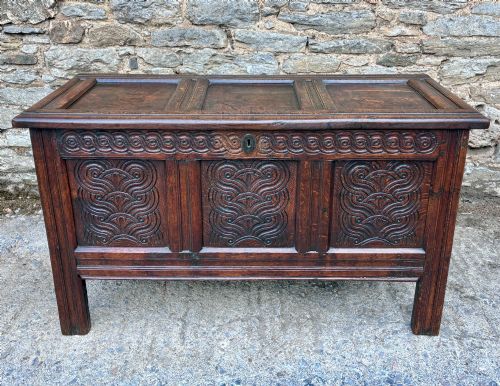
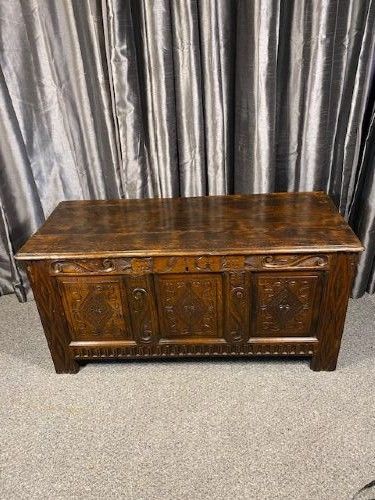
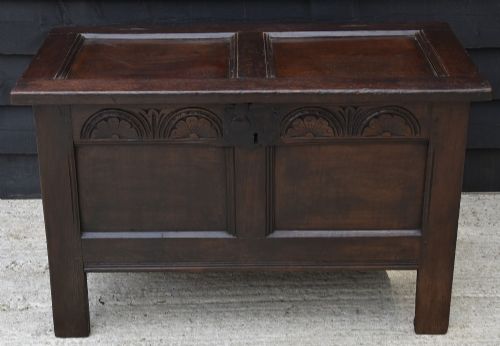
Antique Panelled Mule Chest
An antique panelled mule chest offers generous storage with the addition of bottom drawers, bridging the gap between a standard box and a full cabinet.
Antique Panelled Mule Chest
An antique panelled mule chest combines a traditional lidded storage compartment with one or more lower drawers. This hybrid form emerged to provide easier access to linens and garments without disturbing the contents piled on top.
The pieces on this page primarily date from the 17th century through to the Georgian period, with later revival examples also appearing. Oak forms the backbone of these listings, often accompanied by pine and occasional decorative timber panels.
Regional variations such as the Welsh coffer bach or specific regional styles like Dorset and Carmarthenshire pieces reflect local cabinet-making traditions. These domestic storage items served generations of households before entering the antique market.
How they were made
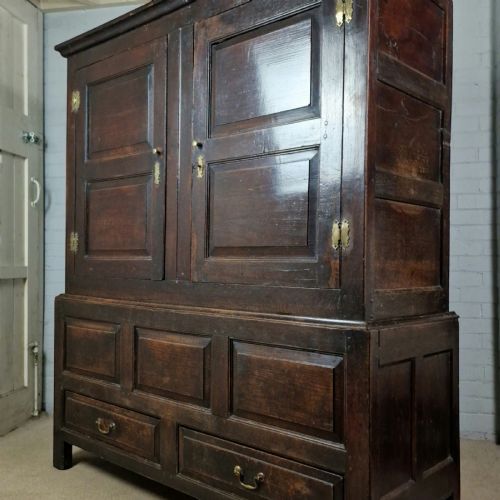
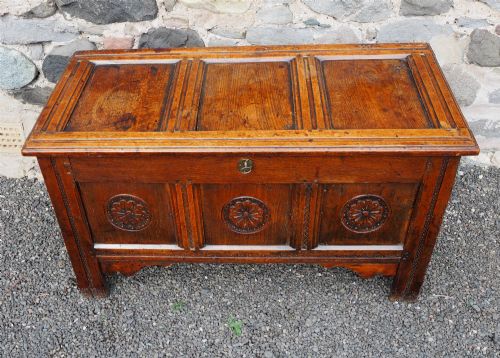
Joiners built these chests using sturdy oak frameworks assembled with mortise and tenon joints, holding panelled sections in place to accommodate wood movement. This frame and panel construction prevented warping as the timber aged in damp or heated rooms.
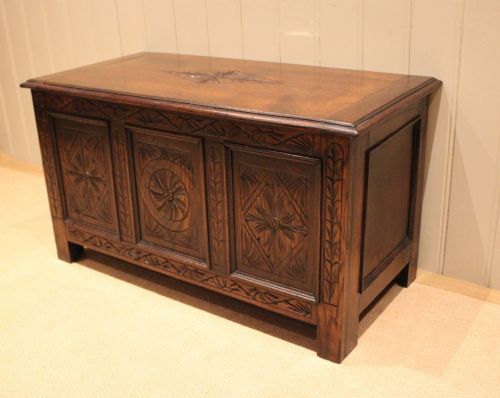
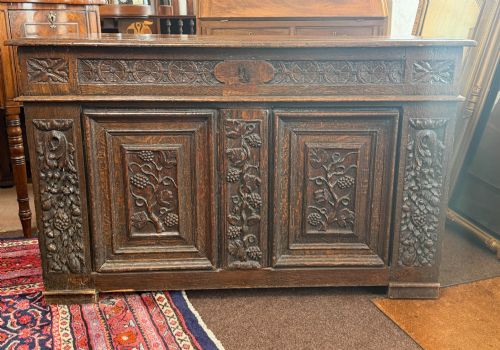
Makers integrated brass and iron hardware, including hinges, latches and drawer pulls, to secure the heavy lids and working drawers. Decorative enhancement came through carved motifs, wood inlay, marquetry inlay, and ebonised wood details applied to the primary oak structure.
The inventory spans the 17th century, the Georgian period, and 20th century revival interpretations.
What varies in quality
The standard of craftsmanship shows in the depth and precision of any carved detailing and the tightness of the joinery. Superior examples maintain their original panel work, drawer configurations and timber integrity without excessive replacement parts.
Proportion and scale dictate much of the visual appeal, ranging from small Welsh coffer bach formats to large housekeepers cupboards and mule chests. The choice of secondary woods like pine or feature timbers like burr elm alters the character and visual depth of each piece.
The Antique Panelled Mule Chest Glossary
- Mule chest
- A storage chest fitted with one or more drawers beneath the main lidded compartment. It represents a transitional step toward the chest of drawers.
- Coffer
- A heavy wooden box used historically for storing valuables, documents or textiles. Many examples feature panelled construction and hinged lids.
- Marquetry
- The art of applying decorative veneer pieces to a structure to form geometric or pictorial designs. It appears on select refined storage pieces.
- Linenfold
- A style of wood carving that imitates folded linen cloth. This motif is frequently found on panels of earlier 17th century pieces.
- Coffer bach
- A small Welsh tabletop or miniature chest used for holding valuables or documents. The term translates from Welsh as small coffer.
Antique Panelled Mule Chest: Frequently Asked Questions
What is a mule chest?
A mule chest is a traditional storage box that incorporates one or more drawers beneath the primary upper compartment. This design allowed users to retrieve items from the drawers without having to clear objects off the top of the lid.
Most examples seen here are constructed from oak and date from the 17th or 18th centuries. They served as essential household furniture for storing garments, blankets and linens before fitted wardrobes became common.
How do I date an oak chest?
Dating relies on observing construction methods, timber characteristics and stylistic motifs present on the piece. 17th century examples typically display simpler panel configurations and hand-carved detailing, while Georgian pieces often introduce lower drawer banks and refined mouldings.
Later revival items from the early 20th century emulate these older vernacular styles. Examining the backboards, interior drawer construction and hardware helps confirm the period of manufacture.
Where were these chests made?
These storage pieces originated across English and Welsh domestic workshops, reflecting regional cabinet-making preferences. Specific regional variations, such as those from Dorset or Carmarthenshire, indicate distinct local construction methods and design traits.
Smaller regional forms like the Welsh coffer bach highlight localized woodworking traditions. Carpenters utilised local timber supplies, predominantly oak alongside pine and burr elm.
How should I care for old oak?
Keep wooden chests away from direct heat sources and sudden temperature fluctuations to prevent the timber from splitting or warping. Maintaining a stable indoor environment protects the structural integrity of the frame and panel construction.
Apply a traditional beeswax polish occasionally to nourish the surface and preserve the natural sheen of the wood. Avoid modern silicone sprays or harsh chemical cleaners that can damage historic finishes.