

Antique Paneled Chest
An antique paneled chest offers robust domestic storage rooted in centuries of traditional joinery and solid timber construction.
Antique Paneled Chest
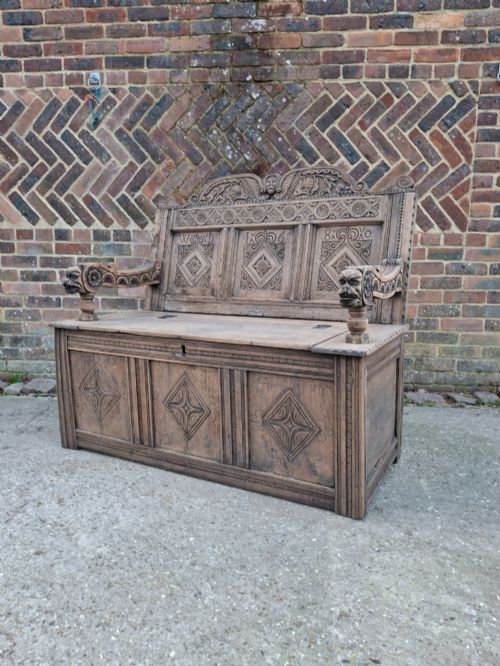
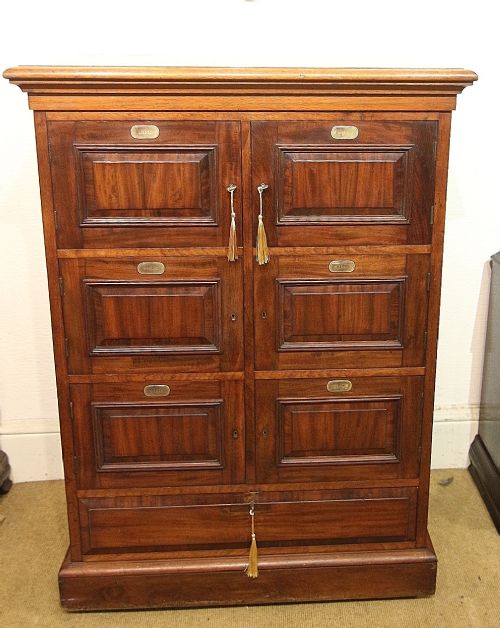
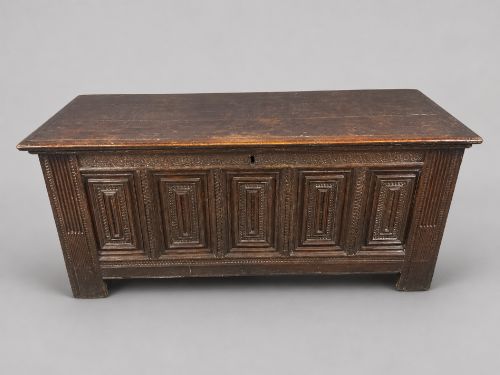
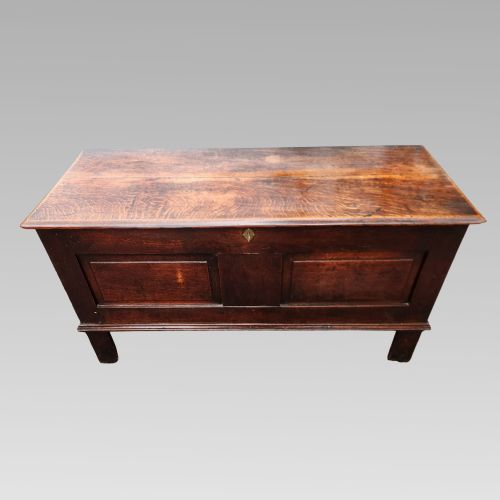
An antique paneled chest appears primarily as a coffer, blanket box, or mule chest designed for household storage. These pieces originate across the seventeenth and eighteenth centuries, alongside later revivals from the Edwardian period and the early twentieth century.
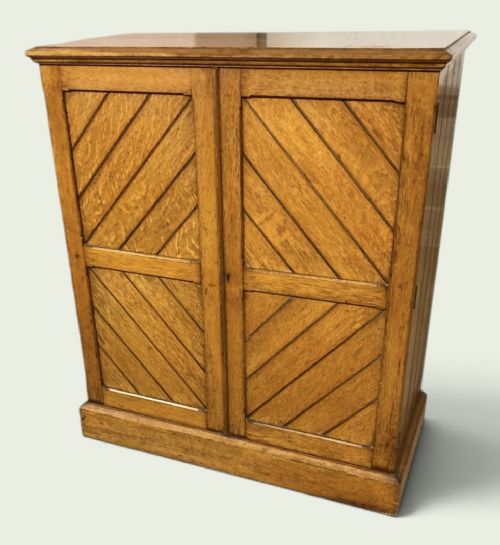
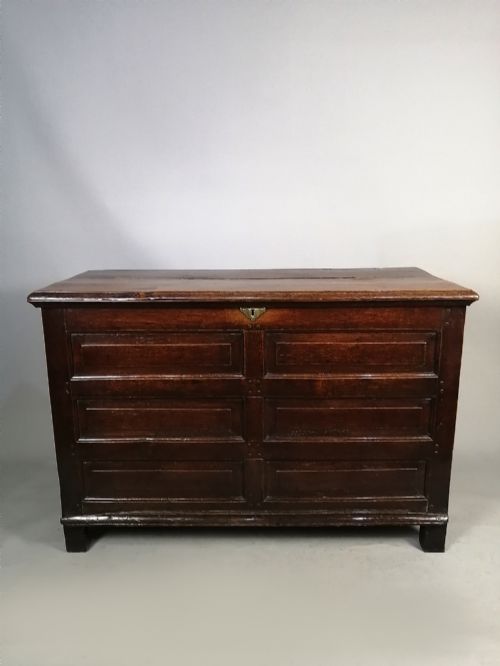
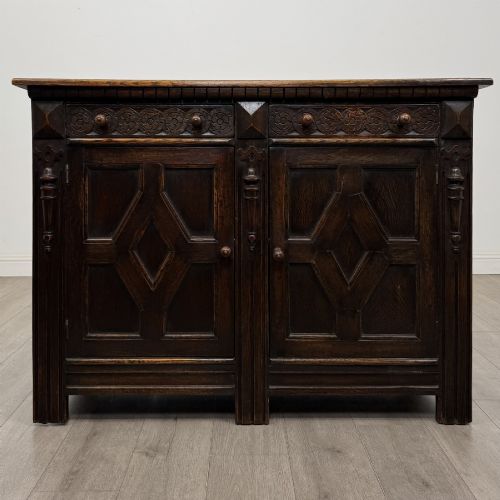
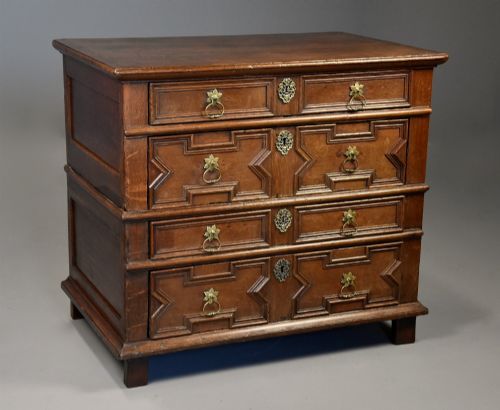
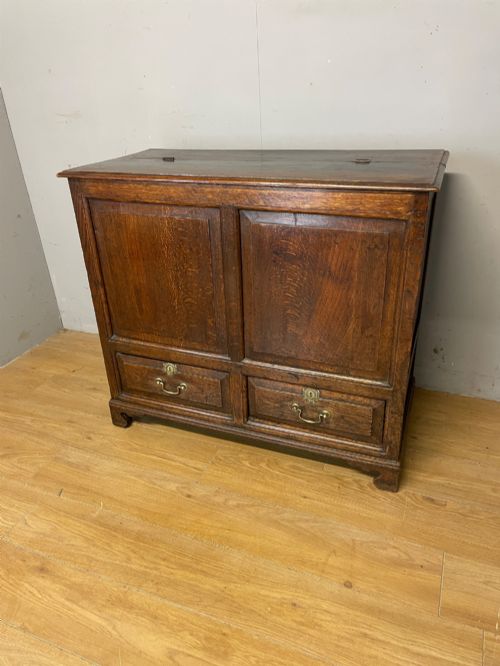
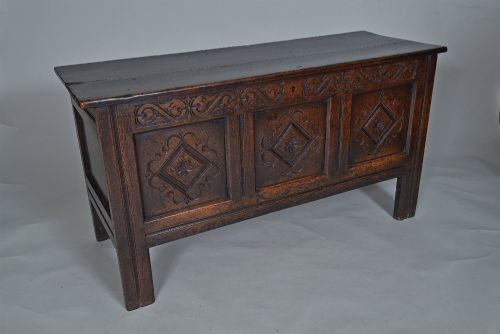
The most common form is the oak coffer, constructed with framed panels set into stiles and rails to accommodate seasonal wood movement. Variants include mule chests fitted with lower drawers, alongside architectural cupboard forms and occasional regional pieces such as the Welsh coffer bach.
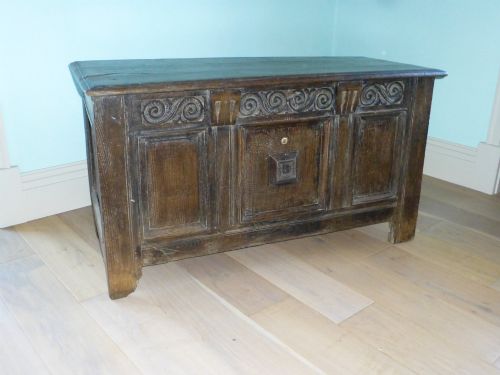
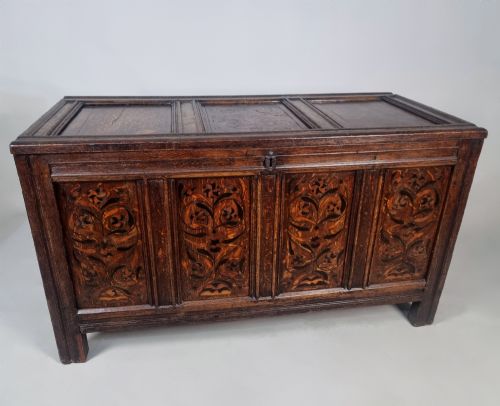
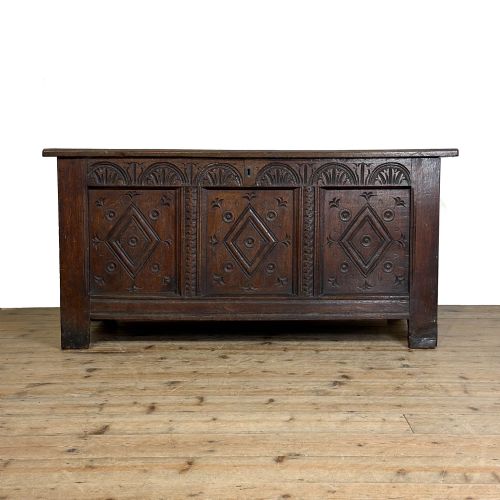
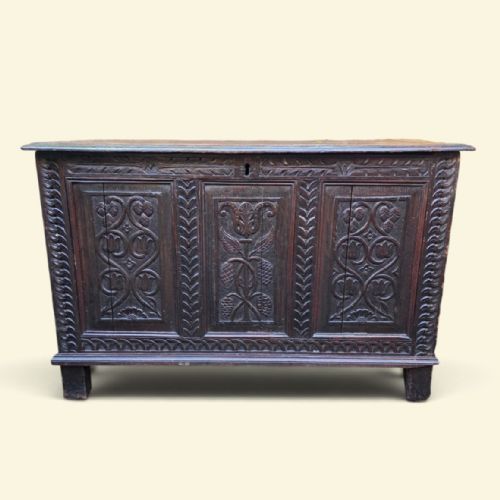
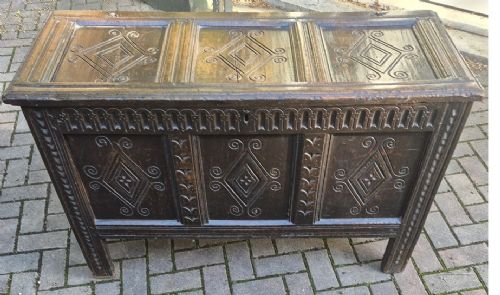
Makers utilised heavy framing techniques to build durable domestic furniture that survived centuries of daily household use. Examples range from plain vernacular boxes to heavily carved Jacobean revival pieces and seventeenth-century joined chests.
Materials and construction
English oak serves as the primary material for the vast majority of these chests, supplemented by occasional instances of walnut, mahogany, pine, and mixed woods. Carpenters employed sturdy frame-and-panel construction to prevent warping, securing joints with wooden pegs rather than modern fixings.
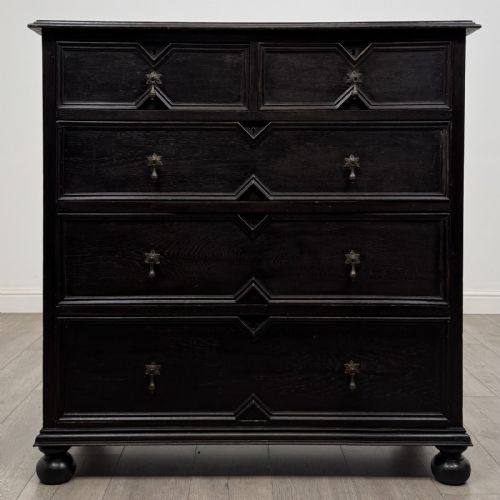
Decoration on these surfaces often includes carved lunette friezes, geometric mouldings, and marquetry inlay work. Iron and brass hardware such as hinges, escutcheons, and latches complete the structural assembly of the boxes and cupboards.
Antique Paneled Chest Retail Price Guide 2026
Typical asking prices for paneled chest among the pieces listed under this phrase on Sellingantiques today, from the lower quarter to the upper quarter. They describe what is for sale here now, not the wider market.
Recorded forms range from simple boarded blanket boxes to complex mule chests fitted with secret drawers and lower storage compartments.
Factors of distinction
Quality rests upon the crispness of the timber carving, the integrity of the original frame-and-panel joints, and the preservation of surface patination. Pieces retaining their initial boarded lids, floorboards, and period metalwork command greater appreciation among collectors.
Proportion and scale dictate the visual presence of each box, with smaller proportions and dated inscriptions marking exceptional examples. Heavy alterations, replaced panels, or stripped surfaces diminish the historical integrity of the piece.
The Antique Paneled Chest Glossary
- Coffer
- A traditional storage chest with a hinged lid, typically constructed from solid oak using panel-and-frame techniques. These boxes served as versatile furniture for linen and valuables.
- Mule chest
- A storage chest featuring one or more drawers built beneath the main internal compartment. This form bridges the traditional coffer and the modern chest of drawers.
- Stile and rail
- The vertical framing members and horizontal cross-pieces that hold a central wooden panel in place. This method accommodates natural wood expansion without splitting.
- Lunette frieze
- A decorative carved band of semi-circular or crescent motifs running along the upper rail of a chest. It frequently appears on seventeenth-century and revival pieces.
- Coffer bach
- A small Welsh oak chest designed to hold personal treasures or documents. The term translates directly from Welsh as little box.
Antique Paneled Chest: Frequently Asked Questions
What is an antique paneled chest used for?
These pieces functioned historically for storing household textiles, garments, blankets, and dry goods securely within the home. Today they provide practical storage while serving as functional tables or focal points in hallways and living spaces.
Their robust timber construction allows them to hold substantial weight on top while keeping contents enclosed safely inside.
How do I care for an oak chest?
Protect the timber by keeping the piece away from direct heat sources and sudden humidity changes that cause wood to split. Regular dusting with a dry lint-free cloth preserves the natural finish without requiring heavy polishes.
Avoid applying modern synthetic waxes that build up a sticky residue over the historic surface patination.
How can I tell a seventeenth-century chest apart from a later revival?
Seventeenth-century originals display hand-split timber surfaces, pegged mortise and tenon joints, and authentic wear patterns accumulated over centuries of use. Tool marks left by pit saws and primitive hand planes differ markedly from uniform twentieth-century machine milling.
Revival pieces from the Edwardian era or 1930 often feature cleaner interior surfaces and standardised hardware components.
What is a mule chest?
A mule chest combines the top-opening compartment of a standard coffer with one or more lower pull-out drawers. This transitional form emerged to provide easier access to stored clothing without requiring items on top to be moved.
They appear frequently in eighteenth-century vernacular furniture traditions across Britain.