



Antique Painted Tin Pitcher
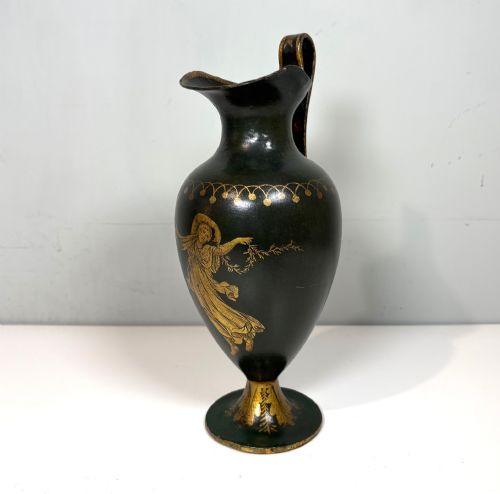
An antique painted tin pitcher brings domestic history to interiors, offering painted tin-glazed earthenware and toleware vessels shaped for service.
Antique Painted Tin Pitcher
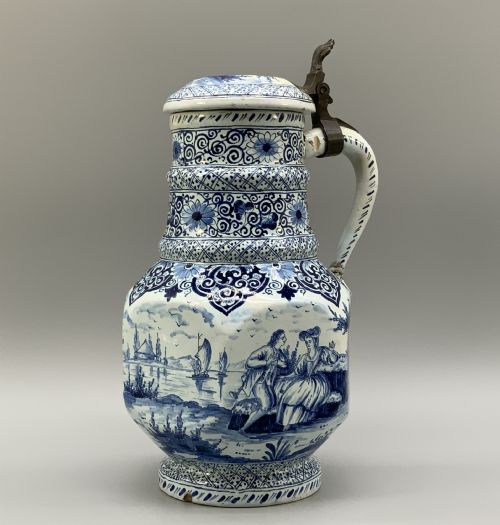
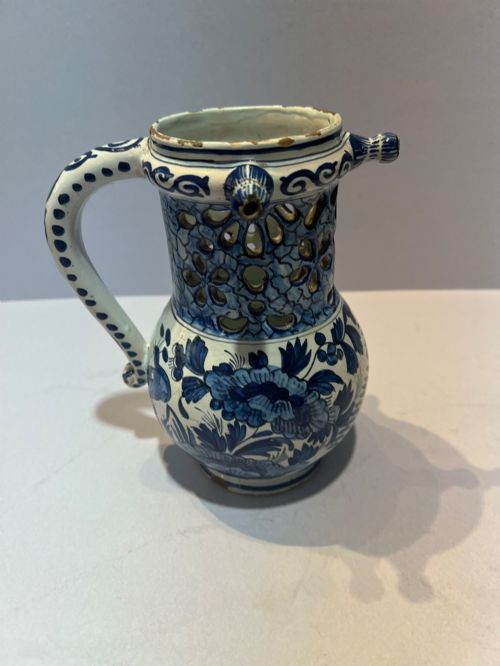
An antique painted tin pitcher encompasses utilitarian vessels and decorative jugs constructed from tin-glazed earthenware and painted toleware. Buyers searching this phrase encounter forms ranging from 17th-century Dutch Delftware pitchers to 19th-century Victorian toleware hot water cans and Regency ewers.
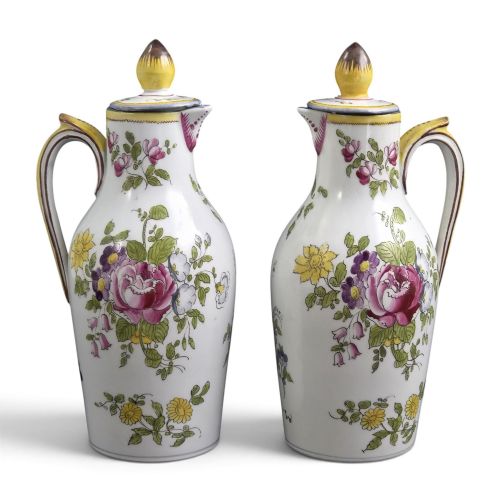
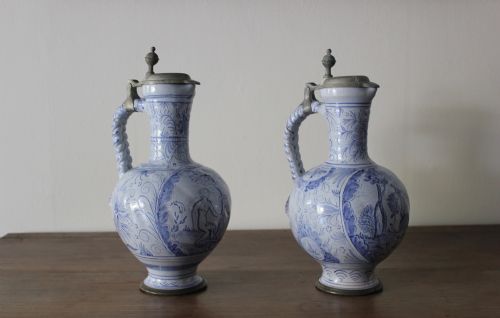
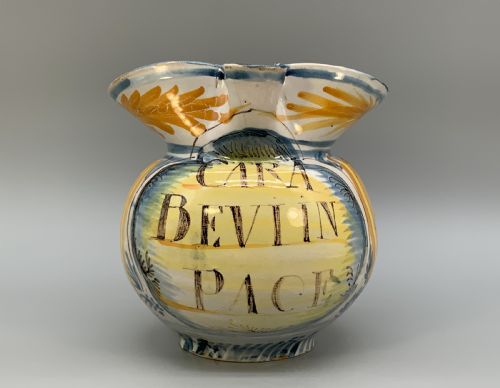
The selection on this page relies heavily on Dutch Delftware, English delftware, and French toleware, spanning the seventeenth through the nineteenth centuries. Standard forms include pharmacy jugs, puzzle jugs, lidded vessels with pewter mounts, and matched pairs decorated in blue and white or polychrome palettes.
Makers and regional potteries such as Veuve Perrin Marseille represented here produce tin-glazed ceramics that align closely with traditional European styles. These objects serve as functional tableware or decorative display pieces, reflecting historical ceramic techniques and hand-painted artistry.
What varies in quality
Quality rests in the crispness of the hand-painted brushwork and the preservation of the tin glaze across the body of the vessel. Early examples show finer control in cobalt blue pigments and tin-glazed surfaces compared to later mass-produced variations.
The integrity of metal mounts, such as pewter lids on Dutch jugs, and the stability of painted finishes on toleware hot water cans determine the overall standard. Pieces retaining fresh polychrome or manganese colours demonstrate superior survival through centuries of handling.
Antique Painted Tin Pitcher Retail Price Guide 2026
Typical asking prices for painted tin pitcher among the pieces listed under this phrase on Sellingantiques today, from the lower quarter to the upper quarter. They describe what is for sale here now, not the wider market.
The Antique Painted Tin Pitcher Glossary
- Tin-Glazed Earthenware
- Earthenware pottery coated with a white tin-oxide glaze that creates an opaque surface for painting. This technique forms the basis for delftware and faience production.
- Toleware
- Painted or lacquered metalware, typically tinplate or iron, popular during the Regency and Victorian periods for domestic utensils and hot water cans.
- Delftware
- Tin-glazed earthenware produced in the Netherlands and England, traditionally characterised by blue and white designs inspired by imported porcelain.
- Faience
- European tin-glazed pottery, particularly associated with French and Italian production centres like Marseille. It displays intricate polychrome or monochrome painted decoration.
- Puzzle Jug
- A ceramic vessel with a perforated neck that prevents normal drinking, requiring the user to solve a hidden path of liquid flow through the handle.
Antique Painted Tin Pitcher: Frequently Asked Questions
What is an antique painted tin pitcher?
An antique painted tin pitcher is a ceramic or metal vessel featuring tin glaze or painted finishes, designed for holding liquids in historical households.
These pieces include Dutch delftware jugs, apothecary vessels, and Regency toleware hot water cans produced across several European centuries.
How were these pitchers used historically?
Households utilised these vessels for serving liquids at the table, storing medicinal preparations in pharmacies, or carrying heated water for washing.
Many examples functioned as decorative display items in domestic interiors, combining utility with hand-painted artistic expression.
How do I date an antique painted tin pitcher?
Dating relies on identifying the material, such as tin-glazed earthenware versus painted metal toleware, along with stylistic markers from periods like Dutch Baroque or Victorian.
Examining the characteristics of the glaze, pigment colours like manganese or yellow, and pewter lid mounts helps narrow the era of manufacture.
How should I care for a tin-glazed jug?
Keep these fragile earthenware and painted metal objects away from excessive moisture and harsh cleaning agents to protect the delicate tin glaze and surface pigments.
Display them in stable interior environments where temperature fluctuations remain minimal to preserve the historic paintwork.