
Antique Padlock Bracelet
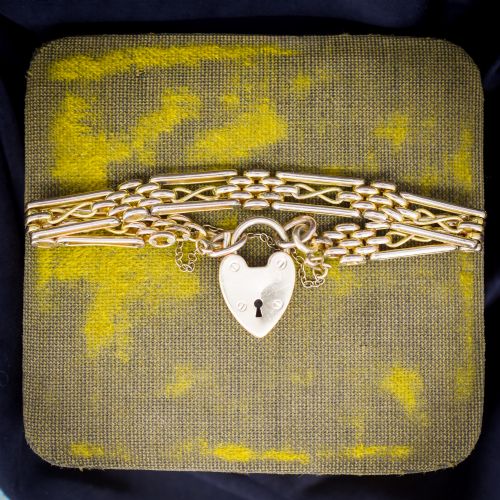
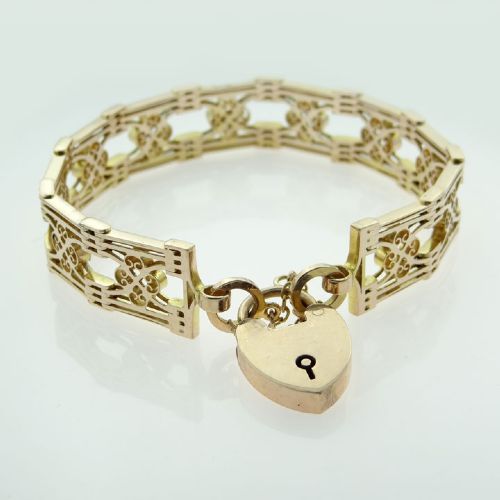
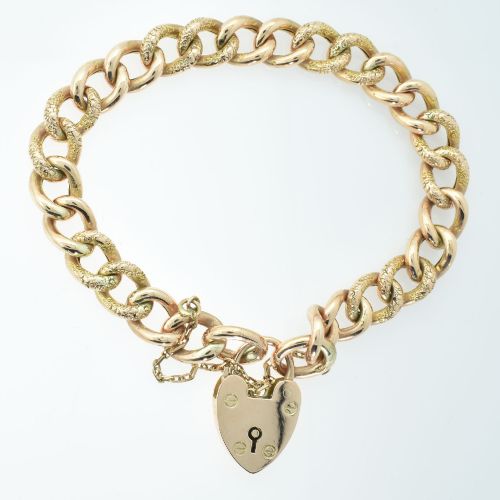
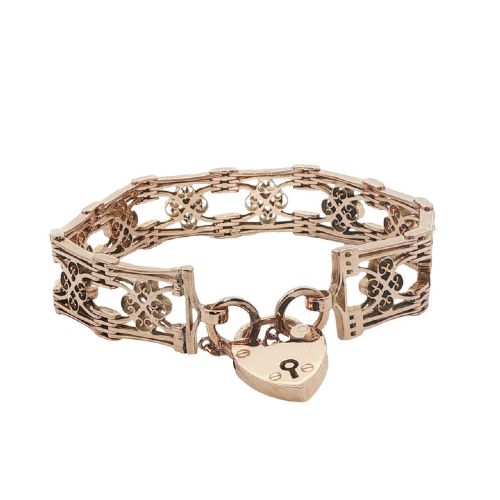
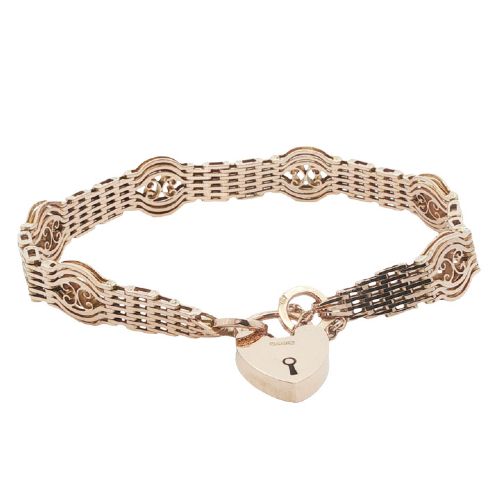
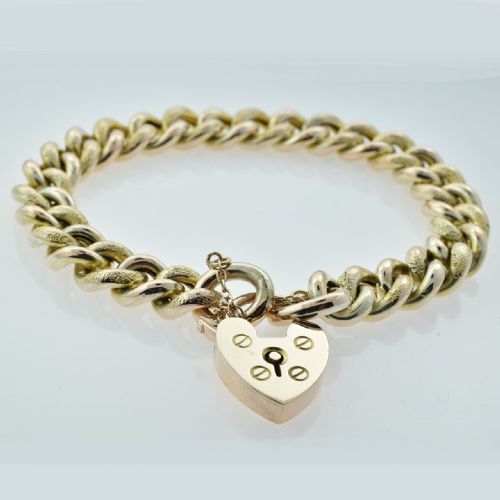
An antique padlock bracelet secures sentiment with a sprung heart clasp, uniting heavy curb or gate links from the Victorian and Edwardian eras.
Antique Padlock Bracelet
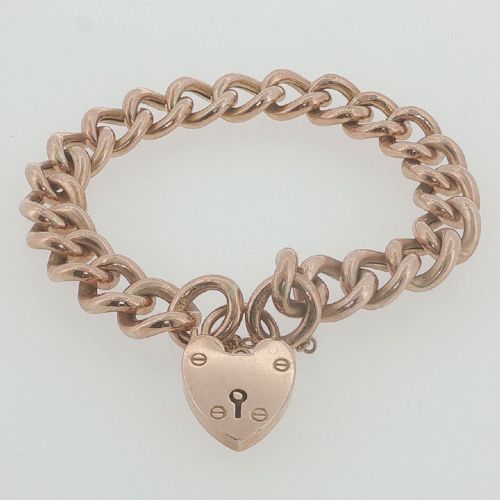
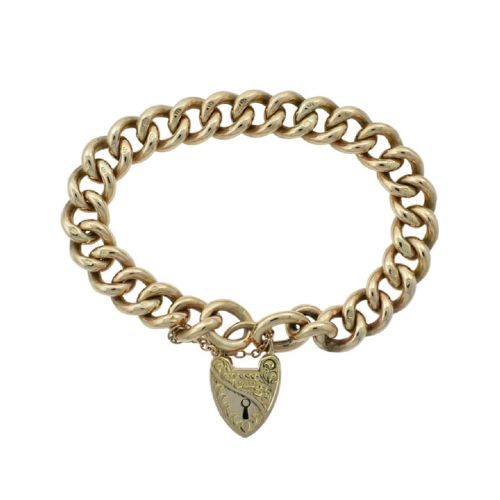
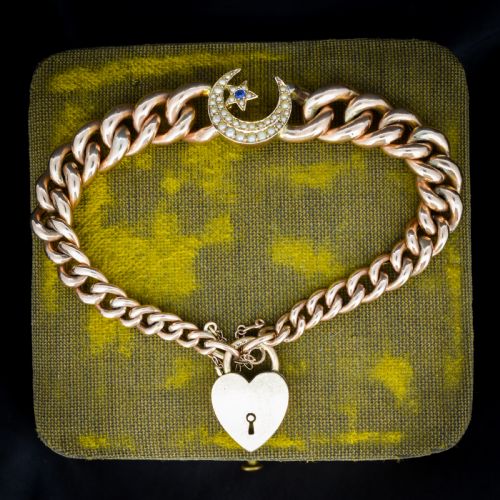
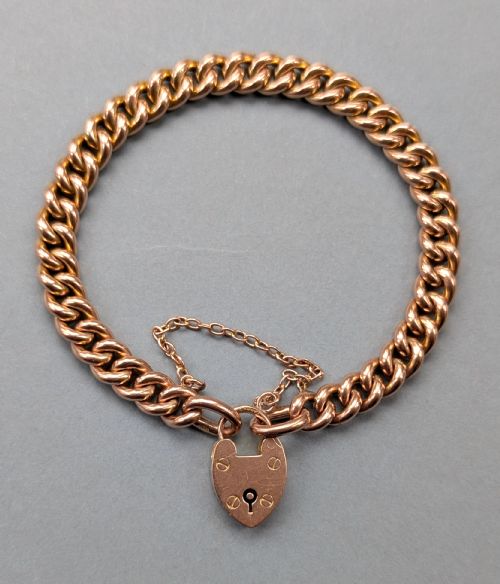
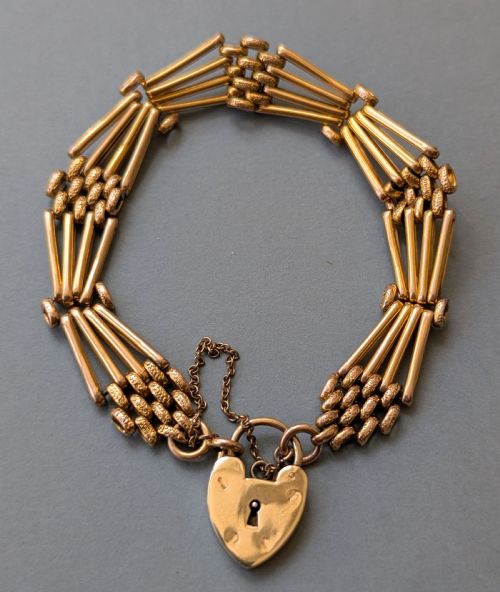
An antique padlock bracelet combines a substantial link chain with a functioning heart-shaped clasp, functioning both as a secure fastening and a decorative centrepiece. The most common form met on this page is the 9ct rose gold curb link or gate bracelet, frequently stamped with early twentieth-century hallmarked dates.
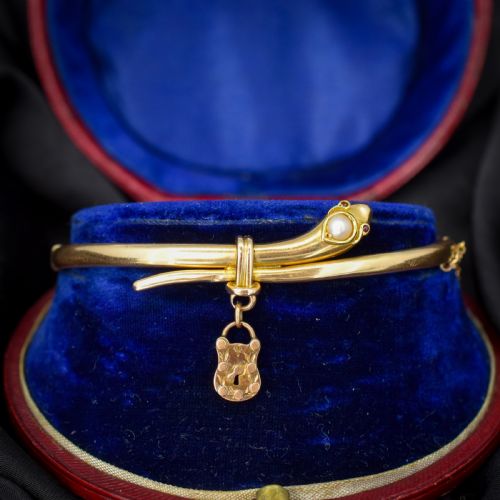
These items originate primarily from the Victorian, Edwardian, and 1900 periods, constructed as daily wear pieces that often incorporated safety chains. Alongside standard curb links, variations include fancy gate designs, half-engraved patterns, and stone-set accents featuring pearls or amethysts.
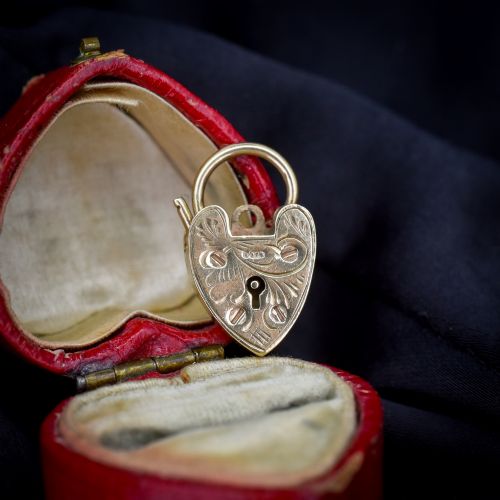
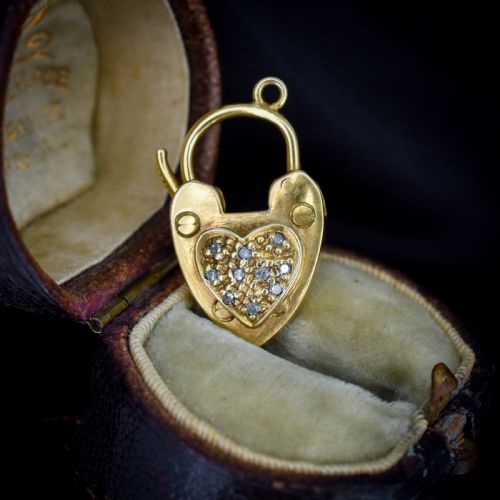
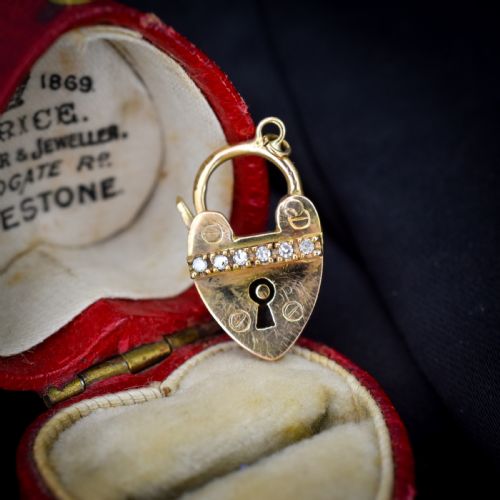
Many examples integrate a detachable heart padlock that doubles as a charm or pendant, allowing the clasp to be removed or swapped between chains. Pieces span from the late nineteenth century into the mid-twentieth century, including later revival styles and vintage items.
Materials and construction
Gold forms the primary structural material, predominantly found in 9ct yellow and rose gold, alongside occasional 15ct and 18ct variants and rolled gold alternatives. Goldsmiths built chains using hollow or solid curb links, interlocking long links, and intricate gate configurations soldered by hand.
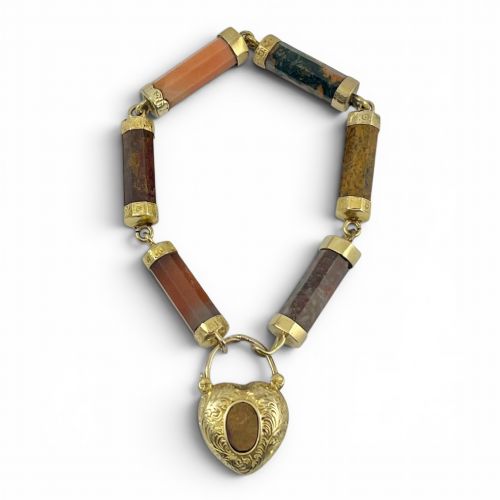
Surface decoration relies heavily on hand engraving, particularly foliate and half-engraved scrollwork across one side of the curb links or padlock face. Gemstones including seed pearls, diamonds, rubies, amethysts, and agates are flush-set or claw-set into central motifs, knots, and crescent details.
Recorded periods cover the Victorian era, Edwardian period, 1880, 1900, 1910, and 1960.
Grading the workmanship
Quality rests in the weight and structural integrity of the links, distinguishing hollow stamped chains from solid gold constructions that retain their gauge over decades of wear. Superior examples display crisp, deep hand engraving across the padlock and links rather than shallow or worn surface marks.
The mechanism of the heart padlock determines operational finesse, separating tight, dependable sprung clasps from loose hinges that require adjustment. Hallmarking clarity and original matching safety chains further elevate a piece, indicating complete survival without later component replacements.
The Antique Padlock Bracelet Glossary
- Curb link
- A chain formed of interlinked, uniform flat-faced links that lie completely flat against the wrist.
- Gate bracelet
- A construction comprising parallel rectangular bar links connected by central vertical links, mimicking textile webbing.
- Padlock clasp
- A heart-shaped mechanical fastening containing an internal spring mechanism operated by a small push button.
- Rolled gold
- A durable composite material consisting of a thin layer of gold mechanically bonded to a base metal core.
- Hallmark
- An official stamp struck into precious metal indicating the purity standard, assay office, and year of manufacture.
Antique Padlock Bracelet: Frequently Asked Questions
How do I open the padlock?
Most padlocks operate via a small sprung lever or hidden pin on the side or base of the heart body. Pressing this internal spring releases the shawabty loop so it swings open on its hinge.
Avoid forcing the clasp if the mechanism feels stiff from age or accumulated debris. A gentle press while supporting the hinge prevents stress on the gold.
Are safety chains original?
Safety chains frequently accompanied curb and gate bracelets to prevent loss if the main padlock sprang open during wear. Many survive from the period, attached by a small jump ring near the clasp.
Determining originality involves inspecting the solder points and matching the gold colour and patina to the rest of the chain. Replacements are common due to the fragile nature of these fine auxiliary links.
How do I date an antique bracelet?
Dating relies on official hallmarking stamps, style conventions, and manufacturing techniques recorded on the piece. British hallmarks stamped inside the padlock or on the end links provide exact assay office symbols and date letters.
Stylistic shifts, such as the transition from heavy Victorian curb designs to Edwardian gate structures, offer a reliable secondary timeframe when hallmarks are absent or rubbed.