
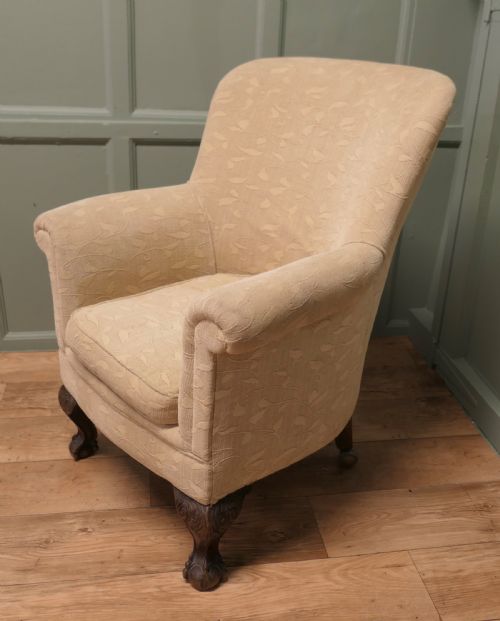
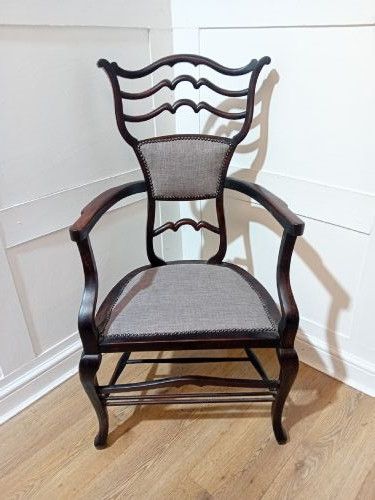
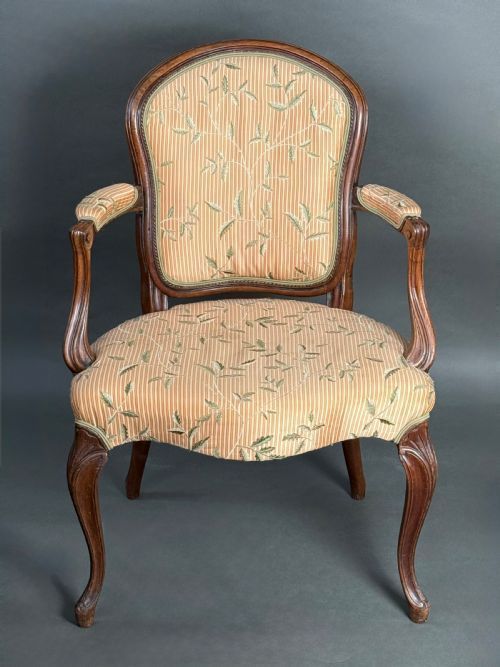
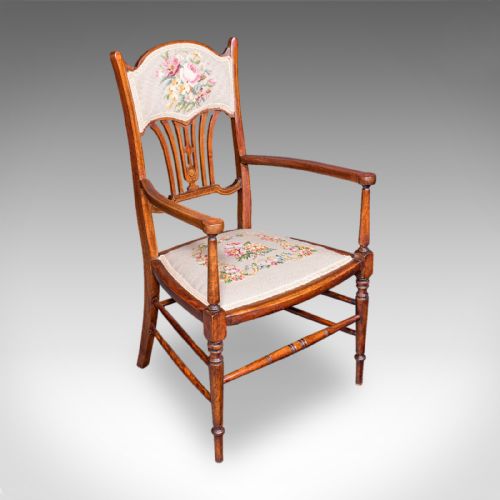
Antique Padded Armchair
An antique padded armchair brings tactile comfort and historical character into a room, offering generous proportions and enduring design.
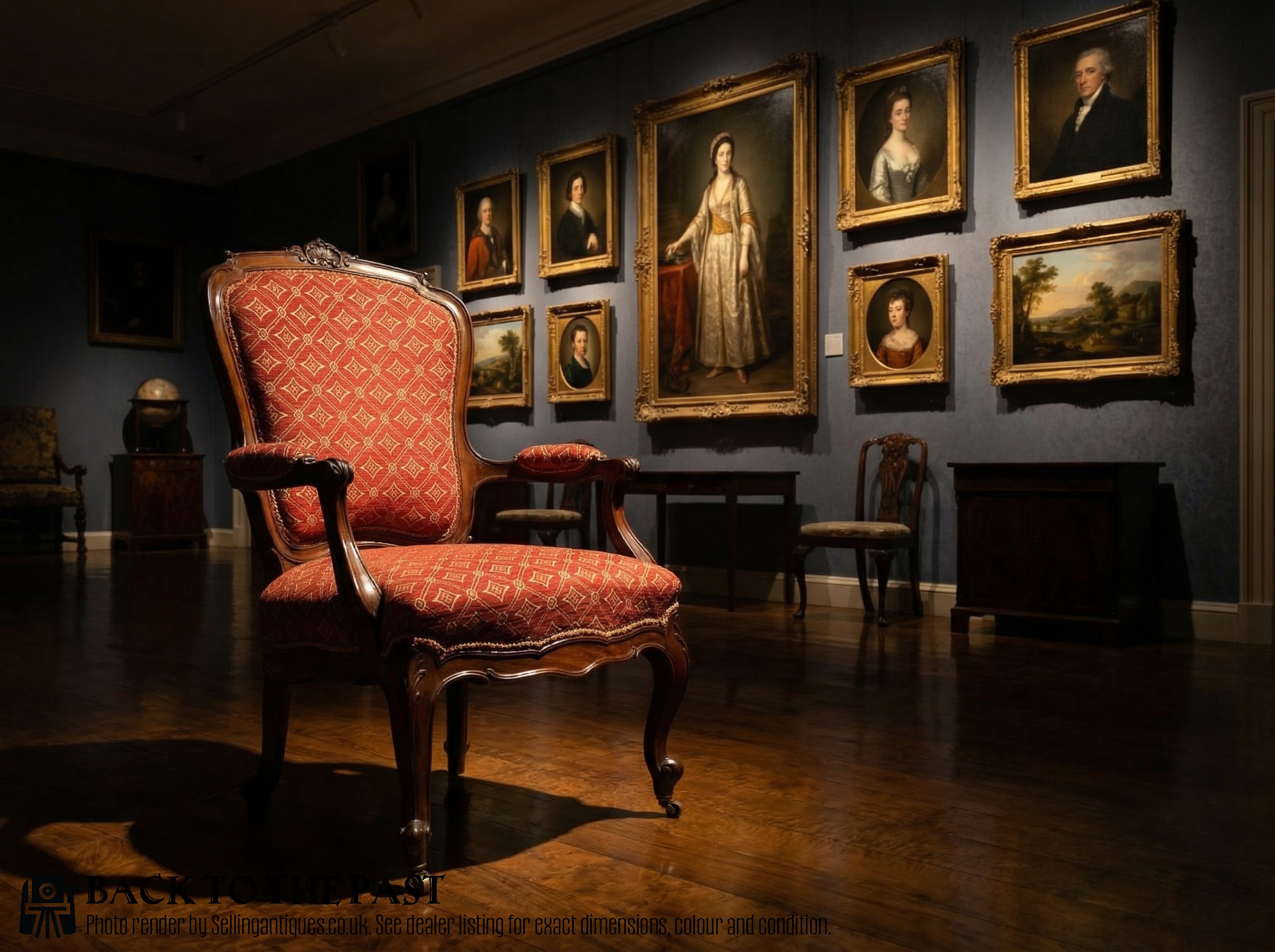
Antique Padded Armchair
An antique padded armchair encompasses diverse forms designed for relaxation, study, and formal sitting across multiple eras. Buyers examining this page will frequently encounter nineteenth-century Victorian examples alongside eighteenth-century Georgian library chairs and early twentieth-century revivals.
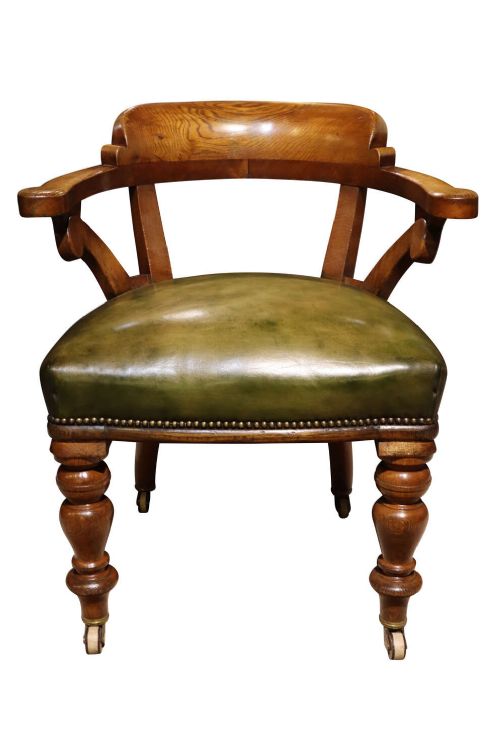
The selection ranges from sturdy library and desk chairs to elegant salon seating and grand wing-backed versions. Mahogany, walnut, and oak frequently frame the upholstered bodies, accompanied by textiles, leather, and velvet.
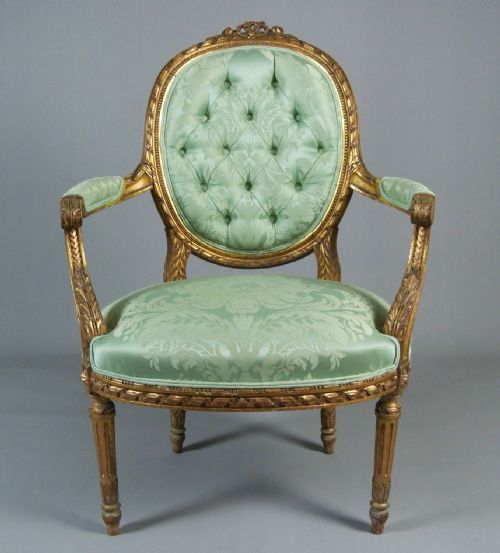
Origins stretch from English country houses to French salons, spanning periods such as the Georgian, Victorian, and Edwardian eras. Pieces often arrive with specific regional traits, ranging from heavy carved walnut to slender giltwood frames.
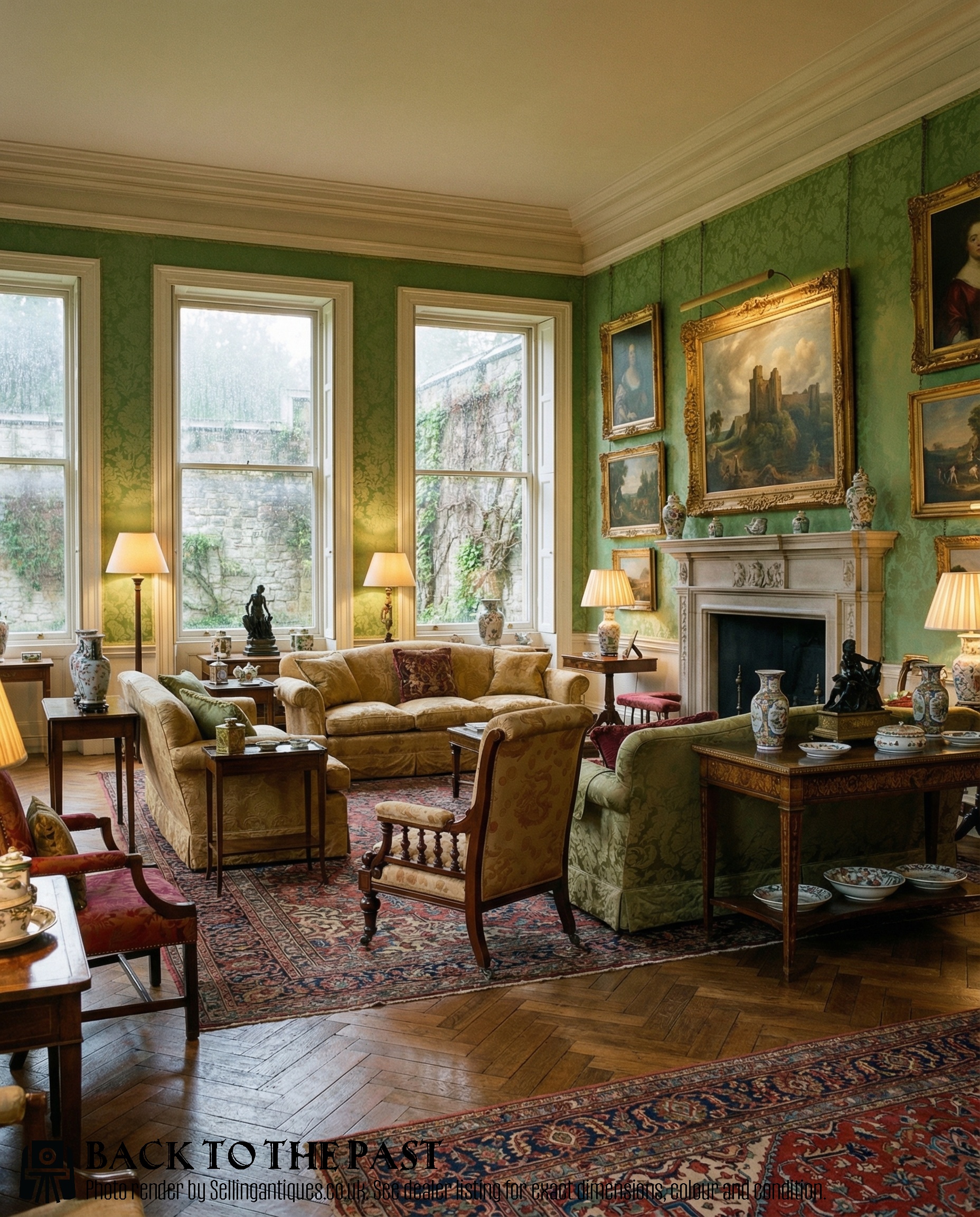
How they were made
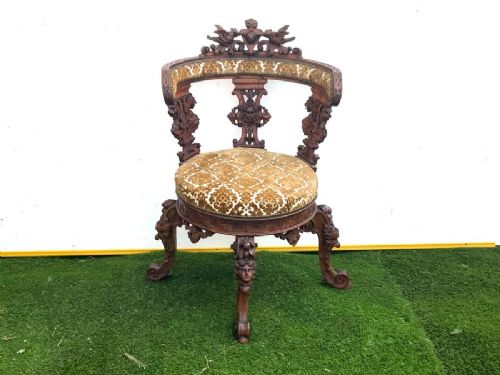
Maker's workshops built these frames using dense hardwoods like mahogany, walnut, oak, and beech, often employing mortise and tenon joints for stability. Carved details appeared directly on the solid wood framework, seen in giltwood accents, mahogany arms, and walnut cabriole legs.
Upholstery techniques combined supportive webbing and springs with horsehair or wool stuffing, enclosed within outer layers of leather, silk, velvet, or printed cotton. Brass tacks frequently secured the fabric margins along the wooden rails.
Antique Padded Armchair Retail Price Guide 2026
Typical asking prices for padded armchair among the pieces listed under this phrase on Sellingantiques today, from the lower quarter to the upper quarter. They describe what is for sale here now, not the wider market.
Materials range from solid yew wood and maple to supple leather, velvet, and silk textiles.
What varies in quality
The distinction between ordinary and exceptional seating lies in the harmony of the timber frame and the crispness of the hand-carved details. Superior examples maintain structural integrity through dense, unwarped hardwoods and retain their original upholstery materials or historically accurate coverings.
Proportion and comfort dictate the success of the design, where balanced arm supports and properly angled backs elevate the piece from simple utility to high craftsmanship.
Jacob-Desmalter·Thomas Chippendale·Morris and Co·Howard and Sons·Colefax and Fowler
The Antique Padded Armchair Glossary
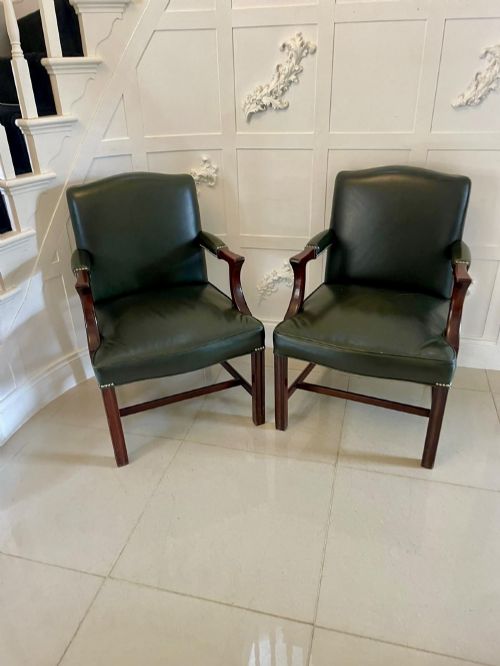
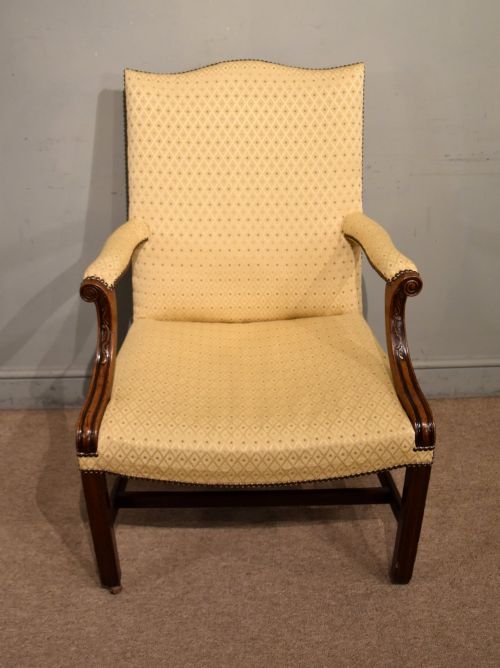
- Gainsborough armchair
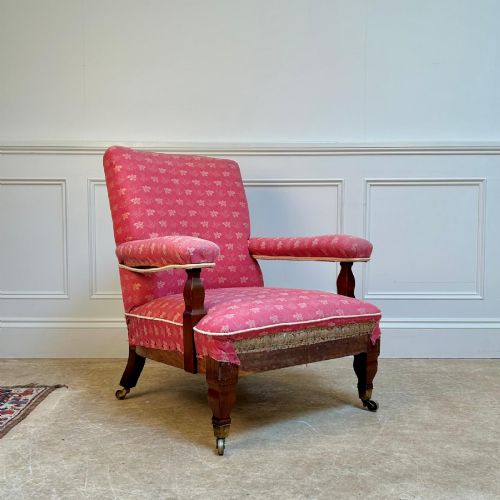
- A wide, open-armed seat with padded back and armrests, typically dating from the eighteenth century and designed for writing desks or libraries.
- Bergère
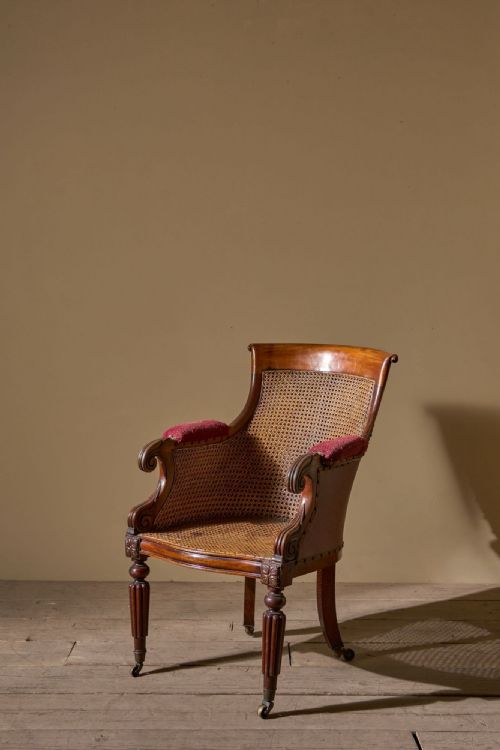
- An enclosed armchair with stuffed upholstery on the back and sides, often featuring cane panels beneath the cushions.
- Fauteuil
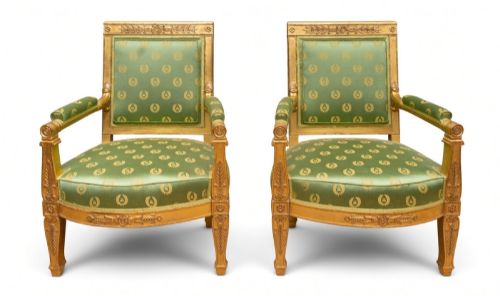
- An open-armed wooden armchair originating in France, characterised by exposed carved framing and upholstered back and seat pads.
- Wing chair
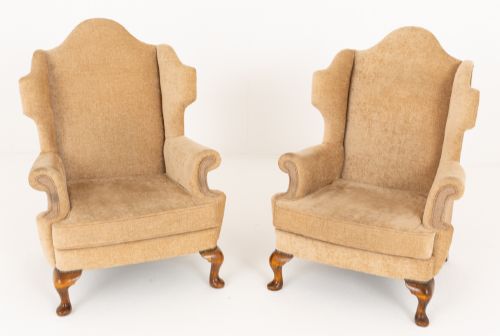
- A high-backed seat featuring protective side panels designed to shield the occupant from draughts near a fireplace.
- Tub chair
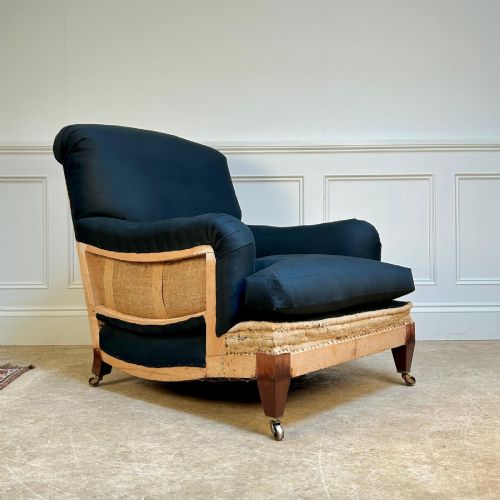
- A curved, rounded seat where the backrest flows continuously into low arms, creating a compact and enclosed profile.
Antique Padded Armchair: Frequently Asked Questions
What is a Gainsborough armchair?
A Gainsborough armchair is a wide, open-armed seat featuring a padded back and upholstered armrests, designed originally for eighteenth-century libraries and desks. These chairs combine sturdy mahogany or walnut frames with generous seating space.
They are easily identified by their distinct open wooden arms and refined proportions, making them versatile for modern studies and living rooms.
How do I identify a Victorian armchair?
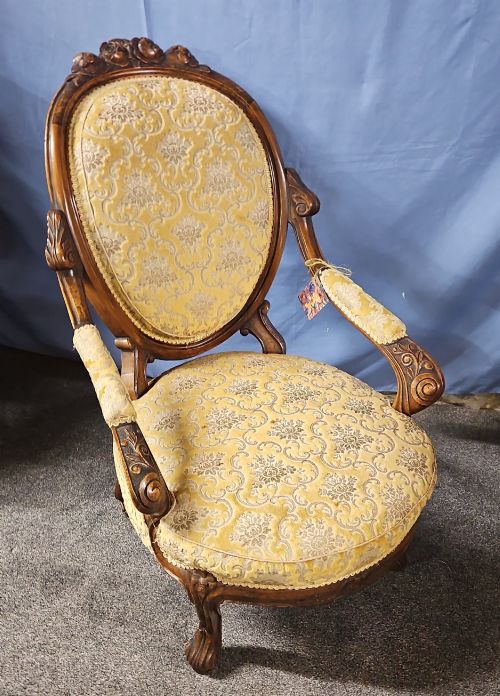
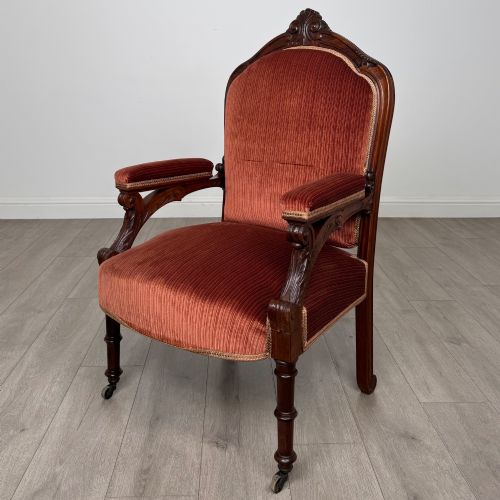
Victorian armchairs typically display heavier proportions, darker woods like walnut or rosewood, and robust button-back or sprung upholstery. They often reflect revival styles influenced by earlier Georgian or French designs.
Examining the construction methods and the wear on the timber helps determine whether the piece dates to the nineteenth century.
Where were bergere chairs used?
Bergère chairs served primarily as drawing room and salon seating, offering enclosed upholstered comfort alongside exposed wooden frames. Their characteristic cane panels provided a lighter visual weight.
Living with these pieces involves placing them in formal reception rooms where their curved profiles and detailed woodwork can be appreciated.
What woods were used for frames?
Cabinetmakers relied on durable timbers such as mahogany, walnut, oak, and beech to construct the underlying skeletons of these armchairs. Richly grained woods were often left polished to highlight the natural material.
Softer woods or gilt coatings appeared on specific continental pieces, while sturdy oak and mahogany suited heavy domestic English use.