



Antique Oyster Veneered Furniture
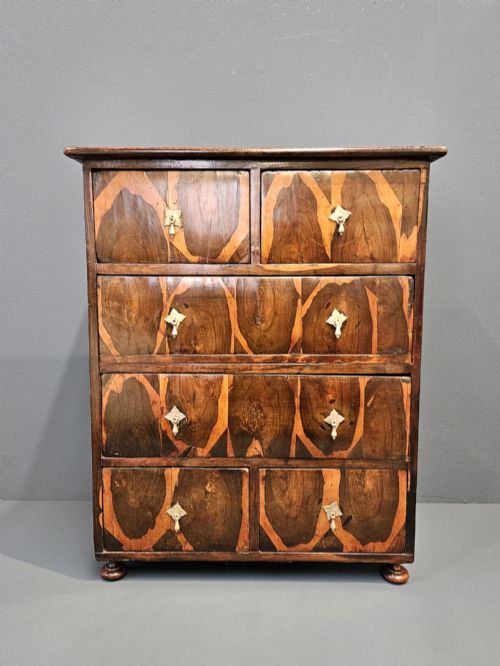
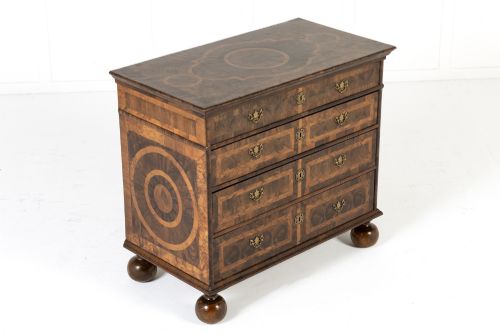
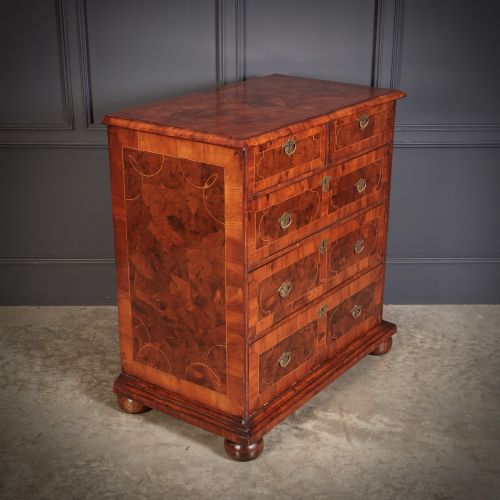
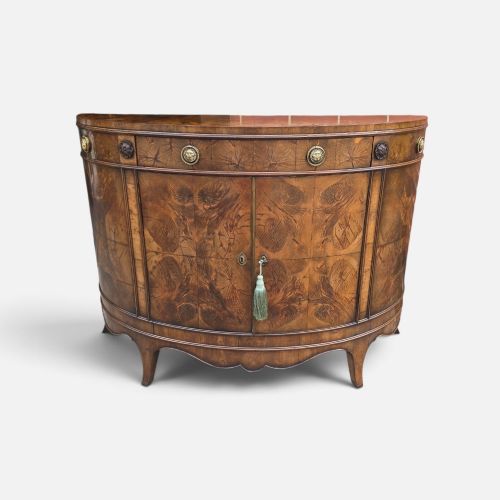
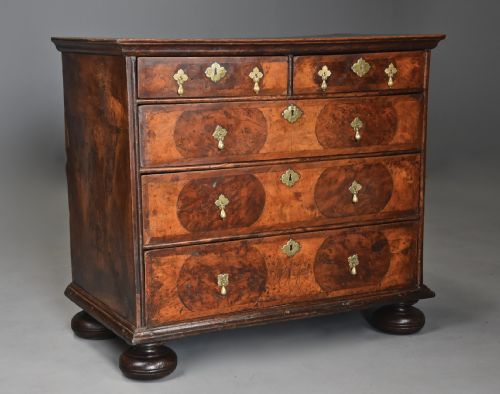
Antique oyster veneered furniture displays circular cross-section cuts of timber arranged to resemble shells, prized for rich, undulating grain patterns.
Antique Oyster Veneered Furniture
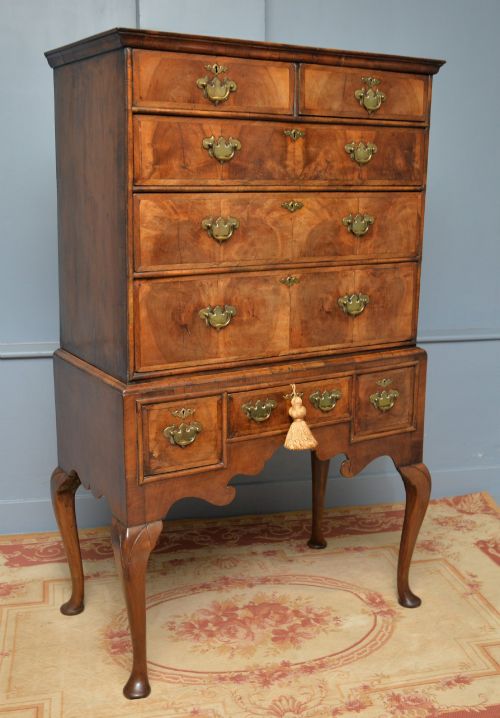
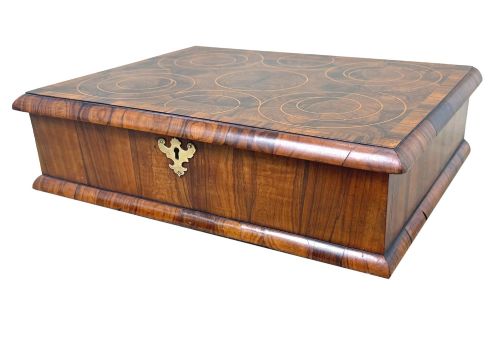
Antique oyster veneered furniture comprises storage pieces and small tables dating principally from the seventeenth century and the William and Mary period. Chests of drawers and cabinets on stand form the core of what is available, joined by occasional boxes and side tables.
Makers of these pieces utilised distinct timbers sliced across the branch or root to create circular motifs across the surfaces. While seventeenth-century originals dominate, later revival pieces from the twentieth century also appear.
Buyers encounter walnut, laburnum and olive wood most frequently, often inlaid with boxwood or holly to frame the decorative roundels. These works bring striking geometric visual depth to domestic interiors.
Materials and construction
Craftsmen sliced small branches and roots at an angle to produce oval and circular cross-sections known as oyster veneers. These thin slices were laid down in intricate patterns across secondary woods such as oak and pine.
Brass hardware including drop handles and escutcheons complemented the rich tones of walnut, laburnum and kingwood. Surface finishes relied on traditional polishes that enhanced the natural figuring of the timber.
Antique Oyster Veneered Furniture Retail Price Guide 2026
Typical asking prices for oyster veneered furniture among the pieces listed under this phrase on Sellingantiques today, from the lower quarter to the upper quarter. They describe what is for sale here now, not the wider market.
Listings feature seventeenth-century origins alongside twentieth-century revival pieces, utilising walnut, laburnum, olive wood and brass.
Distinguishing finer examples
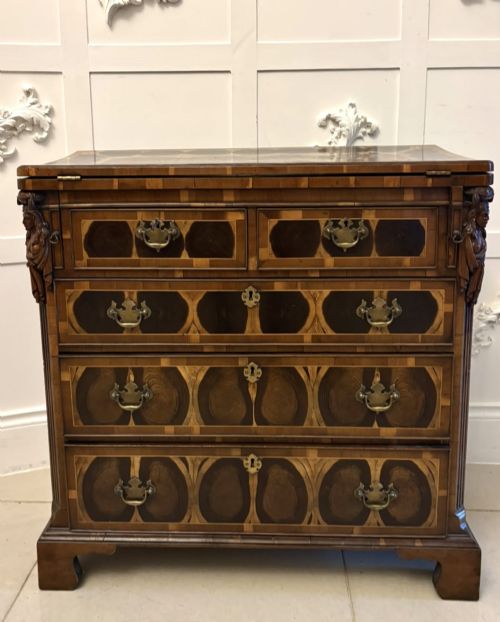
Quality rests upon the uniformity of the cutting and the tightness of the arrangement across the carcass. Finer chests display minimal gaps between the roundels and thoughtful alignment with stringing inlay.
The choice of primary timber shifts the visual impact, with olive and laburnum yielding denser patterns than plain walnut. Surviving stands and original brasses elevate the standing of cabinets and chests.
The Antique Oyster Veneered Furniture Glossary
- Oyster veneer
- Slices of branch wood cut transversely to show the concentric growth rings, resembling the shape of an oyster. This technique gained prominence during the late seventeenth century.
- Laburnum
- A dense hardwood frequently utilised for its dark heartwood and contrasting lighter sapwood rings. It provides some of the most dramatic figuring in oyster veneered pieces.
- Cabinet on stand
- A case piece raised on a separate supporting frame with legs, popular during the William and Mary period. These structures often incorporate drawers within the lower framework.
- Stringing
- Thin inlay lines of contrasting timber, such as boxwood or holly, used to outline panels and drawers. It creates a crisp boundary against the swirling oyster veneer.
- Carcass
- The main structural body of a chest or cabinet before veneering and finishing take place. Secondary woods like oak or pine usually form this internal framework.
Antique Oyster Veneered Furniture: Frequently Asked Questions
What is oyster veneer?
Oyster veneer consists of thin cross-sections cut from small branches or roots rather than boards sawn along the log. This method produces repeating circular and oval patterns across the surface of the furniture.
Cabinetmakers arranged these pieces closely together to form geometric designs. The resulting patterns catch the light and highlight the natural growth rings of the timber.
Which woods were used?
Walnut, laburnum and olive wood appear most often in these pieces, valued for their distinct growth ring contrasts. Boxwood and holly frequently supplement them as fine inlay stringing.
Secondary woods like oak and pine form the interior carcass structures. These materials provided a stable foundation for the decorative cross-cut veneers.
How do I date these pieces?
Dating relies on carcass construction, hardware styles and the specific timber combinations employed by the maker. Most period examples date from the late seventeenth century under William and Mary.
Later revival pieces appear from the early to mid-twentieth century. Examining the interior timber and the method of cutting helps distinguish between eras.
How should I care for them?
Keep these items away from direct heat sources and strong sunlight to prevent the thin veneers from lifting or splitting. Maintaining a stable room humidity preserves the old timbers.
Apply traditional wax sparingly and buff gently with a soft cloth. Avoid modern liquid polishes that can penetrate the grain and harm the finish.