

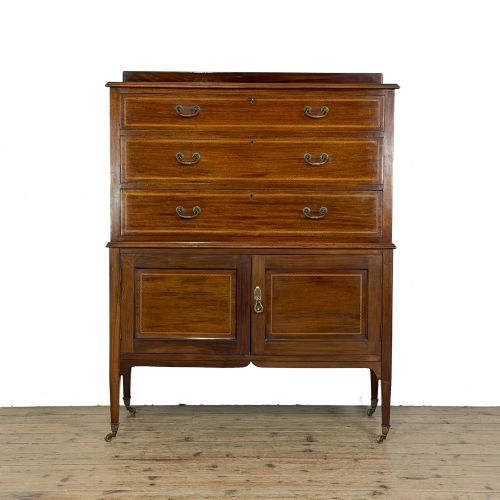
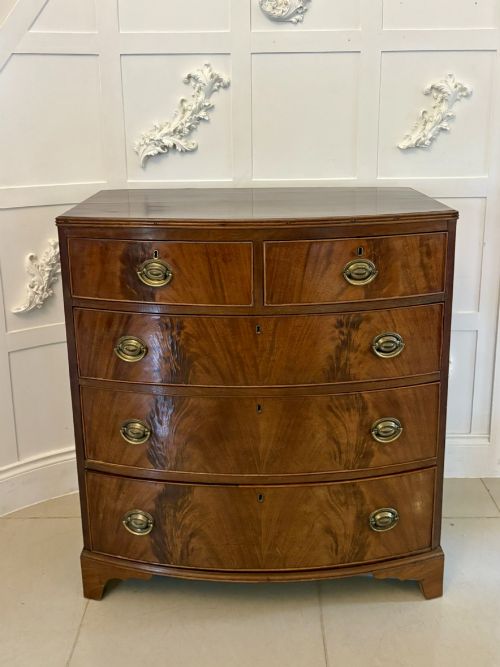
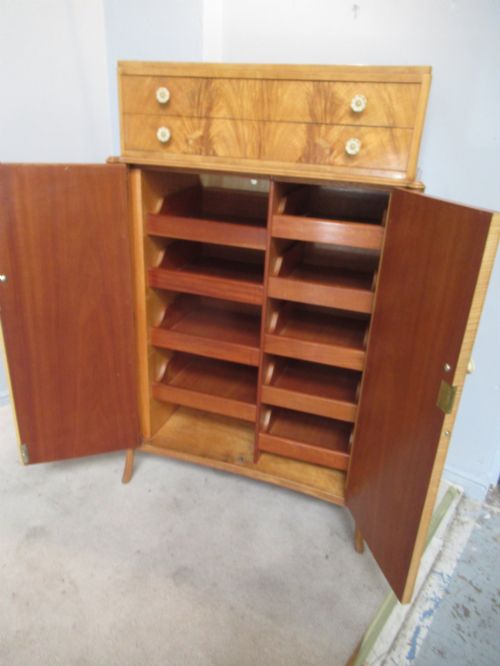
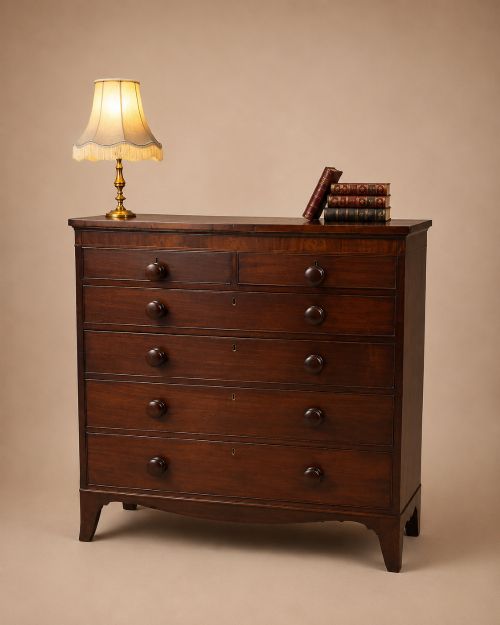


Tall Boy Drawers
Tall boy drawers combine generous vertical storage with compact floor space, offering an imposing profile developed to hold linen and garments in period bedchambers.
Tall Boy Drawers
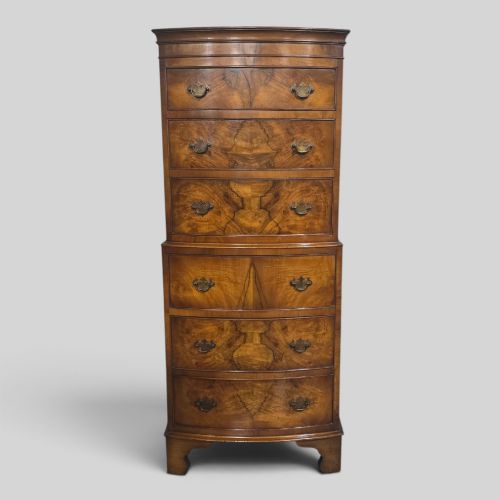
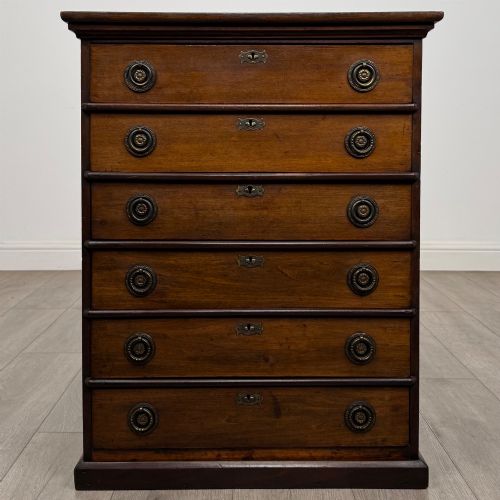
When you search for tall boy drawers, you encounter stately multi-tiered furniture designed to maximise vertical storage without occupying excessive floor space. These pieces typically take the form of a chest on chest, combining a larger base section with a slightly narrower upper chest, or a tall single-carcase chest fitted with multiple graduated drawers.
The versions most frequently seen on this page date from the Georgian era, constructed in rich mahogany or figured walnut, alongside later interpretations from the Edwardian period and the 1930s. Alongside traditional English cabinet work, variations include Dutch marquetry, Anglo-Indian carved surfaces, and secretary sections that incorporate a fitted writing desk at waist height.
Form and proportion dictate the character of these items, with some standing on bracket feet while others employ low stands or structured cornices. Their primary function remains the organisation of household textiles and personal attire, presenting an impressive elevation that draws the eye upward in a traditional room.
How they were made
Cabinet makers constructed these carcases primarily from solid timbers like mahogany, oak, and walnut, frequently applying fine decorative veneers of burr walnut or maple to the drawer fronts. Drawer linings commonly utilise secondary woods such as pine, assembled with traditional hand-cut dovetails that ensure durability across centuries of daily opening and closing.
Surfaces received careful finishing through polishing and wax application to highlight the natural grain patterns of figured woods, while brass drop handles and escutcheons secured the drawer faces. Specialised variations incorporate marquetry inlay work or carved detailing, reflecting the prevailing craftsmanship of their respective periods from the eighteenth century onward.
Tall Boy Drawers Retail Price Guide 2026
Typical asking prices for tall boy drawers among the pieces listed under this phrase on Sellingantiques today, from the lower quarter to the upper quarter. They describe what is for sale here now, not the wider market.
Listings feature woods including mahogany, oak, burr walnut, and maple across periods from the mid eighteenth century to the 1930s.
What varies in quality
The distinction between standard examples and superior pieces rests upon the choice of timber and the intricacy of the grain arrangement on the primary facades. Highly figured burr walnut or richly flamed mahogany indicate careful selection by the original maker, whereas plain timber surfaces yield a more utilitarian appearance.
Structural integrity and the retention of original brass hardware, feet, and cornice mouldings heavily influence the standing of an individual piece. Finer examples display precise joinery in the drawer carcases and clean interior secondary woods, maintaining their original height proportions and structural balance without extensive modern timber replacement.
Waring s Gillows·Heals
The Tall Boy Drawers Glossary
- Chest on chest
- A two-part storage unit where a slightly smaller upper chest sits directly upon a deeper lower chest, creating a tall vertical profile. This form dominated eighteenth-century bedchamber furniture.
- Secrétaire chest
- A tall chest featuring a pull-out drawer front that drops down to reveal a fitted interior with small compartments and a writing surface. It integrates a bureau into the upper section of a tallboy.
- Burr walnut
- Timber harvested from the gnarled growths of a walnut tree, yielding an intensely patterned, swirling grain used for decorative veneer on high-status cabinets.
- Cornice
- The decorative wooden moulding running along the very top of a tall piece of furniture, often featuring dentil or carved detailing in Georgian examples.
- Dovetail
- A traditional interlocking joint used to connect drawer sides to drawer fronts and backs, prized for its mechanical strength and resistance to being pulled apart.
Tall Boy Drawers: Frequently Asked Questions
What is the difference between a tallboy and a standard chest?
A standard chest of drawers remains low enough to use the top surface easily, whereas a tall boy stacks additional drawers vertically to increase storage capacity.
This vertical format creates a commanding presence in a room while keeping the footprint compact against the wall.
How were tall boy drawers used historically?
These pieces served primarily in bedchambers for storing folded linens, shirts, and garments before fitted wardrobes became common household fixtures.
Some variants included a secretaire drawer equipped with pigeonholes and small drawers for writing correspondence.
How do I secure a tall piece to the wall?
Due to their height and weight distribution, tall furniture pieces benefit from discreet anti-tip brackets attached to the wall behind the upper carcase.
This precaution protects the antique structure from accidental tipping while preserving the exterior appearance.
How do I tell an 18th century piece from a 20th century copy?
Eighteenth-century examples exhibit hand-sawn secondary woods, irregular dovetails, and hand-planed carcase backs that reflect period tool marks.
Later revival pieces and twentieth-century interpretations typically show uniform machine-cut joinery and modern timber preparation methods.