



Antique Oval Snuff Box
An antique oval snuff box is a pocket-sized vessel designed for tobacco, and these pieces span the Georgian, Victorian, and Edwardian eras.
Antique Oval Snuff Box
An antique oval snuff box is a small container designed to hold powdered tobacco, appearing across the Georgian, Victorian, and Edwardian periods alongside related forms such as patch boxes, pill boxes, and vinaigrettes. These items were carried in pockets or kept on tables for personal use during social gatherings.
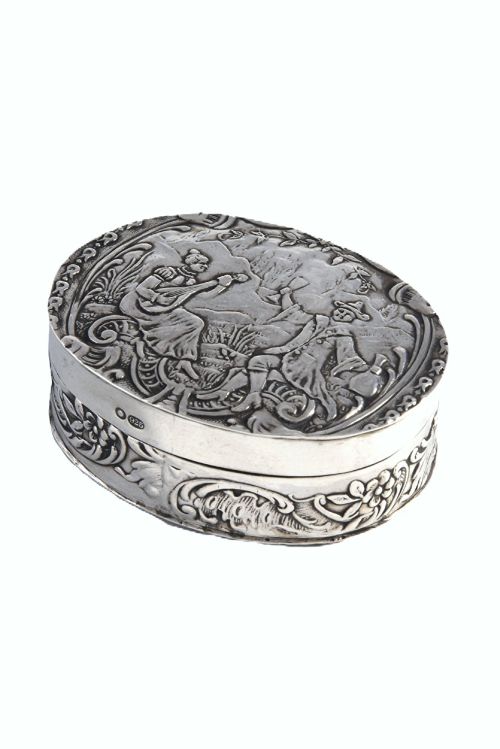
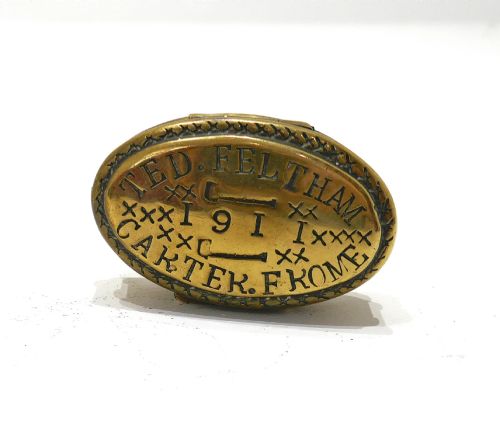
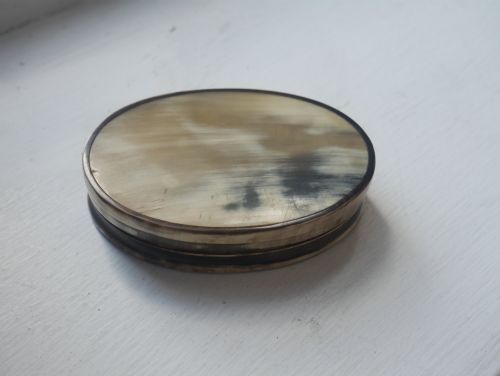
The selections here range from modest brass and horn pocket pieces to elaborate gold and enamel table boxes. Most examples follow the characteristic curved outline that defined pocket storage for tobacco through the eighteenth and nineteenth centuries.
How they were made
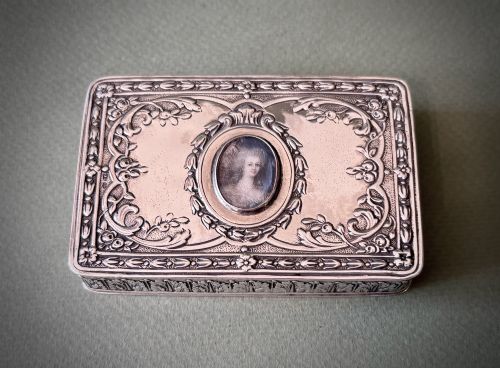
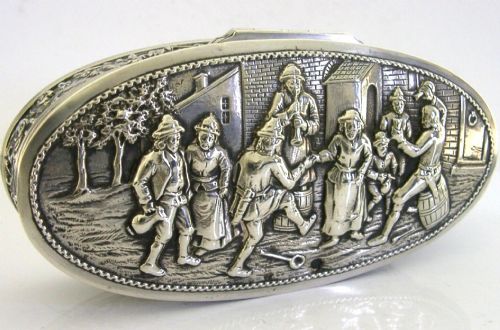
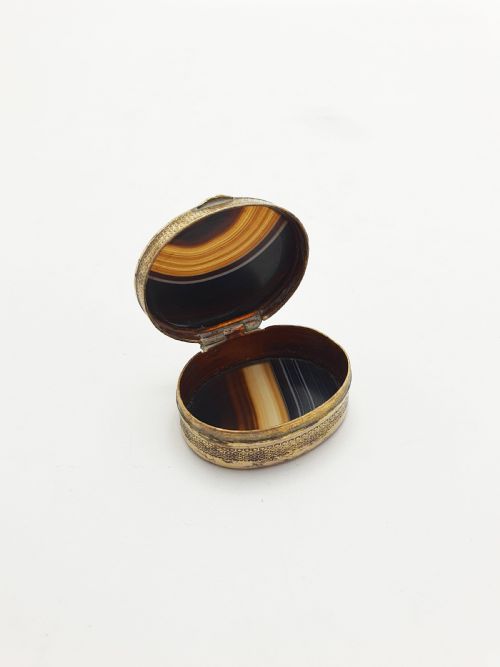
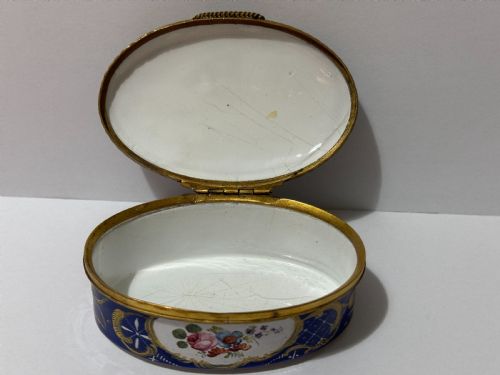
Makers shaped these containers using metals such as silver, sterling silver, brass, copper, and gold, often combining them with organic materials like mother-of-pearl, agate, horn, and walnut. Enamel work and hand-engraved surface decoration appear frequently across the period examples.
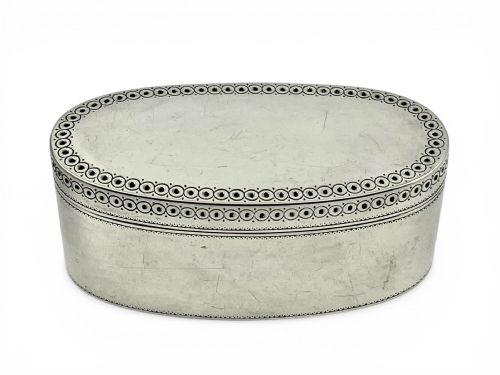
Construction techniques involved casting, bright-cut engraving, and precision-fitting lids designed to keep dry contents secure. Many pieces incorporate gilt interiors, inset stones, or painted plaques set flush into the metal framing.
What varies in quality
The calibre of an antique oval snuff box rests on the weight of the metal, the crispness of the hand-engraving, and the integrity of the hinges. Heavier gauge silver and solid gold demonstrate superior craftsmanship compared to plated or lighter metal alternatives.
Refinement in secondary materials dictates value, such as flawless polychrome enamel, well-matched natural agate panels, or finely turned horn. The precision with which a lid closes marks the standard of the original workshop.
Samuel Pemberton·Joseph Ash·Charles Rawlings·William Summers·William Simpson
The Antique Oval Snuff Box Glossary
- Vinaigrette
- A small hinged box containing a perforated internal grille, used to hold a sponge soaked in aromatic vinegar. These date largely from the Georgian period.
- Patch box
- A diminutive container originally used for holding small pieces of black fabric worn on the face as cosmetic patches. They frequently feature enamel lids and built-in mirrors.
- Bilston enamel
- Enamel work produced in the English Midlands during the eighteenth century, commonly featuring painted pastoral or sentimental scenes on copper bases.
- Bright-cut engraving
- A surface decoration technique utilising faceted angled cuts to create sparkling geometric or floral patterns in silver.
- Sterling silver
- A silver alloy containing ninety-two point five percent pure silver by mass, standard for British plate and marked with traditional hallmarking stamps.
Antique Oval Snuff Box: Frequently Asked Questions
What was an antique oval snuff box used for?
These vessels were created to hold dry ground tobacco that users would inhale or take by pinch. Gentlemen and ladies carried them in pockets or displayed them on tables during social calls.
Over time, owners also repurposed them for smaller valuables, pills, or decorative patches. Their compact dimensions made them convenient personal accessories for daily use.
How do I date an antique oval snuff box?
Dating relies upon examining hallmarked stamps, maker marks, and the prevailing decorative style of the period. Georgian examples often feature bright-cut engraving, whilst Edwardian pieces show different manufacturing traits.
Materials and construction methods also provide clear indicators of age. Horn and tortoiseshell work evolved significantly between the eighteenth and late nineteenth centuries.
Are these boxes made of solid silver?
The inventory includes both solid silver items and pieces formed from brass, copper, gold, or base metals. Many British examples carry sterling silver hallmarks indicating standard metal purity.
Other variations combine metals with natural elements such as agate, mother-of-pearl, or walnut. Each material grouping reflects the specific manufacturing standards of its originating decade.
How should I clean my box?
Silver components benefit from gentle wiping with a soft cloth to preserve surface patination and engraving detail. Abrasive polishes should be avoided, especially on gilt surfaces or thin plating.
Inlaid materials like enamel, horn, and agate require careful handling without liquid immersion. Keeping them away from direct moisture protects the historic internal hinges and linings.