


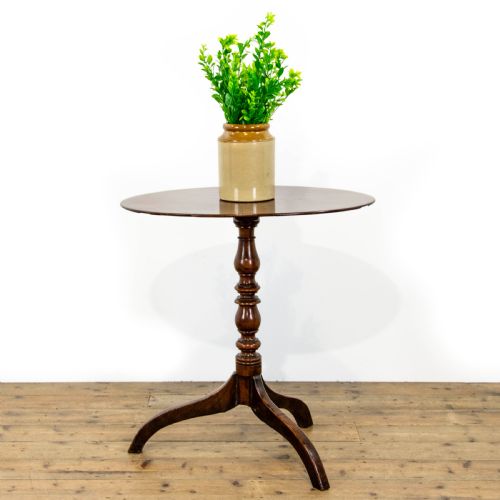
Antique Oval Pedestal Stands
Antique oval pedestal stands are useful occasional tables that bring period timber and graceful proportions to any corner.
Antique Oval Pedestal Stands
Antique oval pedestal stands encompass side tables, wine tables, urn stands, and centrepieces resting on a central column or support. Buyers seeking these items will encounter pieces spanning the eighteenth century, the Georgian era, the Victorian period, and into the twentieth century.
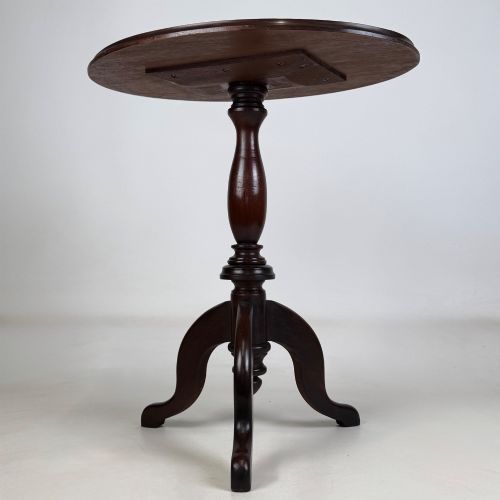
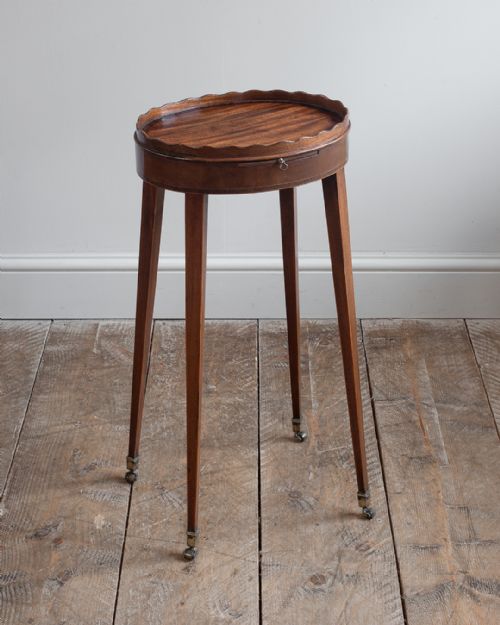
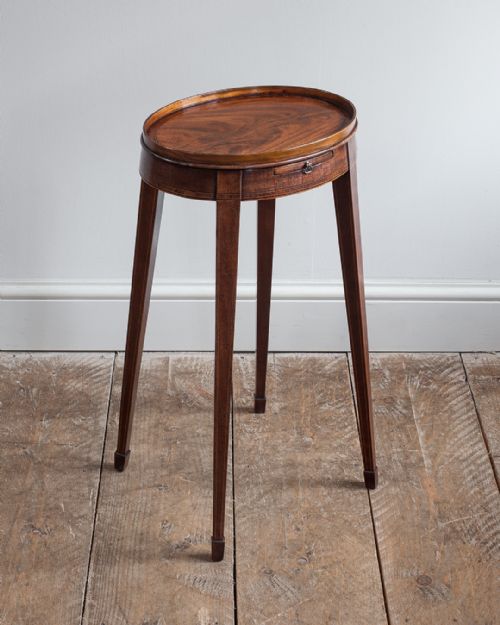
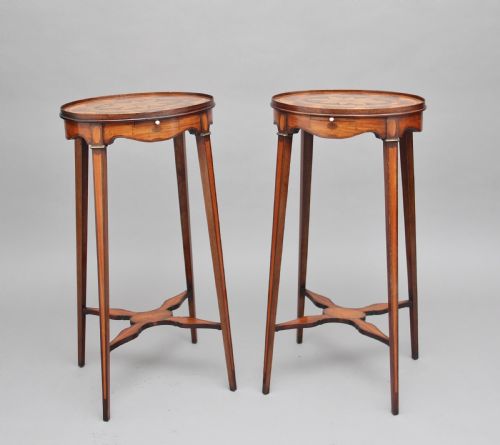
The versions most commonly met on this page are mahogany side tables and wine tables from the Georgian and Edwardian eras. These pieces take the form of compact occasional tables designed to sit beside seating or display small decorative objects.
Makers utilised various timbers and ornamental details, producing forms such as Sheraton revival urn stands, Japanese Meiji ebonised elm tables, and rosewood gallery wine tables. Each variation serves a similar domestic function while reflecting the design preferences of its period.
How they were made
Makers constructed these stands primarily using solid timber and veneers, frequently selecting mahogany or flame mahogany veneer for its rich grain. Workshops added decorative contrast through wood inlay, bone details, and ebonised elm.
Support structures often incorporated turned pedestals, sometimes complemented by brass or silver plate mounts. Certain pieces integrated glass elements or gallery rails around the oval top to secure items placed upon them.
Listings feature pieces spanning the eighteenth to the twentieth centuries, utilising mahogany, rosewood, ebonised elm, and bone.
What varies in quality
The selection of timber and veneer dictates much of the visual character, with figured grains and balanced flame mahogany marking out superior examples. Plain secondary timbers and simpler construction denote utilitarian production rather than high-style cabinet making.
Execution of detail separates standard items from finer work, particularly in inlaid decoration, turned columns, and gallery borders. Coarser joints and heavier proportions contrast with the crisp carving and refined joinery found in top-tier pieces.
WMF
The Antique Oval Pedestal Stands Glossary
- Pedestal stand
- A piece of furniture supported by a single central column rather than four distinct corner legs. This construction allows the top to remain stable while occupying minimal floor space.
- Urn stand
- A small, elevated table originally designed to hold a tea urn during the eighteenth and nineteenth centuries. These stands often feature raised rims or galleries to keep vessels secure.
- Wine table
- A compact occasional table intended for holding drinks or glasses during social gatherings. They typically possess a small oval or circular top on a pillar and tripod base.
- Flame mahogany veneer
- A thin slice of mahogany timber cut from the fork of the tree where branches meet, creating a distinctive flamed or feathered grain pattern. Cabinet makers applied this to prominent surfaces for visual impact.
- Ebonised elm
- Elm timber treated with a chemical stain or finish to simulate expensive ebony wood. This technique appears in nineteenth-century decorative pieces influenced by Japanese design.
Antique Oval Pedestal Stands: Frequently Asked Questions
What is an antique oval pedestal stand used for?
These pieces serve primarily as occasional tables, side tables, or plant stands within domestic interiors. Their compact oval tops make them suitable for placing beside chairs or in narrow hallways.
Historically, specific forms such as urn stands and wine tables held tea vessels or glassware during social occasions. Today, they function well for displaying small lamps, books, or decorative objects without dominating a room.
How do I identify a Georgian pedestal stand?
Georgian pieces typically display robust timber construction in solid mahogany, often featuring traditional elements like turned central pillars and tripod bases. The proportions remain balanced and utilitarian ornamentation is kept restrained.
Examining the underside and joinery reveals hand-cut elements consistent with eighteenth-century workshop practices. Later revivals often replicate these forms but employ nineteenth- or twentieth-century manufacturing techniques.
What is the difference between a side table and a wine table?
Side tables generally offer a slightly larger surface area and heavier construction, designed to stand against walls or beside larger pieces of furniture. They suit general placement in living spaces.
Wine tables are typically smaller and lighter, originally intended to be moved easily around a room to serve guests. They feature compact oval or circular tops supported by a slender pedestal.
How should I care for a mahogany pedestal table?
Mahogany surfaces require minimal maintenance beyond regular dusting with a soft, dry cloth to prevent dirt accumulation. Avoiding direct sunlight and sudden temperature changes protects the timber and veneer from drying out.
Applying occasional applications of appropriate furniture wax helps nourish the wood and maintain its natural lustre. Protective pads should be used beneath any wet or hot items placed on the top.