



Sheraton Revival Urn Stands
Sheraton revival urn stands bring refined neoclassical lines and delicate satinwood or mahogany craftsmanship into your home.
Sheraton Revival Urn Stands
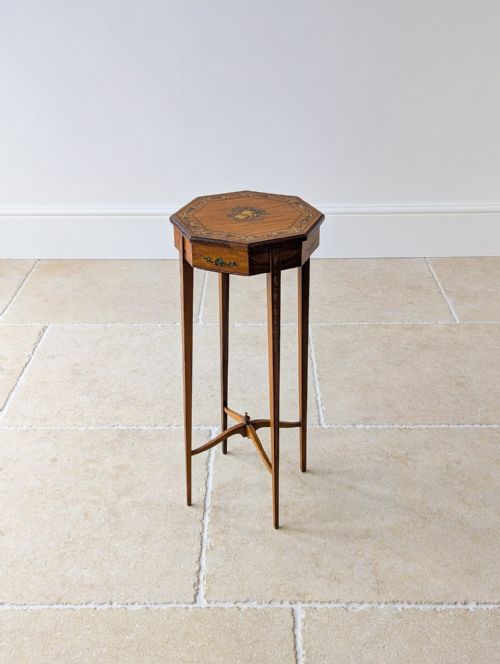
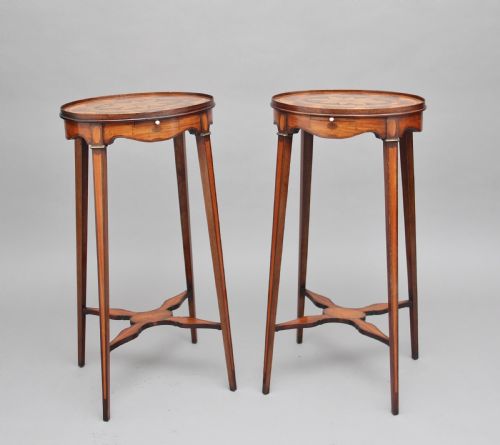
When you search for Sheraton revival urn stands, you are looking at slender display pieces designed to elevate decorative urns, lamps, or plants in period rooms. These tables draw on late eighteenth-century elegance, reinterpreted during the Edwardian era and late Victorian period.
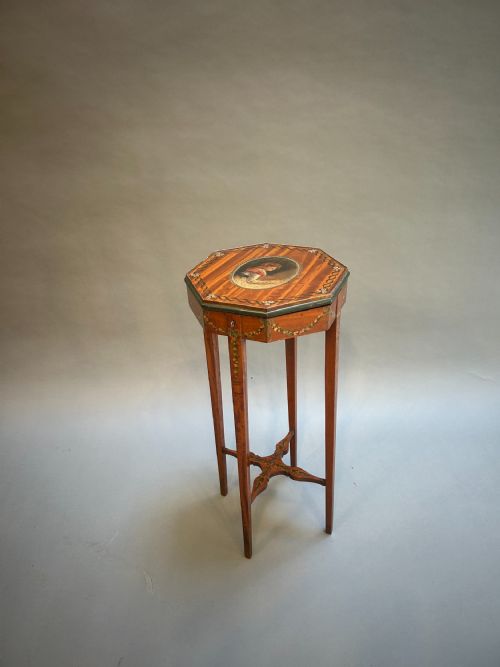
The versions you are most likely to meet on this page include mahogany and satinwood tripod or pillar stands, often enriched with contrasting stringing and inlay. They function equally well as occasional tables or torchere stands in a traditional interior.
Makers of these stands favoured compact forms that fit easily into corners or beside seating, combining utility with decorative painted or inlaid surfaces. They reflect a late nineteenth and early twentieth century fascination with lighter, more graceful furniture styles.
Materials and construction
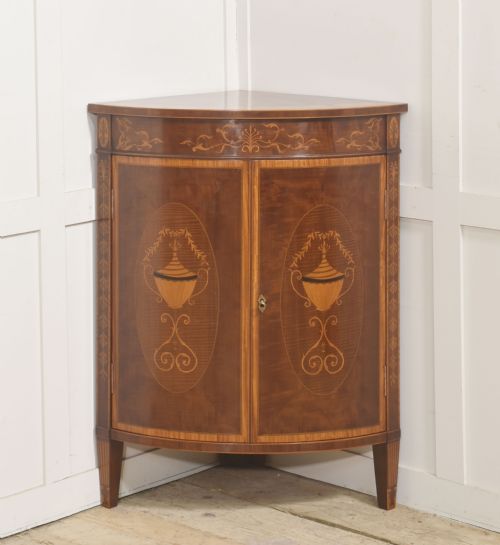
Cabinetmakers constructed these stands using solid timbers such as mahogany and satinwood, frequently applying decorative boxwood and rosewood inlay to create geometric and floral motifs. The timber surfaces are often polished to a soft sheen that highlights the natural grain.
Detailing includes hand-painted decoration on satinwood panels, along with delicate brass mounts and fittings that complement the classical forms. Turned columns and tapered legs provide the stability required for supporting tabletop urns and torchere ornaments.
Some Edwardian makers painted floral swags onto satinwood so convincingly you might try to water them.
Judging quality
Quality in these stands rests upon the crispness of the inlaid decoration and the choice of figured timber, such as flamed mahogany or fine satinwood. Superior examples display meticulous hand-painted details and precise joinery that remains tight after a century of use.
The distinction between standard production pieces and finer work lies in the depth of the timber selection and the restraint of the design. Subtle use of contrasting stringing demonstrates a higher level of cabinetmaking than heavier, unadorned framing.
The Sheraton Revival Urn Stands Glossary
- Sheraton Revival
- A late nineteenth and early twentieth century style that reinterpreted the light, classical furniture designs of Thomas Sheraton. It relies on satinwood veneers, painted decoration, and delicate inlay.
- Satinwood
- A lustrous, hard timber native to Ceylon and India, prized for its golden colour and smooth grain. It forms the primary surface for many high-grade Edwardian display pieces.
- Torchere Stand
- A tall, slender support designed specifically to hold a lamp, candle, or decorative urn. These stands feature elevated tabletops supported by single columns or tripod bases.
- Stringing
- Narrow strips of contrasting wood inlaid into channels cut into the furniture surface. It creates delicate borders around table tops and drawer fronts.
- Inlay
- A decorative technique where pieces of contrasting wood, shell, or metal are fitted into recessed spaces to form patterns. It defines the neoclassical aesthetic of this period.
Sheraton Revival Urn Stands: Frequently Asked Questions
What were urn stands used for?
These tall, slender stands were originally designed to display decorative ornamental urns in formal drawing rooms and parlours.
Over time, owners adapted them to hold table lamps, jardinières, or trailing plants as interior fashions shifted.
How do I date an urn stand?
Dating relies on examining the underlying timber, the style of the inlay, and construction methods characteristic of the late Victorian and Edwardian periods.
Most surviving examples date from around eighteen-eighty to nineteen-hundred, reflecting the peak of the Sheraton Revival movement.
Are these stands structurally sturdy?
Despite their delicate appearance, well-built stands utilise seasoned timbers and solid joinery to support modest display items securely.
Their slender tripod or pedestal bases are balanced to prevent tipping under the weight of an urn or lamp.
How do I care for satinwood surfaces?
Satinwood benefits from regular dusting with a soft, dry cloth and occasional application of appropriate furniture wax to nourish the grain.
Keep these pieces away from direct sunlight and radiators to prevent the timber veneers from drying out or fading.