




Antique Oriental Mantel Vases
Antique oriental mantel vases bring striking colour and intricate hand-painted detail to a fireplace, offering a focal point drawn from 19th-century and early 20th-century decorative traditions.

Antique Oriental Mantel Vases
Antique oriental mantel vases encompass decorative vessels originating from Japanese and Chinese workshops, designed specifically for display on mantelpieces or as garniture sets. These pieces include pairs and larger matched sets created during the Victorian, Edwardian, and interwar periods, reflecting global trade and aesthetic exchanges of the era.
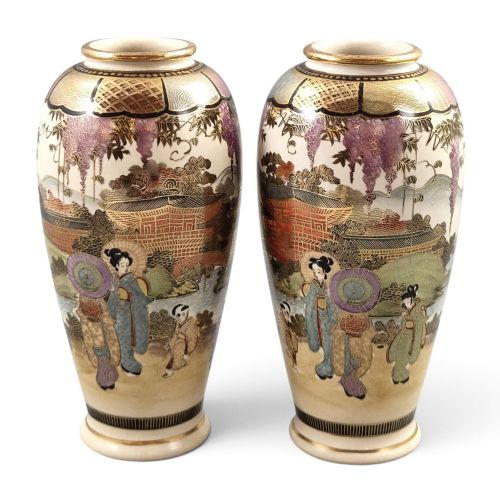
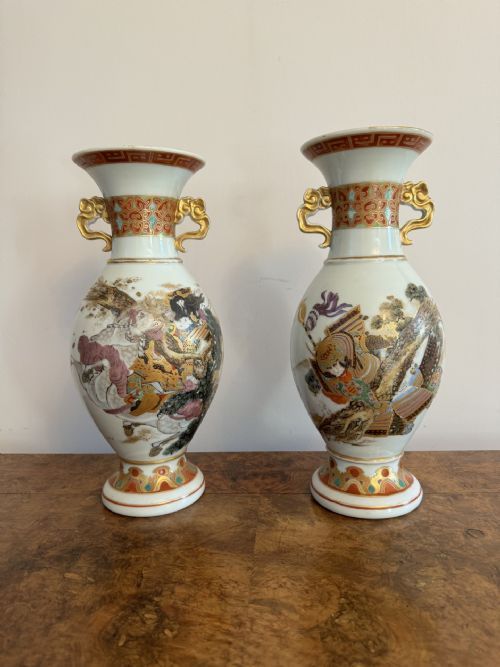
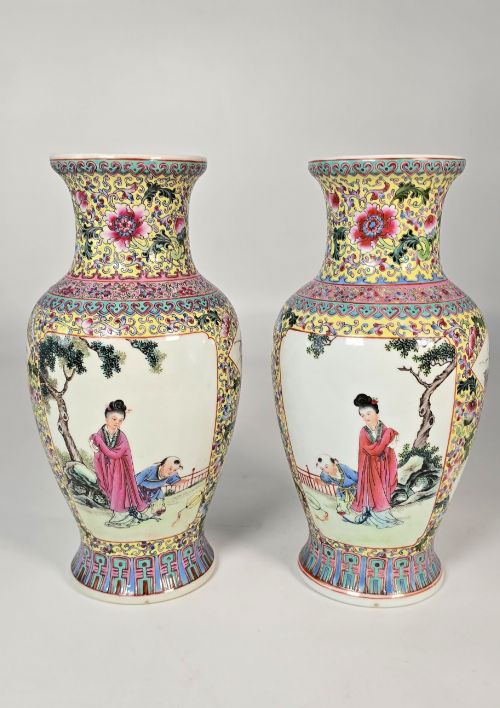
The selections span distinct historical eras such as the Meiji, Edo, and Qing periods, alongside the Chinese Republic and Japanese Showa eras. Buyers frequently encounter pairs of porcelain or earthenware vessels decorated with traditional figures, floral motifs, and rich enamel palettes.
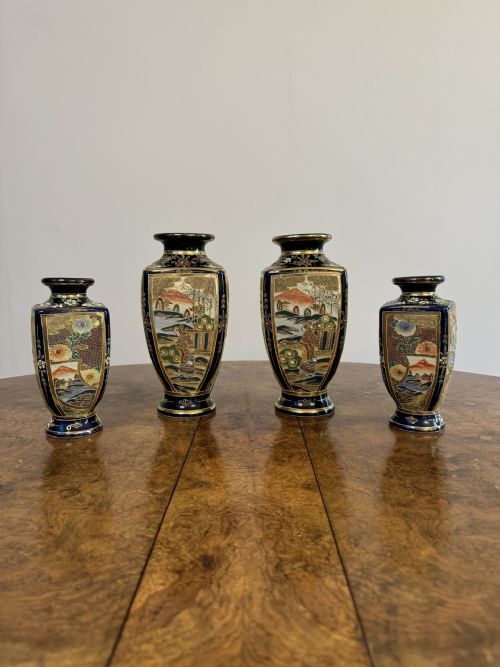
Vessels take forms ranging from standard baluster shapes and polygon profiles to specialised garnitures comprising three or four matching pieces. Such configurations provided symmetrical ornamentation for period drawing rooms and formal reception spaces.
How they were made
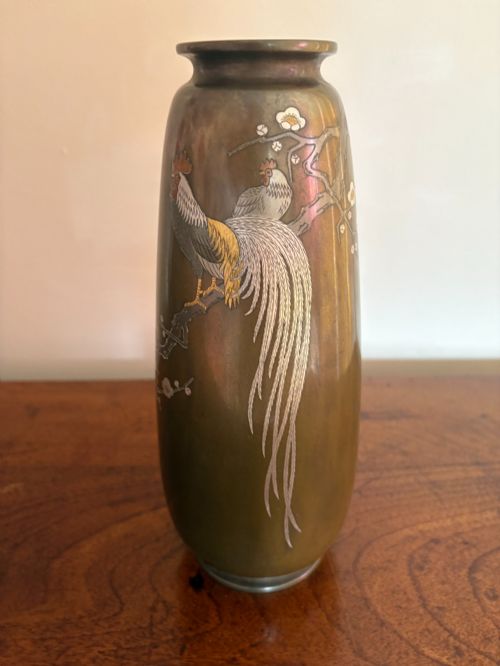
Potters and artisans shaped these vessels from ceramic bases such as porcelain and earthenware, or cast them in bronze and copper. Once formed, pieces received intricate surface treatments involving hand-applied glazes, vibrant enamels, and delicate gold leaf gilding.
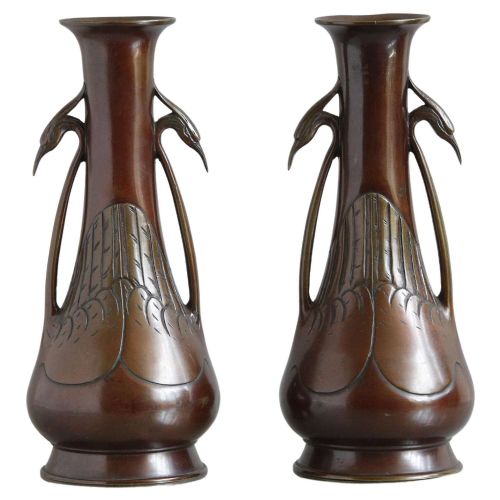
Metal vessels often incorporated inlaid details or sculpted elements like egret handles, whilst ceramic pieces relied on meticulous hand-painting to delineate complex figural scenes, mon crests, and botanical patterns across the body.
Egrets occasionally stand guard as handles on bronze vases, watching over the mantelpiece.
What varies in quality
Quality rests upon the precision of the hand-painting, the richness of the enamel and gilding work, and the structural integrity of the ceramic body or metal casting. Exhibition pieces display superior fineness in brushwork and more complex figural or decorative compositions.
The presence of recognised makers or workshop signatures, such as those associated with Satsuma or Kutani production, distinguishes standard decorative output from works intended for international exhibitions and high-end collections.
KANASAWA·Shozan·Manpei·Hododa
The Antique Oriental Mantel Vases Glossary
- Garniture
- A set of matched vases or decorative vessels designed to be displayed together on a mantelpiece or sideboard. These typically consist of three or four pieces sharing a unified decorative scheme.
- Imari palette
- A traditional style of ceramic decoration employing a distinctive colour scheme of underglaze blue, iron red, and gold overglaze. Originating in Japan, this aesthetic heavily influenced European taste.
- Cloisonne
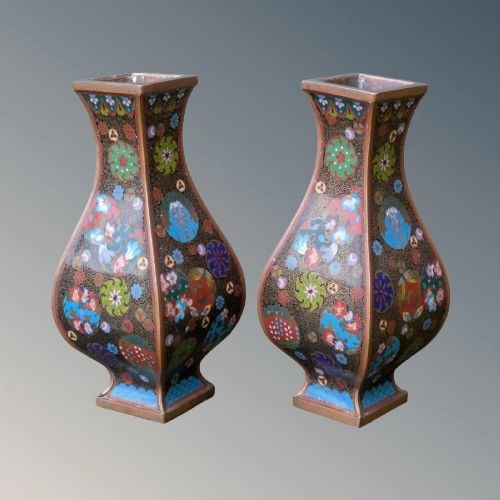
- A metalwork technique where enamel paste is applied within compartments created by soldering flat metal wires to a bronze or copper base. The piece is then fired and polished to a smooth finish.
- Satsuma
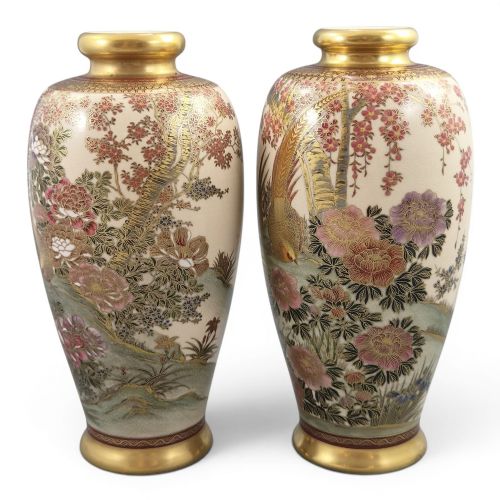
- A type of Japanese earthenware featuring a crackled ivory glaze decorated with polychrome enamels and gilding. These pieces frequently depict historical figures, court scenes, and floral motifs.
- Meiji Period
- The era in Japanese history spanning from 1868 to 1912, noted for opening trade with the West and producing highly detailed decorative arts for export markets.
Antique Oriental Mantel Vases: Frequently Asked Questions
What is a mantel vase garniture?
A garniture is a coordinated set of three or four vases intended for symmetrical arrangement across a mantelpiece or shelf. These matched sets create a balanced visual display characteristic of period interiors.
Individual pieces within a garniture share identical decorative motifs, colour palettes, and manufacturing techniques, ensuring a cohesive appearance when grouped together in a formal room.
How do I identify Satsuma ware?
Satsuma ware is characterised by its distinctive ivory-coloured earthenware body covered in a fine, network-like glaze crackle. The surfaces are typically embellished with rich polychrome enamel and gold leaf.
These pieces frequently depict historical figures, women, and children, often accompanied by artist signatures or family crests such as the Shimazu mon.
What distinguishes Kutani porcelain?
Kutani porcelain originates from Japan and is noted for its vibrant hand-painted enamels, traditionally dominated by intense greens, blues, purples, and reds. These vessels often feature meticulous geometric borders framing central pictorial scenes.
Works span small decorative vases to larger display pieces produced throughout the Meiji period and subsequent decades.
How were bronze mantel vases decorated?
Bronze vessels from these periods utilised metalworking techniques such as casting, inlay, and applied sculptural details. Artisans often incorporated naturalistic motifs like egret handles or integrated contrasting metallic elements into the body.
These heavy metal pieces provided a durable alternative to porcelain and earthenware for prominent display locations.
What is the Imari palette?
The Imari palette refers to a specific decorative style defined by the combination of deep underglaze blue, rusty iron red, and extensive gold gilding. This distinctive colour scheme was applied to porcelain and earthenware vessels in Japan.
Pieces decorated in this palette present a bold, high-contrast appearance that remained popular across both the Edo and Meiji periods.