





Antique Oriental Embroidery
These antique oriental embroidery textiles bring rich motifs and fine needlework from across Asia into modern rooms.
Antique Oriental Embroidery
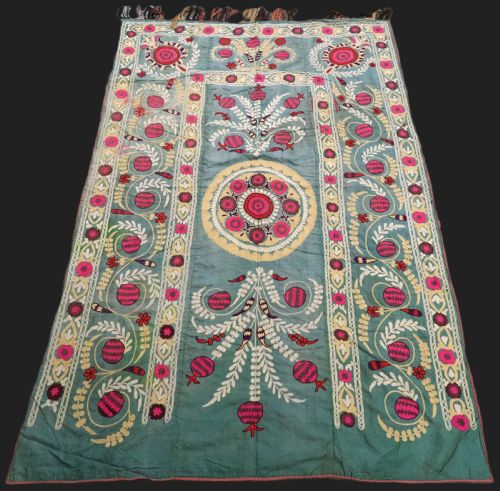
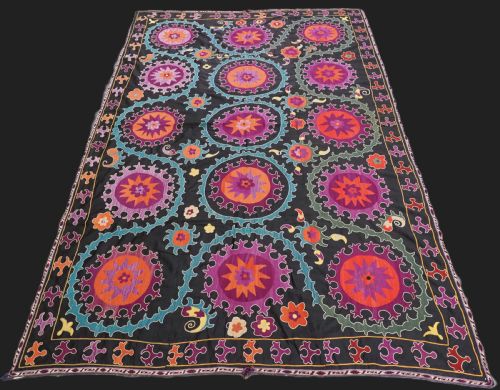
An antique oriental embroidery selection spans decorative textiles, wall hangings, table screens, and garments sourced from regions including China, Central Asia, Turkey, and Persia. Buyers encountering this phrase will find diverse regional forms such as Uzbek suzanis, Persian Rasht panels, and Chinese silk embroidered screens.
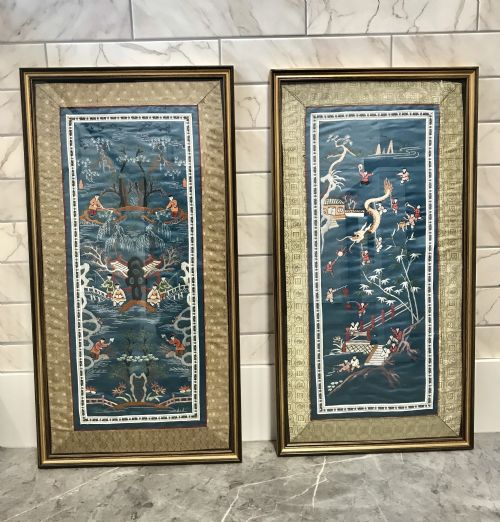
The objects date primarily from the nineteenth and early twentieth centuries, capturing traditional aesthetics of the Qing Dynasty, Ottoman Empire, and Central Asian tribal workshops. Pieces range from framed figural panels and architectural suzanis to practical items like robes and jackets.
How They Were Made
Artisans executed these works using fine silk, cotton, and wool threads meticulously stitched onto woven grounds, often incorporating metallic thread, glass elements, or felt applique work. Central Asian suzanis typically feature bold silk embroidery on cotton or linen foundations, while Persian Rasht examples utilise complex mosaic-like felt and silk applique techniques.
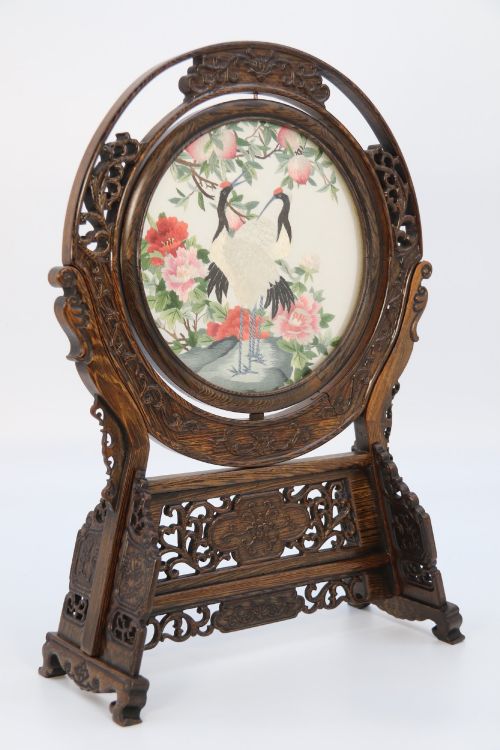
Many textiles rely on hand-sewn pictorial and geometric motifs, occasionally mounted within carved hardwood frames, rotating display stands, or folding screens. Ground fabrics vary from simple black and red cotton to rich velvet and silk, highlighting regional specialities.
Listings feature textiles spanning the nineteenth and early twentieth centuries, utilising silk, wool, felt, and metallic thread.
What Varies in Quality
The calibre of an antique oriental embroidery depends heavily on the density and precision of the needlework, alongside the complexity of the design layout. Finer examples display intricate, uniform stitches and sophisticated colour blending that elevate pictorial depth, particularly in figural and architectural compositions.
Material preservation and the integrity of the ground fabric dictate distinction across the range. Pieces retaining vibrant, original dyed threads and intact metallic or applique elements stand apart from heavily faded or compromised specimens.
Iida Takashimaya Company
The Antique Oriental Embroidery Glossary
- Suzani
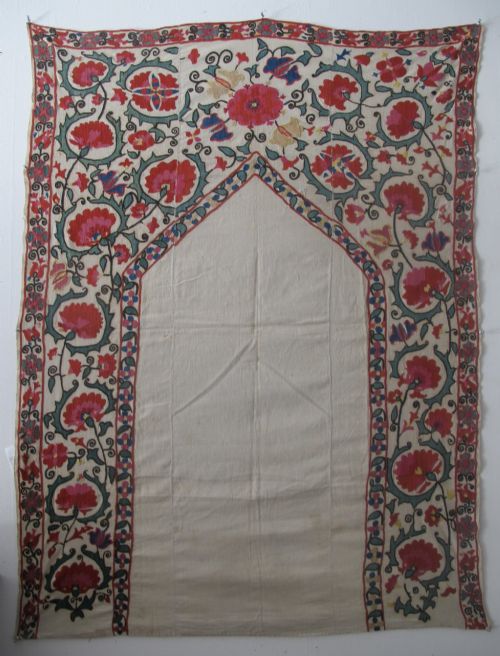
- A large, embroidered tribal textile originating from Central Asia, traditionally worked in silk on a cotton or linen foundation. These decorative hangings often display bold floral, sun, or architectural motifs.
- Rasht embroidery
- A traditional Persian technique involving colourful silk and felt applique work assembled in intricate mosaic patterns. Artisans cut and stitch pieces of felt to form rich surface decoration on wool or cotton grounds.
- Metallic thread
- Metal-wrapped yarn utilised in needlework to add shimmering outlines and luminous highlights to garments and panels. It frequently appears in Ottoman and Qajar dynasty textiles.
- Double sided embroidery
- A sophisticated needlework technique where the image appears identically on the front and reverse of a translucent silk ground. This method is notably associated with Chinese textile arts.
- Chain stitch
- A looping sewing technique that forms a series of connected stitches resembling a chain. It is widely employed in regional rugs and decorative panels for its texture and durability.
Antique Oriental Embroidery: Frequently Asked Questions
How were suzanis used?
Suzanis were traditionally created by brides and their families as part of a dowry in Central Asian cultures. They functioned as wall decorations, bed covers, and ceremonial wrappings.
In modern settings, these large embroidered textiles are typically displayed as wall art or decorative throws. Their bold patterns bring vibrant colour and historical texture to contemporary interiors.
How do I care for antique textiles?
Preserving antique needlework requires protecting the fabric from direct sunlight, which can fade delicate silk and cotton threads over time. Displaying pieces away from high-moisture areas ensures the organic fibres remain stable.
When framing or mounting these textiles, use conservation-grade materials that prevent direct contact with glass. Gentle, professional textile cleaning is recommended only when necessary to avoid damaging fragile stitches.
How can I tell regional styles apart?
Regional styles reveal themselves through distinct motifs, colour palettes, and stitching techniques. Central Asian suzanis often feature large floral medallions and vines on cotton grounds, while Persian Rasht work utilises felt applique.
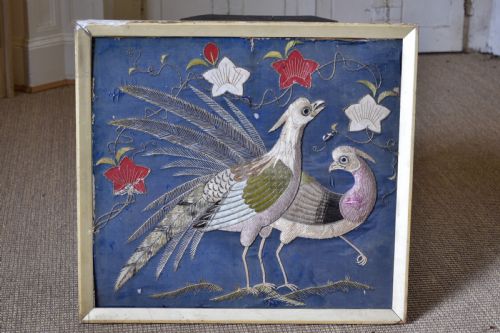
Chinese pieces frequently display formal iconography such as birds, dragons, and figures using refined silk thread. Ottoman and Qajar works incorporate heavy gold or metallic thread embroidery on rich velvet or wool.