

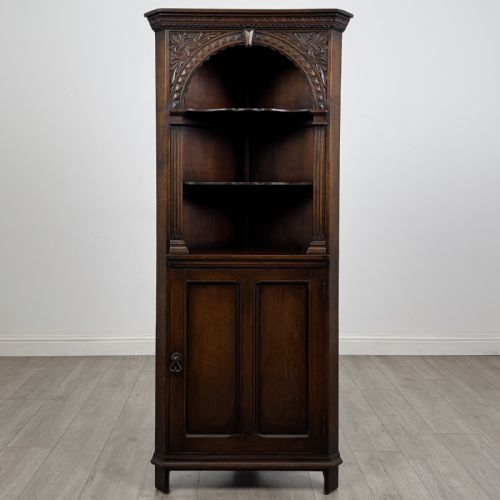
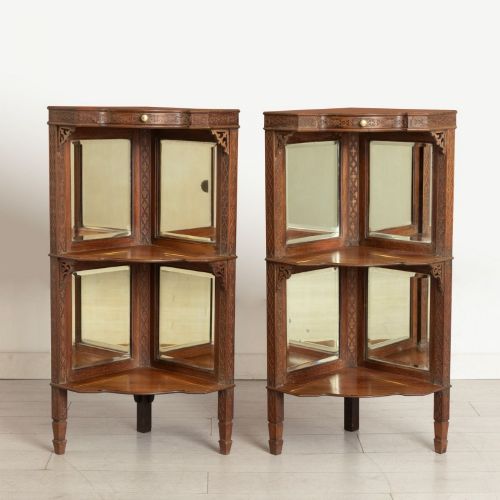

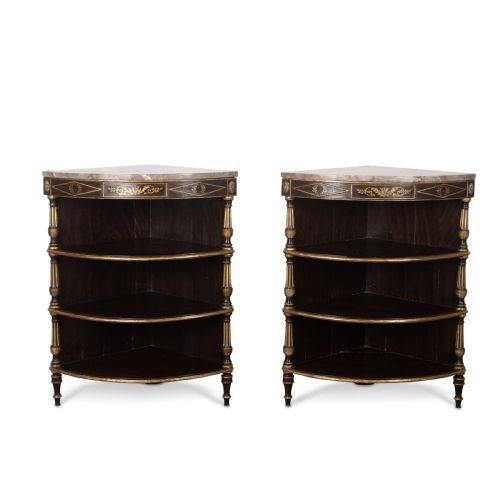


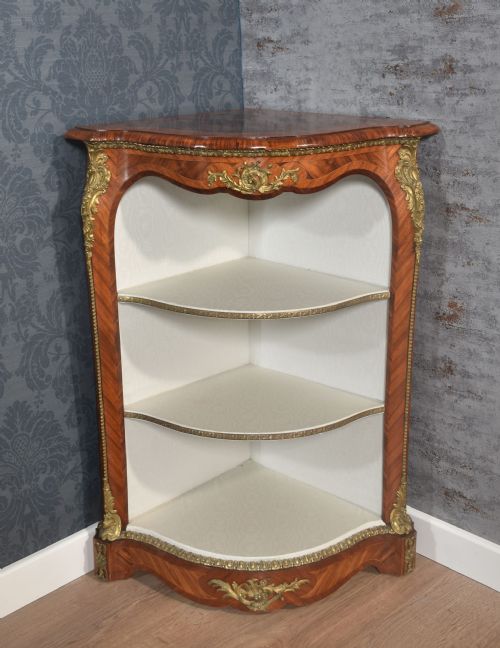
Antique Open Corner Cupboard
These antique open corner cupboards turn neglected angles into display space, offering Georgian proportion and Victorian utility in a single footprint.
Antique Open Corner Cupboard
An antique open corner cupboard utilises dead space in a room, fitting snugly into a ninety-degree junction between walls. The pieces recorded here span the eighteenth and nineteenth centuries, taking forms from simple hanging cupboards to grand display cabinets.
Buyers are most likely to encounter nineteenth-century mahogany pieces on this page, alongside earlier eighteenth-century examples in oak and painted wood. The selection also includes dwarf bookcases, whatnots and etageres with open shelving or enclosed lower cupboards.
Origin and period dictate the character of each piece, ranging from rustic pine country furniture to polished Regency and William IV specimens. These units function equally well for displaying ceramics or housing a modest library in a dining room or study.
How they were made
Cabinetmakers constructed these cupboards primarily in mahogany, oak, and pine, selecting timber according to the intended formality of the piece. Finer examples integrate brass hardware, mirror glass, gold leaf, and ormolu mounts to elevate the visual weight.
Construction techniques balanced stability with elegance, utilising sturdy pegged joints for heavy eighteenth-century oak while applying delicate painted finishes and gilded decoration to later Regency and Victorian items. Surface treatments range from clear wax polish over rich wood grain to elaborate polychrome paint.
Antique Open Corner Cupboard Retail Price Guide 2026
Typical asking prices for open corner cupboard among the pieces listed under this phrase on Sellingantiques today, from the lower quarter to the upper quarter. They describe what is for sale here now, not the wider market.
The listings on this site encompass periods from the eighteenth century through to nineteen-ten, spanning oak, mahogany, pine, and painted wood.
What varies in quality
Quality rests upon the selection of timber and the restraint of the decoration, distinguishing architectural clarity from heavy-handed restoration. Finer pieces display well-figured mahogany veneers or precise carved details, while simpler country versions rely on honest utility.
The integration of secondary materials such as ormolu mounts, marble tops, and mirror glass signals a higher workshop origin. Proportion remains critical, as the best examples negotiate the transition from wall to corner with balanced shelving and clean sightlines.
Edwards and Roberts·Goodhall Lamb and Heighway
The Antique Open Corner Cupboard Glossary
- Ormolu
- Gilded bronze mounts applied as decorative accents on furniture. This technique is frequently seen on French Rococo and high-style nineteenth-century pieces.
- Whatnot
- A set of open shelves standing on legs, designed for displaying ornaments or books. Examples in the records combine these shelves with a lower cupboard.
- Georgian
- The design period spanning the reigns of the first four Georges, characterised by classical proportion and refined mahogany cabinetmaking. Pieces from this era often feature fielded panels and dental moulding.
- Regency
- The stylistic period covering the early nineteenth century, drawing heavily on classical Greco-Roman motifs. Furniture from this time typically exhibits bold wood grains and restrained brass detailing.
- William IV
- The British design era bridging the Regency and Victorian periods, known for robust proportions and dark timbers. Pieces often showcase substantial mahogany construction.
Antique Open Corner Cupboard: Frequently Asked Questions
How do I choose the right size?
Measure the wall clearance on both sides of the corner and check the height against your skirting boards. Taller cabinets require stable walls and sufficient vertical clearance to maintain correct proportion in the room.
Consider whether you need enclosed storage at the base or entirely open shelving for display. Smaller hanging versions free up floor space entirely, whereas tall corner bookcases anchor a room.
Were these made for specific rooms?
Historically, corner cupboards suited dining rooms and parlours where wall space was at a premium. They held glassware, ceramics, or small collections out of the main traffic flow.
Today, they adapt readily to hallways, studies, and drawing rooms. Their triangular footprint makes them practical for rooms that cannot accommodate a deep rectangular bookcase.
How do I care for the wood?
Keep wooden surfaces away from direct sunlight and heat sources to prevent the timber from splitting or warping. Dust regularly with a dry cloth and apply a traditional beeswax polish sparingly to maintain the sheen.
Avoid silicone-based sprays, which build up over time and dull the grain. Period brassware and ormolu mounts should be left unpolished unless active tarnish threatens the metal.
How do I date an antique cabinet?
Examine the secondary timbers used for the backboards and interior shelves, such as pine or oak, alongside the construction joints. Hand-cut dovetails and timber movement indicators often point towards earlier eighteenth-century craftsmanship.
Style markers, such as Regency classical motifs or Victorian rustic pine finishes, provide a reliable framework for dating. Compare the hardware and glass type against known period manufacturing techniques.