
Antique Open Back Chairs
These antique open back chairs span centuries of cabinet-making, offering structural form and exposed timber frames designed for sitting in comfort.
Antique Open Back Chairs
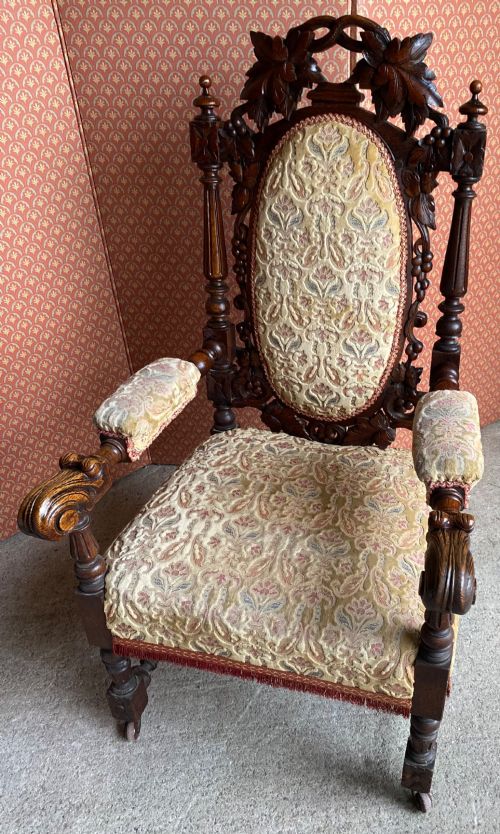
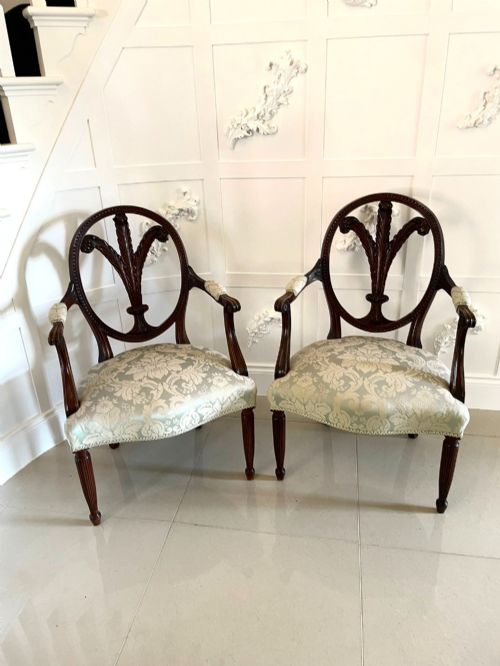
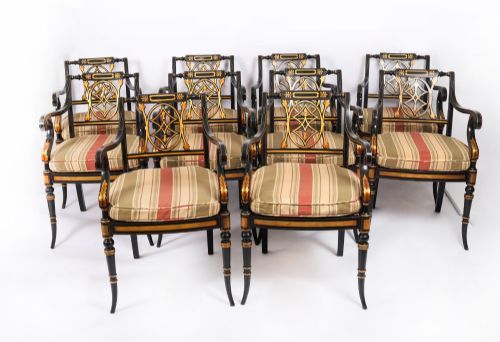
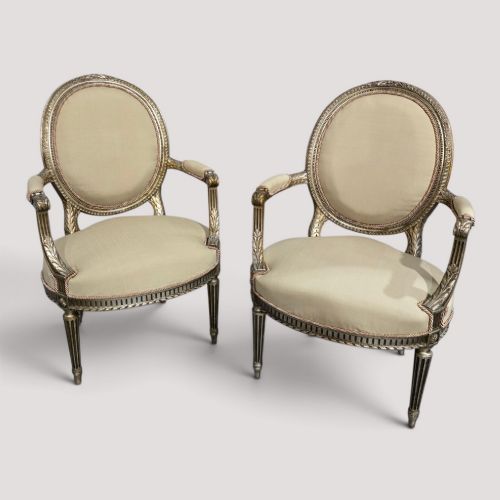
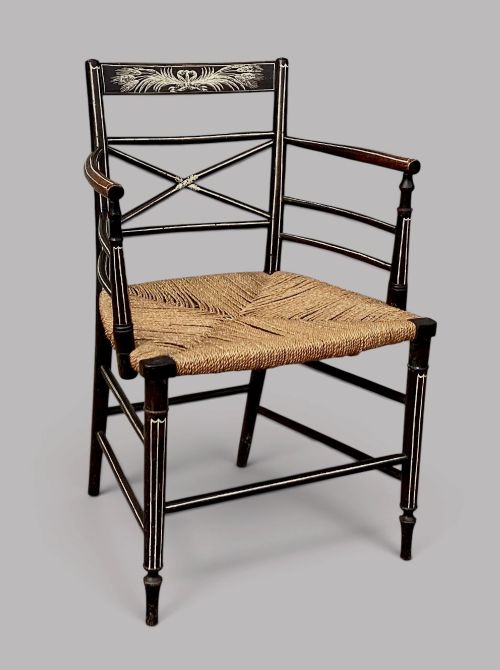
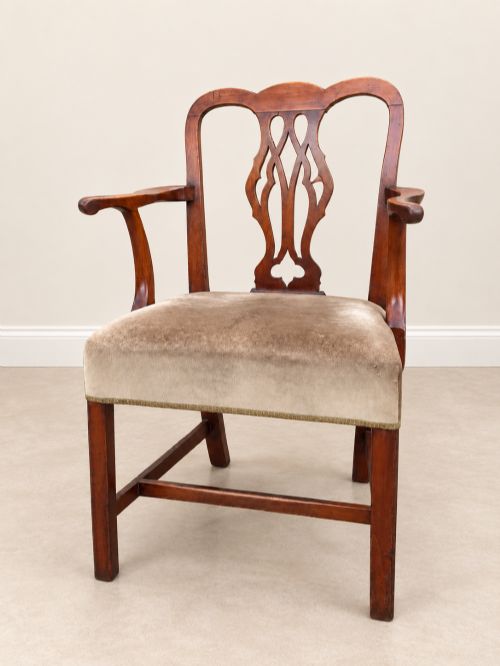
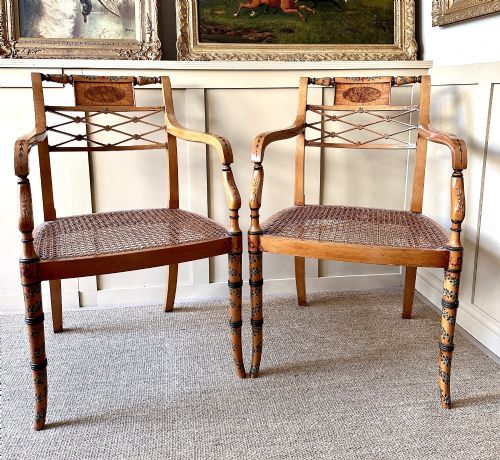
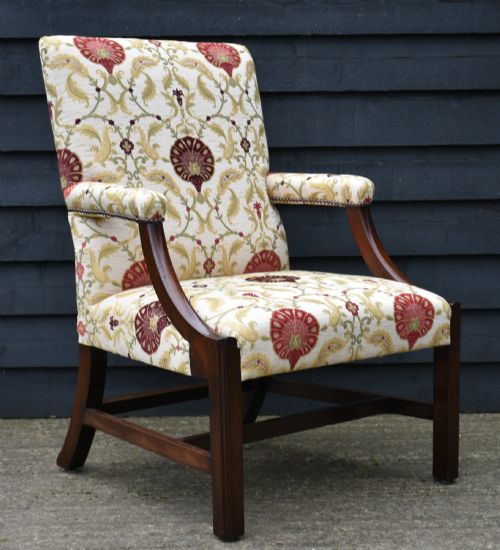
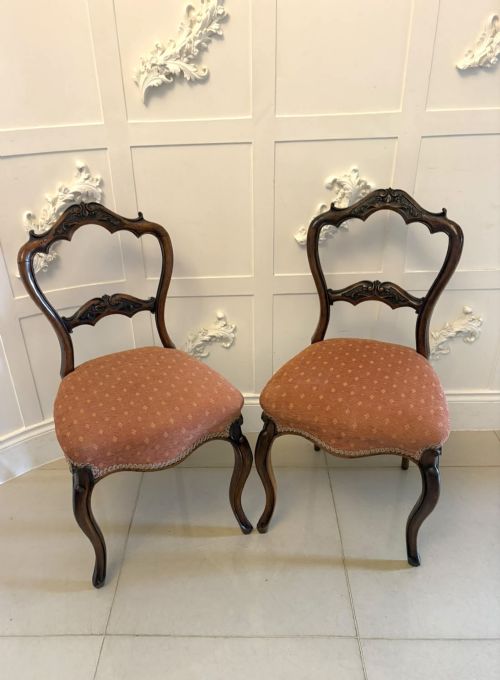
When you search for antique open back chairs, you encounter a wide selection of seating encompassing armchairs, side chairs, dining chairs, and salon chairs. The forms range from early wainscot oak seats to refined George III library armchairs and later revival pieces.
The material record on this page shows a heavy reliance on mahogany and walnut, alongside oak, giltwood, and satinwood. These timbers provide the structural integrity required for open frames where the back relies on joinery rather than solid panels.
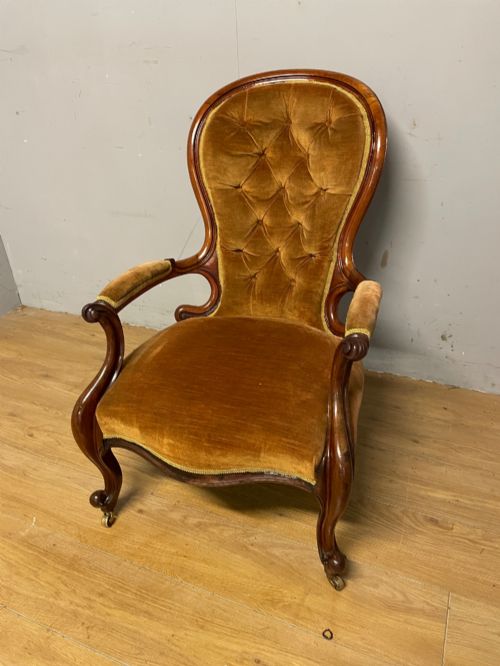
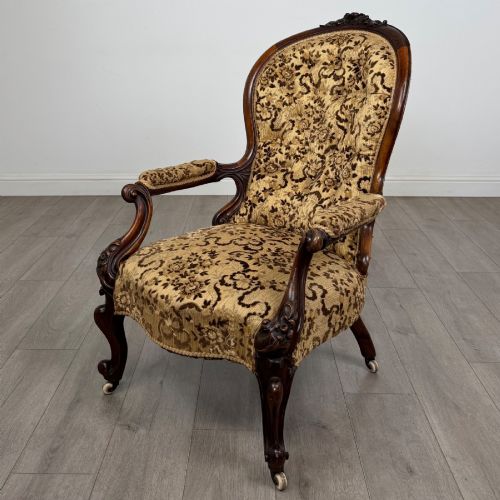
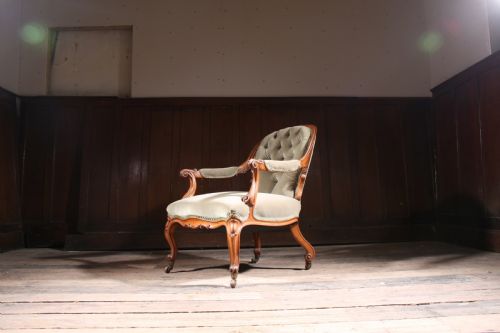
Victorian and Georgian examples dominate the selection, appearing alongside earlier 17th-century models and 20th-century revivals. Buyers will find formal library and Gainsborough chairs sitting alongside rustic country house models and lighter salon seating.
Construction and materials
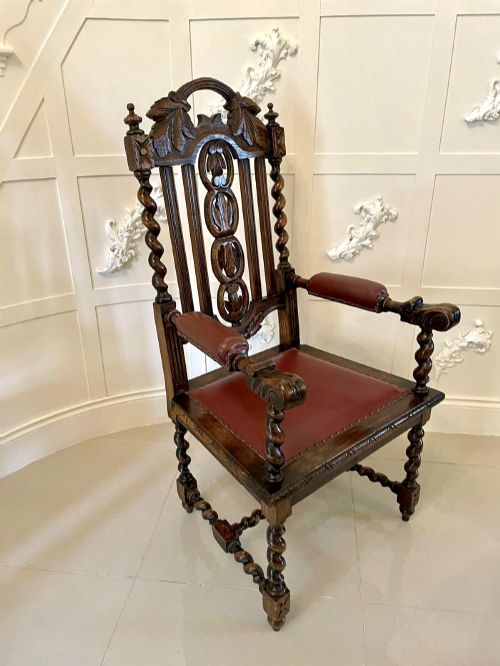
Makers utilised solid hardwoods such as mahogany, walnut, and oak to build the load-bearing frames. These timbers permitted intricate hand-carving along the arms, splats, and crest rails without compromising the stability of the open back structure.
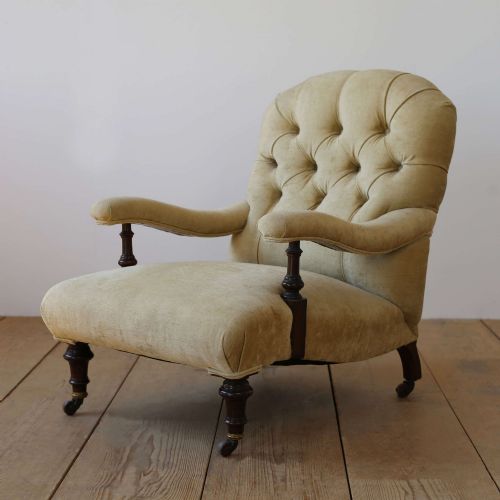
Upholstery materials include traditional fabric, leather, velvet, and brass details. These elements were secured directly to the wooden frames, often featuring open arms that exposed the polished timber beneath.
Surface finishes varied from giltwood leaf applied to decorative salon chairs to polished mahogany and oiled oak on country house and library models.
One listed piece is specifically designated as a drunkard's chair, built for relaxing with a wide stance.
Judging quality in open back seating
The distinction between tiers rests on the crispness of the hand-carving and the selection of timber grain. Superior examples exhibit deeply sculpted rails and well-matched wood selections that enhance the visual weight of an open frame.
Structural joinery dictates longevity, particularly where arms meet the upright supports and where legs join the seat rails. Finer pieces maintain rigid frames through traditional tenon joints rather than supplementary mechanical fastenings.
Proportion and stance separate standard production from exceptional examples. The sweep of an open arm or the rake of a ladder-back determines both comfort and visual balance.
Howard and Sons·Thomas Chippendale·Gillows·Edward Barnsley·Mellier and Co
The Antique Open Back Chairs Glossary
- Gainsborough chair
- A wide armchair with a padded back and open upholstered arms, standing on four legs. This form originated in the mid-18th century for library and desk use.
- Wainscot chair
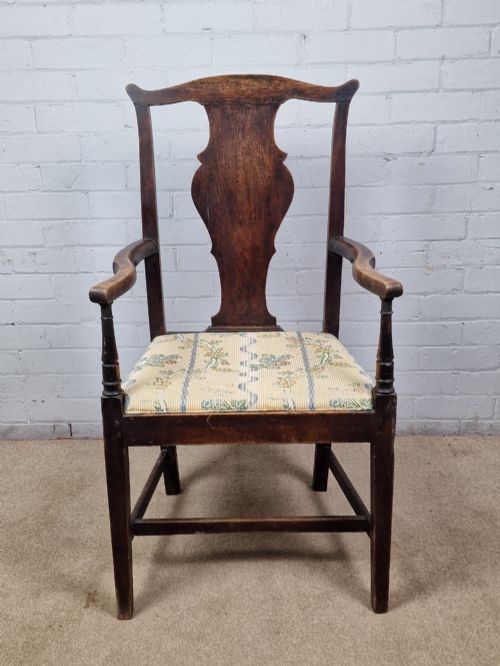
- An early wooden armchair constructed primarily from oak with panelled backrests and solid arms. These sturdy seats represent some of the earliest domestic seating forms.
- Giltwood
- Timber coated with a thin layer of gold leaf or gold paint. This finish appears frequently on 18th-century and revival salon chairs.
- Carver
- A term for an armchair, often used in the context of dining sets where two matching armchairs accompanied a set of side chairs. They provide wider seating for the head of a table.
- Lyre back
- A chair back featuring a splat shaped like an ancient Greek lyre instrument. This motif gained popularity during the late 19th century revival periods.
Antique Open Back Chairs: Frequently Asked Questions
How do I date an antique armchair?
Dating relies on identifying the primary timber, the style of the carving, and the construction methods used in the frame. Oak dominates earlier centuries, while mahogany and walnut become prominent in the Georgian and Victorian eras.
Revival pieces often combine historical styles with the machine-assisted joinery techniques typical of the late 19th and early 20th centuries.
Were these chairs used at dining tables?
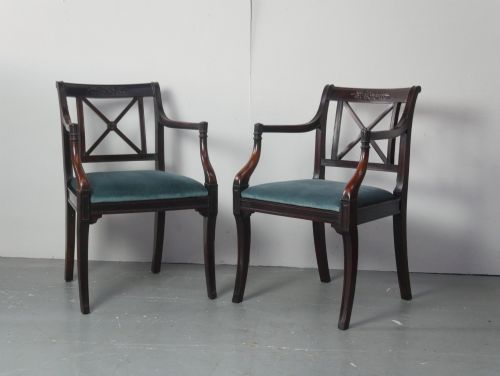
Many open back chairs served as dining furniture, particularly when created as sets containing both side chairs and matching armchairs.
Armchairs were typically placed at the heads of the table while side chairs lined the sides.
How should I care for antique wood frames?
Maintain timber frames by keeping them away from direct heat sources and sudden humidity changes that can cause wood to split. Regular dusting with a soft cloth preserves the polished surface without requiring heavy chemical polishes.
Leather and fabric upholstery components require specialist cleaning appropriate to their specific textile type.