
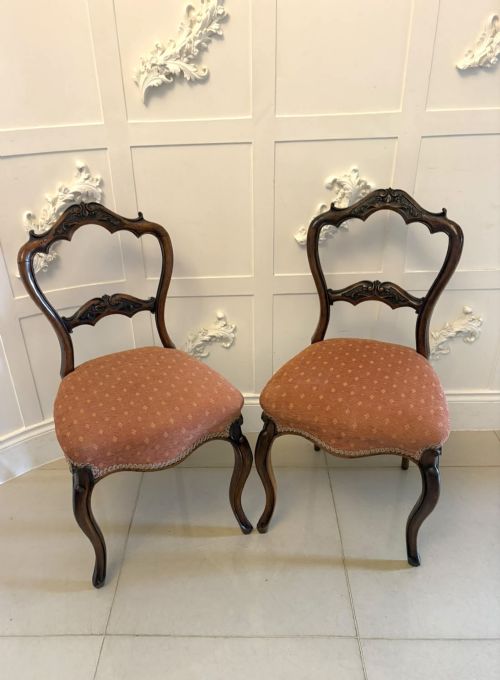
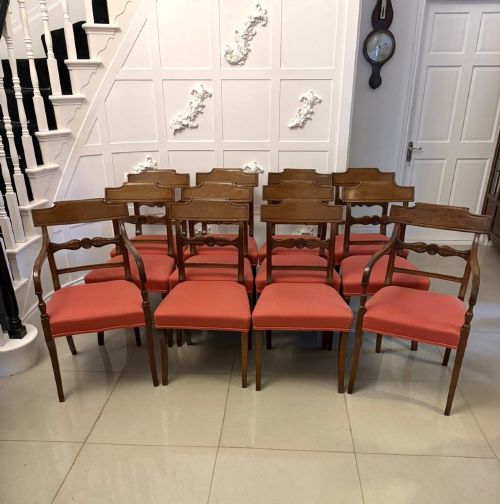
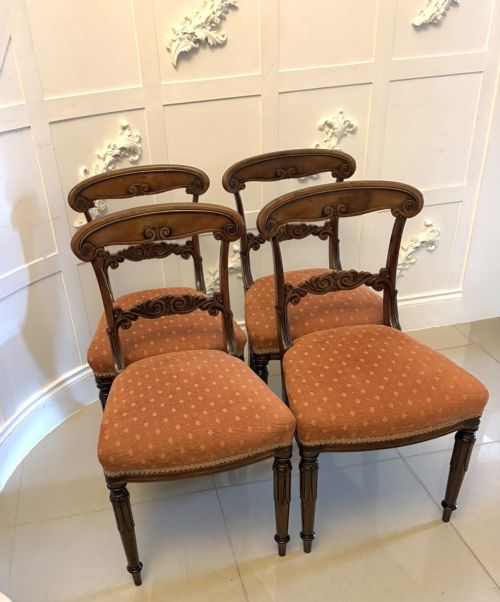
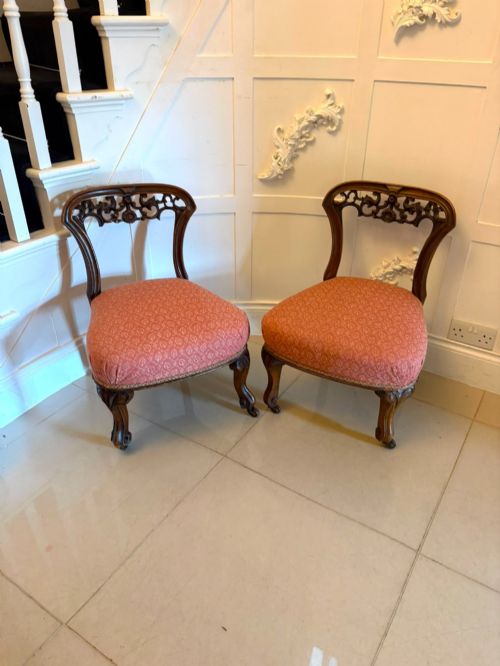
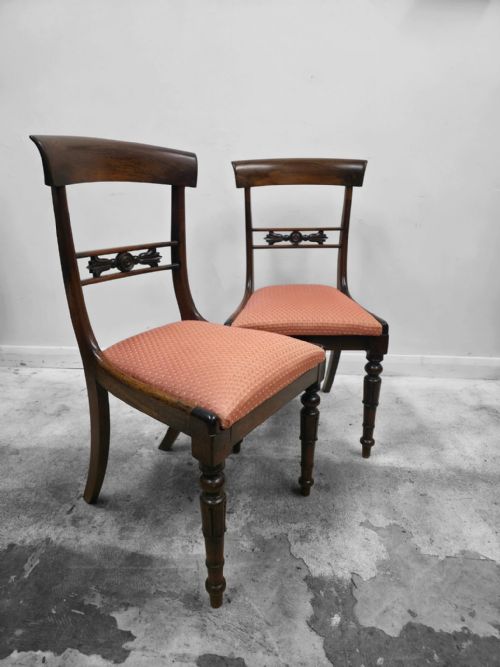
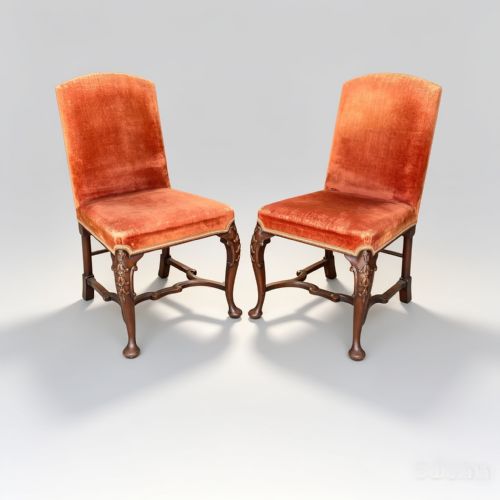
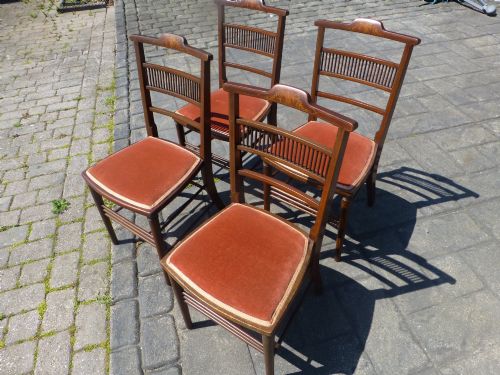


Terracotta Upholstered Side Chair
These terracotta upholstered side chairs bring warmth and tactile depth to any room, offering versatile seating grounded in centuries of cabinet-making tradition.
Terracotta Upholstered Side Chair
A terracotta upholstered side chair brings together robust wooden frames and warm textile seating, as seen across various periods on this page. These pieces primarily function as dining chairs or occasional seating, spanning formal Victorian dining rooms and earlier George II designs.
Most examples encountered here date from the Victorian era through to the Edwardian period, often constructed from rich timbers like mahogany and walnut. They appear as individual seats, pairs, or larger matched sets suitable for a dining table.
Makers and workshops from Edinburgh to London produced these forms, incorporating stylistic revivals ranging from Louis XV to Grand Regency. Buyers select them for their combination of sturdy period frames and rich terracotta textile tones.
Materials and Construction
Frames rely on dense hardwoods such as mahogany, walnut, and rosewood, selected for their structural strength and capacity for intricate carving. Cabinet-makers shaped pierced splat backs, balloon backs, and tulip legs using traditional joinery methods.
Upholstery techniques secure various textiles, including plush velvet and woven fabric, over supportive internal padding fixed to the wooden framework. Decorative details like boxwood inlay and brass accents complete the surface enrichment of select pieces.
Periods represented span from the eighteenth century through to the Edwardian era.
Judging Quality
Superior quality rests in the crispness of the timber carving, from the depth of the George II style motifs to the fluid lines of the Victorian balloon backs. Timber selection dictates longevity, with dense, well-figured walnut and mahogany holding structural integrity far better over time.
The precision of the joinery and the integrity of the frame dictate the distinction between everyday seating and superior workshop production. Cohesive sets matching across six or more chairs command greater interest than assembled groups due to uniform wear and identical construction.
Morison and Co of Edinburgh·Munro
The Terracotta Upholstered Side Chair Glossary
- Splats
- The central vertical wooden strip down the middle of a chair back. Pierced splats feature cut-out openwork designs.
- Balloon Back
- A rounded, oval-shaped chair back popular during the Victorian period. It curves outward to support the back comfortably.
- Inlay
- A decorative technique where contrasting materials like boxwood are inserted into recesses in the wood surface. This creates flat patterns and linear borders.
- Tulip Legs
- Turned wooden chair legs shaped to resemble the bulbous profile of an opening tulip flower. They appear frequently on mid-nineteenth-century seating.
Terracotta Upholstered Side Chair: Frequently Asked Questions
How do I clean terracotta upholstery?
Maintenance depends entirely on whether the textile is velvet or a flat-woven fabric, as each reacts differently to moisture. Vacuum gently with a soft brush attachment to remove surface dust.
For marks, consult a professional textile conservator rather than applying domestic cleaning fluids directly to antique fabric. This protects the original fibres surrounding the wooden frame.
Are these chairs suitable for daily dining?
Many Victorian and Georgian timber chairs were built for regular dining use and remain structurally robust today. Check that the frame joints feel completely firm before putting them into heavy daily service.
Adding discreet felt glides helps protect both the wooden feet and modern flooring during routine movement around a table.
How do I date a walnut side chair?
Dating relies on observing stylistic markers such as leg shapes, backrest contours, and the presence of decorative inlays. Victorian examples often feature balloon backs and tulip legs, whereas eighteenth-century pieces display heavier carved walnut frames.
Tool marks and timber oxidation visible underneath the seat provide further physical clues to the period of manufacture.
Can I mix different sets together?
Combining chairs from different periods or styles creates an eclectic interior scheme around a dining table. Maintaining a consistent wood tone or similar upholstery colour helps unify mixed seating.
Ensure seat heights align reasonably well if guests are using them together for a meal.