





Antique Opaline Vases
These antique opaline vases bring a brilliant milky translucence and vibrant hand-painted colour to any mantelpiece.
Antique Opaline Vases
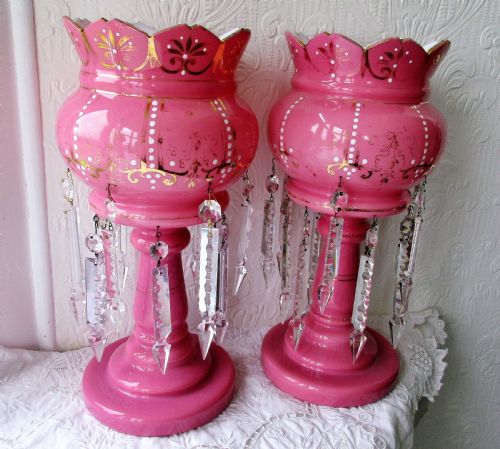
When you search for antique opaline vases, you are looking at decorative glass vessels spanning the nineteenth century, most frequently taking the form of pairs designed for mantelpieces or side tables. The selection ranges from simple bulb shapes to ornate table lustres hung with glass drops, originating primarily from French and English workshops.
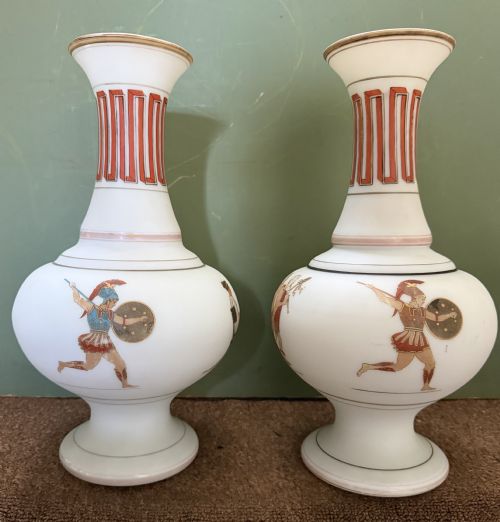
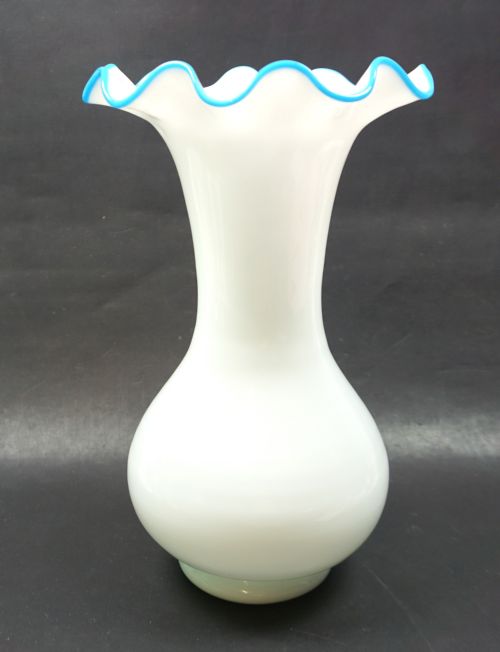
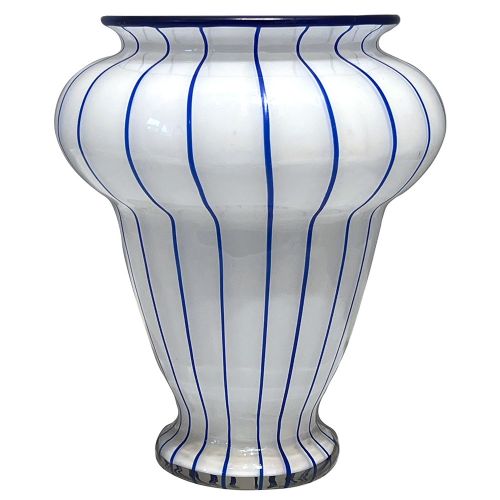
The pieces on offer here display a rich variety of forms, including classical Grecian profiles, slender necked cylinders, and footed urns. Many examples incorporate matching lustres or feature applied crystal components that elevate their decorative presence.
How they were made
These items are fashioned from specialised opaline glass or lead crystal, often combined with hand-applied enamel decoration and delicate gold leaf detailing. Master glassmakers utilised chemical opacifiers to achieve the characteristic opaque, milky white or coloured ground.
Decoration was applied by hand after the initial blowing process, utilising rich enamel colours and raised gilding to create floral motifs, botanical scenes, or geometric borders. Many French pieces feature intricate hand-painted designs attributed to specialised enamel artists working within major glasshouses.
Antique Opaline Vases Retail Price Guide 2026
Typical asking prices for opaline vases among the pieces listed under this phrase on Sellingantiques today, from the lower quarter to the upper quarter. They describe what is for sale here now, not the wider market.
Listings feature pieces from the nineteenth century, spanning Victorian and Art Nouveau styles alongside French Empire and Neoclassical designs.
What varies in quality
The distinction between standard production and the finest work lies in the purity of the glass body and the refinement of the surface decoration. Superior examples exhibit an even, dense opalescence without clouding or streaks in the material itself.
Artistry in the hand-painted enamel and the precision of the gilt highlights dictate the upper tier of the market. Pieces featuring multi-coloured floral designs, raised gilding, or complete sets of original hanging crystal prisms command greater attention.
Baccarat·Jean Francois Robert·Loetz
The Antique Opaline Vases Glossary
- Opaline glass
- A dense, translucent glass that appears milky white or coloured, developed in France during the nineteenth century. It forms the essential body for these decorative vessels.
- Lustre
- A type of vase fitted with a rim hung with cut glass prisms or pendants that catch the light. They were traditionally displayed in pairs on mantelpieces.
- Enamel
- A durable coloured glass paste applied to the surface of the vase and fired to fuse with the body. It provides the medium for detailed floral and figurative painting.
- Gilt
- A thin layer of gold or gold-coloured leaf applied to highlight rims, handles, and painted motifs. It adds a warm metallic contrast to the pale glass.
- Lead crystal
- A heavy, clear or coloured glass containing lead oxide for increased brilliance and weight. It is frequently utilised in the construction of finer prisms and decorative accents.
Antique Opaline Vases: Frequently Asked Questions
Were these vases made as pairs?
Many nineteenth-century decorative vessels were produced as matching pairs to flank a central clock or ornament on a mantelpiece. Symmetrical placement was a fundamental aspect of interior decoration during the Victorian and French Empire periods.
Single pieces do appear, often surviving independently after separation from their original counterparts. Pairs generally command higher interest among collectors seeking complete decorative sets.
What is the difference between opaline and opal glass?
Opaline glass typically refers to the refined, highly decorative nineteenth-century French ware characterised by dense pastel shades and artistic hand-painting. It was prized for its luxurious appearance and softness of tone.
Opal glass is a broader term encompassing various translucent, milky glass compositions used across different manufacturing centres. Both materials rely on bone ash or metal oxides to achieve their opacity.
How can I tell French from English pieces?
French production from makers like Baccarat often displays finer painted detail, such as raised floral enamel work and refined gilt borders. The forms frequently reflect classical Empire or Neoclassical design influences.
English examples tend toward robust Victorian styling, sometimes incorporating bolder colours like pink or deep blue with simpler gilt bands. Examining the weight, finish, and decorative motifs helps identify the likely country of origin.