


Antique Oil Lamp Floor Stand
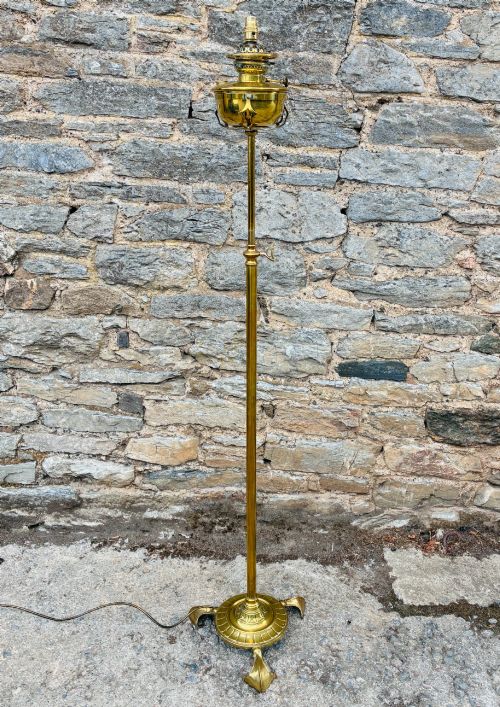
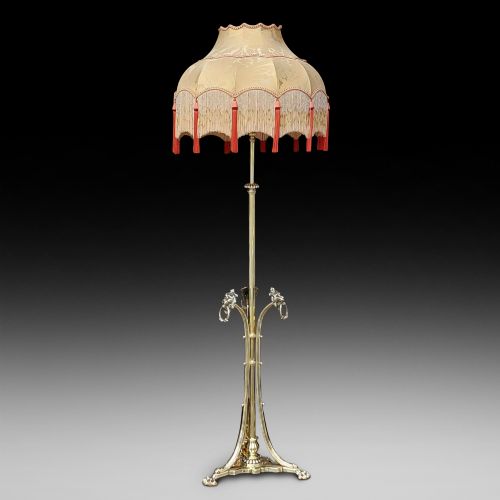
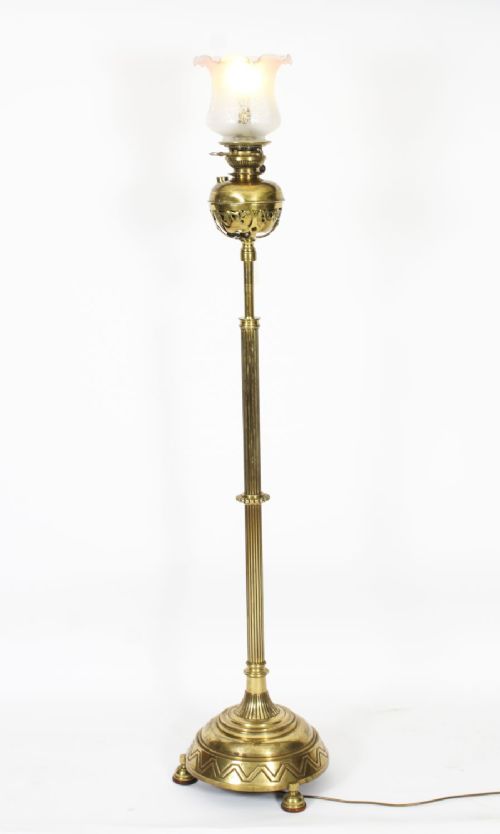
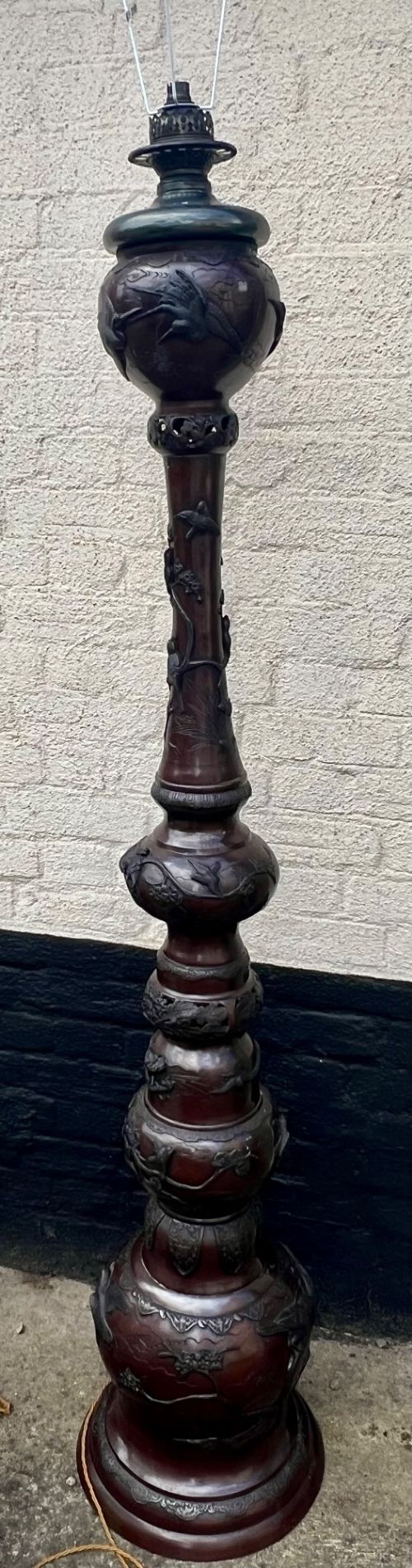
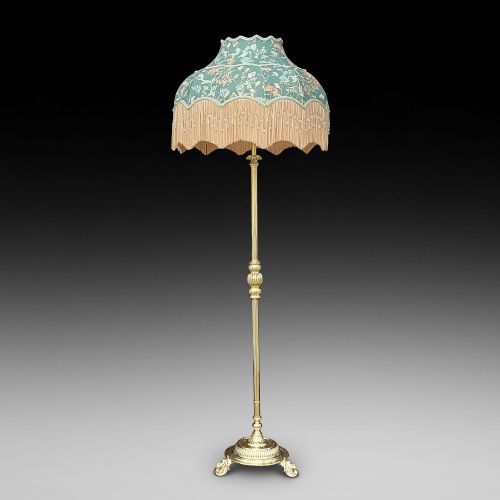
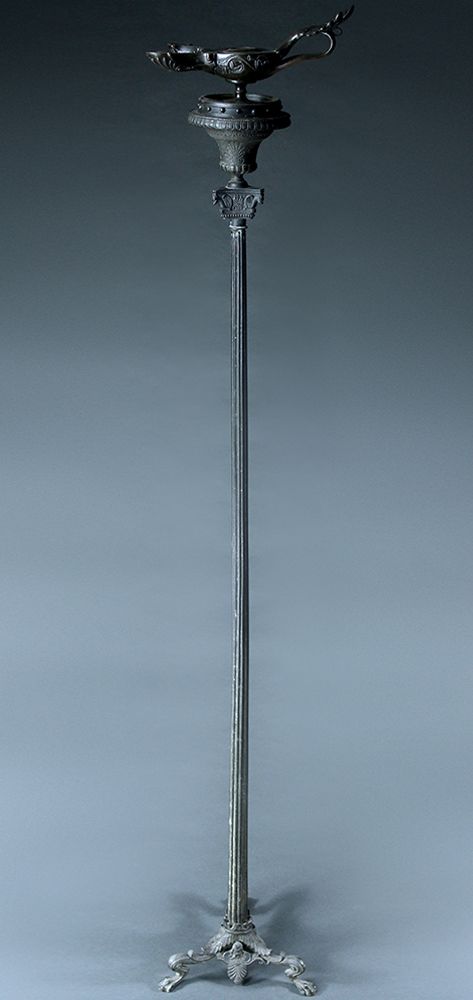
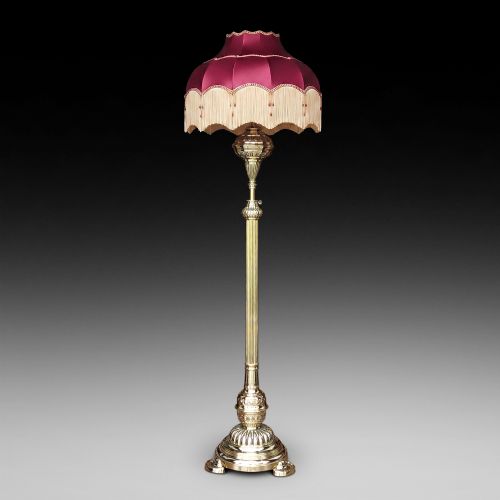
These antique oil lamp floor stands are heavy, adjustable floor pieces in brass, copper, and bronze, made to cast light from an elevated height.
Antique Oil Lamp Floor Stand
An antique oil lamp floor stand is a tall, freestanding column designed to hold an oil reservoir and burner, though many examples found here have since been converted to electric or adapted as standard lamps.
The pieces you meet most often date from the Victorian era and the late nineteenth century, spanning periods marked by distinct decorative movements such as Arts and Crafts, Neo-Classical, and Japanese Meiji designs.
These stands frequently utilise telescopic or extending mechanisms, allowing the height of the column to be adjusted by hand as needed in a room.
How they were made
Makers constructed the structural standards primarily from brass, copper, bronze, and wrought iron, often combining metals within a single piece to create tonal contrast between the shaft and the heavy base.
Vessels and shades incorporate coloured glass elements, including cranberry glass and ruby glass, alongside fabric components such as silk.
Casting, forging, and turning techniques produced the sturdy tripod bases, fluted columns, and adjustable collars necessary to support a heavy oil reservoir safely.
Materials recorded on this page include brass, copper, bronze, patinated bronze, wrought iron, glass, cranberry glass, silk, and fabric.
What varies in quality
The distinction between standard production and the finest work rests on the weight of the metal, the rigidity of the extending mechanism, and the presence of named maker engineering.
Works bearing the marks of established makers such as Hinks or Messenger demonstrate superior mechanical tolerances in their telescopic locking screws and heavy weighted bases compared to unsigned equivalents.
Hinks of B'ham·Messenger
The Antique Oil Lamp Floor Stand Glossary
- Telescopic
- A extending shaft construction that allows the overall height of the standard lamp to be raised or lowered. This mechanism relies on a key or collar to lock the inner tube at the chosen position.
- Standard Lamp
- A term used interchangeably with floor lamp, describing a tall vertical support designed to stand directly on the floor. These pieces position the light source well above table height.
- Cranberry Glass
- A rich pinkish-red glass created by adding gold chloride to the molten batch. It appears frequently in the reservoirs and shades of late nineteenth-century lighting.
- Ormolu
- Gilded bronze ornamentation applied to decorative metalwork. It provides a bright, golden surface finish on high-status nineteenth-century pieces.
- Grand Tour
- A nineteenth-century cultural journey through Europe that inspired the collection of classical antiquities and Neo-Pompeian bronzes. Lamps from this tradition adapt ancient architectural motifs for domestic lighting.
Antique Oil Lamp Floor Stand: Frequently Asked Questions
Are these lamps still able to burn oil?
Many of these stands have undergone conversion to electricity over the decades, though some retain their original burner assemblies.
Buyers intending to burn oil must inspect the internal condition of the reservoir and burner to ensure safe operation.
How do I adjust the height?
Most examples utilise a telescopic or extending brass shaft that moves vertically by hand. A thumbscrew or collar on the outer column locks the inner section at the desired height.
Care should be taken to support the upper section firmly while releasing the lock to prevent sudden drops.
How do I tell Victorian from Arts and Crafts?
Victorian stands typically feature polished brass, Corinthian columns, or ornate cast detailing suited to formal nineteenth-century interiors. Arts and Crafts examples favour simpler, functional lines in hammered copper or patinated brass.
The decorative philosophy shifts from historical revivalism toward visible construction and honest materials.
Where should I place a floor stand?
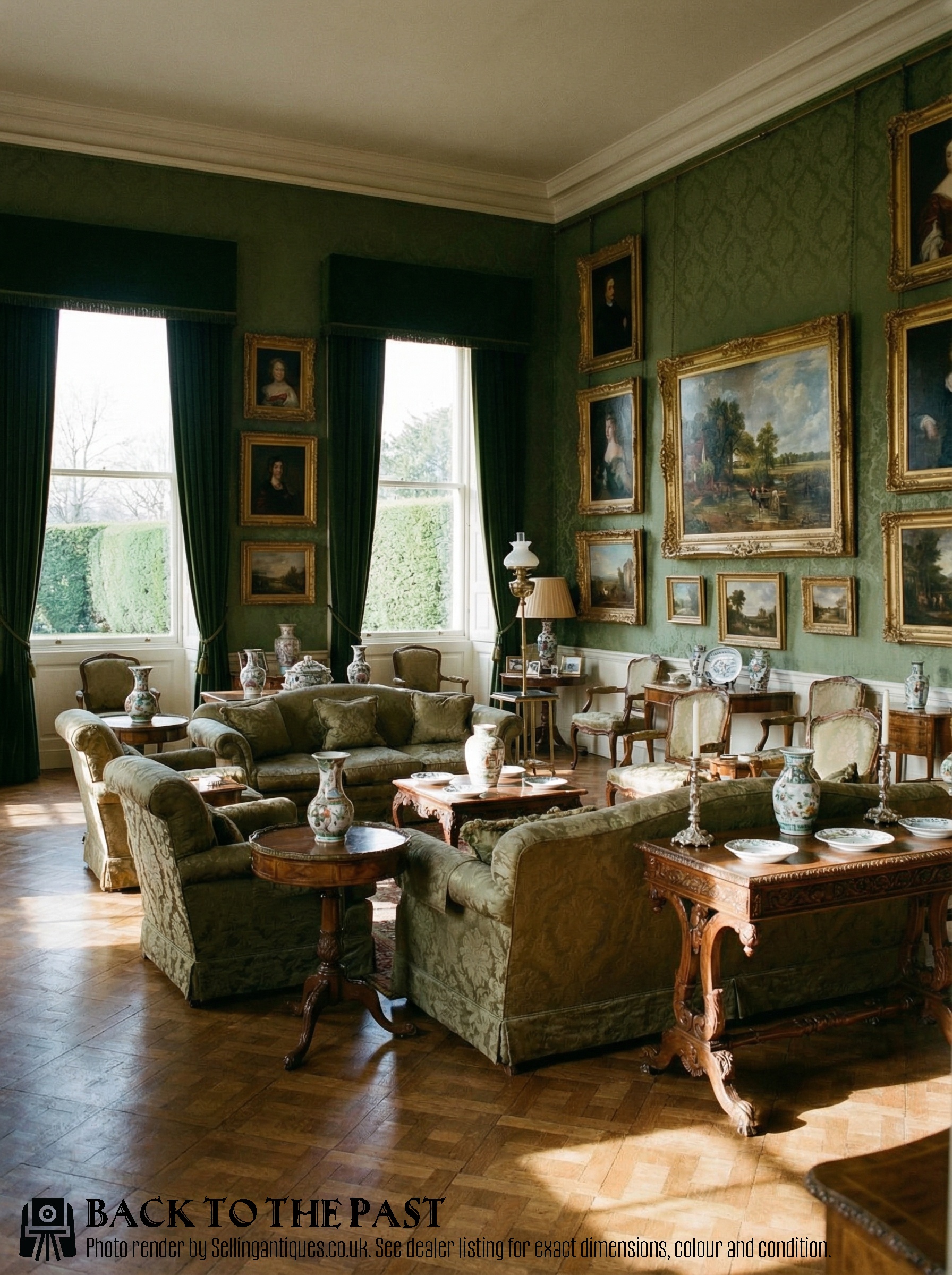
Because these stands possess a substantial weighted base and considerable height, they suit corners or beside heavy seating where they provide ambient illumination.
Their substantial footprint requires a stable, level floor surface to prevent tipping.