




Antique Office Index Chest
An antique office index chest offers robust storage for documents, and you are looking at practical filing cabinets and banks of drawers designed for workspace organisation.
Antique Office Index Chest
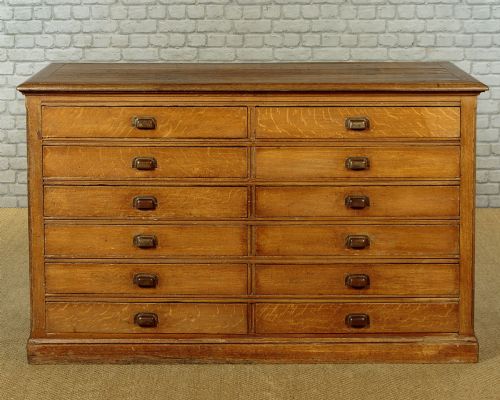
An antique office index chest serves as a functional storage piece, taking the form of multi-drawer filing cabinets, banks of drawers, and desktop units. When you search for an antique office index chest, you encounter sturdy pieces designed for paper management in commercial and domestic workspaces.
The selections span from the late nineteenth century through to the mid-twentieth century, encompassing Victorian, Edwardian, and industrial utility styles. You regularly find oak, mahogany, and walnut constructions alongside painted wood, pine, and metal variations.
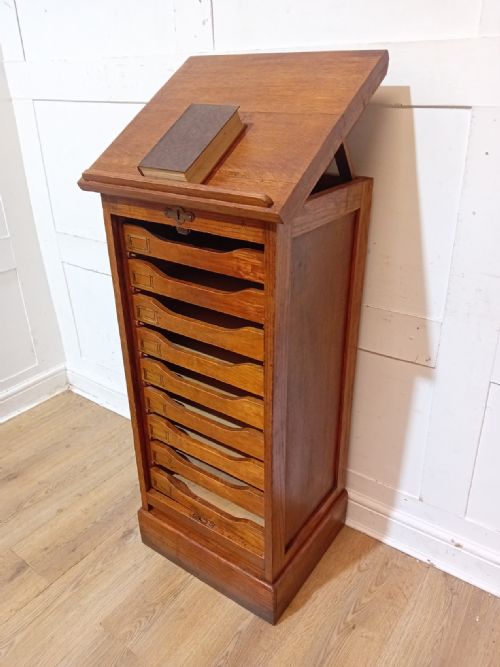
Origin formats range from British commercial designs to French industrial pieces and patented letter files such as Amberg systems. These multi-drawer chests provide practical classification through banks of small drawers, lecturn top cabinets, and haberdashery units.
Materials and construction methods
Cabinet makers utilised hardwoods such as oak, mahogany, and walnut for primary structures, often pairing them with pine carcases and beech components. Metal and steel elements appear in industrial utility pieces, while brass provides durable hardware for handles and label holders.
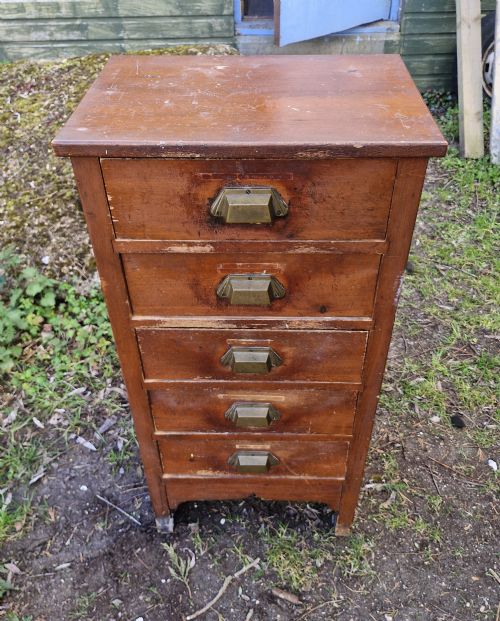
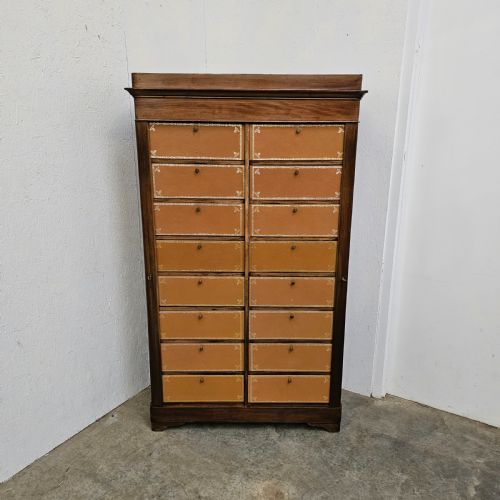
Drawer construction relies on tight joinery suited to daily commercial use, housing numerous small compartments for document sorting. Original details include fitted leather surfaces, shell pulls, and patent letter file mechanisms integrated into the cabinetry.
Cabinet forms include modular banks of drawers, lecturn top filing chests, and patent letter files.
Distinguishing quality in filing furniture
The standard of timber selection and interior joinery determines the grade of an office chest, distinguishing robust commercial work from lighter domestic pieces. Richly grained hardwoods and well-figured walnut or mahogany command attention over utilitarian pine.
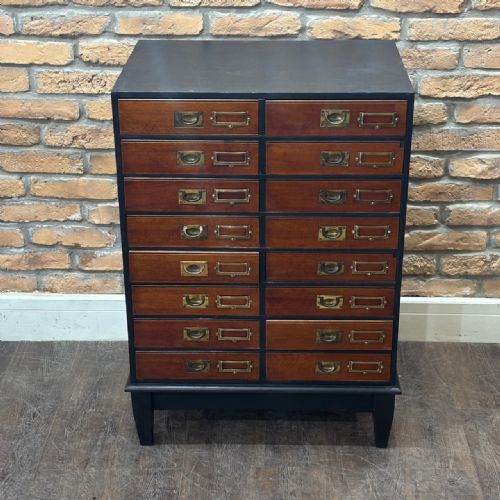
Completeness of original furniture hardware, including brass label holders and shell pulls, elevates the integrity of a multi-drawer cabinet. Patented mechanisms and intact maker systems add functional sophistication to the construction.
Amberg·Shannon
The Antique Office Index Chest Glossary
- Bank of drawers
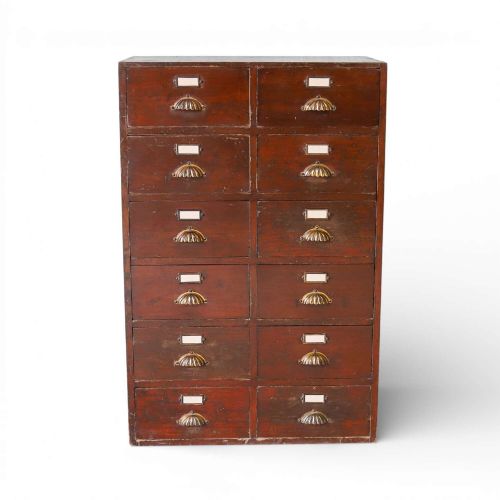
- A multi-tiered arrangement of numerous shallow drawers housed within a single tall or wide cabinet frame. These units served businesses by organising correspondence and index cards.
- Shell pull
- A stamped metal handle shaped like a scallop shell, frequently combined with a card frame. This fitting allowed clerks to insert labels identifying the contents of each drawer.
- Cartonniere
- A French desk accessory or cabinet containing multiple vertical compartments or drawers for papers. They are frequently finished in leather and fine timber veneers.
- Haberdashery cabinet
- A form of multi-drawer storage featuring numerous shallow glazed or panelled drawers originally utilised by drapers. Collectors repurpose them for sorting small items and documents.
- Patent letter file
- A specialised mechanical filing apparatus designed to hold documents securely in alphabetical or numerical order. Amberg systems represent notable examples of this technology.
Antique Office Index Chest: Frequently Asked Questions
What is an office index chest?
An office index chest is a piece of wooden or metal furniture containing multiple small drawers designed for sorting letters, index cards, and documents.
These pieces originate from the late Victorian and Edwardian periods through to the mid-twentieth century, reflecting commercial workspace needs.
How were index chests used?
Businesses utilised these multi-drawer units to organise correspondence, accounts, and reference papers before modern digital filing systems existed.
Clerks relied on label holders attached to drawer pulls to locate specific files quickly within large banks of drawers.
How do I identify an Edwardian cabinet?
Edwardian filing cabinets often feature lighter timbers such as satin walnut, mahogany, or polished oak with restrained classical detailing.
They typically date from around 1900 to 1910 and emphasise domestic utility alongside office practicality.
Are industrial filing chests different?
Industrial filing chests incorporate steel, painted metal, and robust utilitarian timbers suited to heavy factory or commercial environments.
French industrial examples from the early twentieth century often display functional metal hardware and robust unadorned carcases.