


Antique Oak Twist Chairs
These antique oak twist chairs combine turned timber supports with robust frames, offering sturdy seating with distinct period character.
Antique Oak Twist Chairs
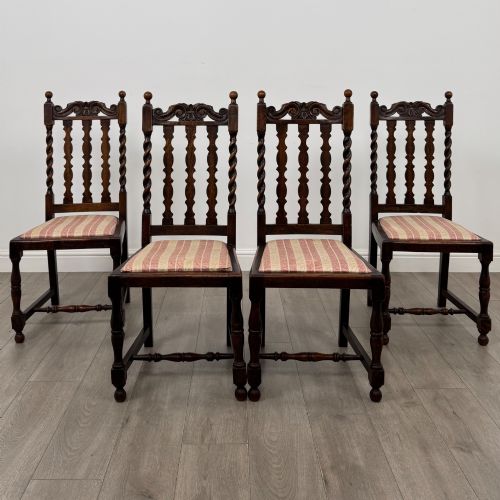
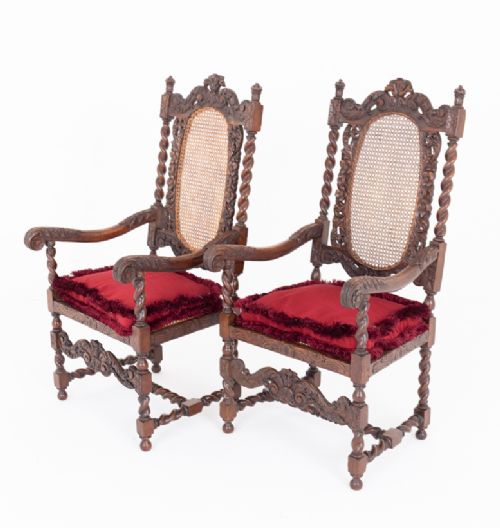
When you search for antique oak twist chairs, you encounter seating built around turned wooden supports, spanning forms from dining chairs to large armchairs and throne chairs. The pieces on this page draw from periods including the seventeenth century alongside nineteenth-century Victorian revivals and twentieth-century Edwardian interpretations.
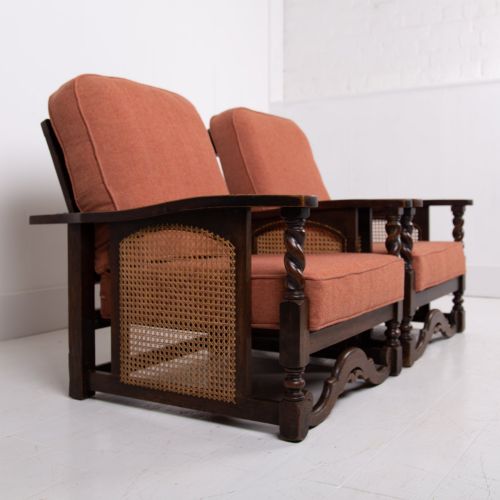
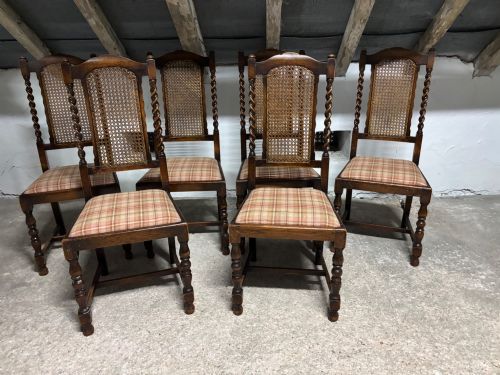
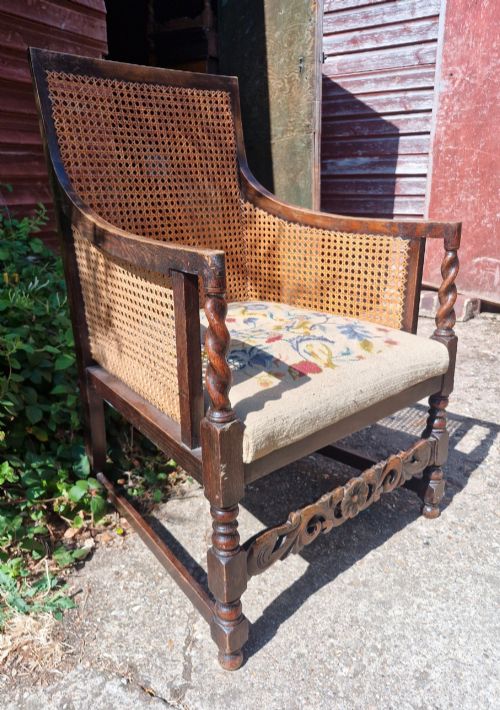
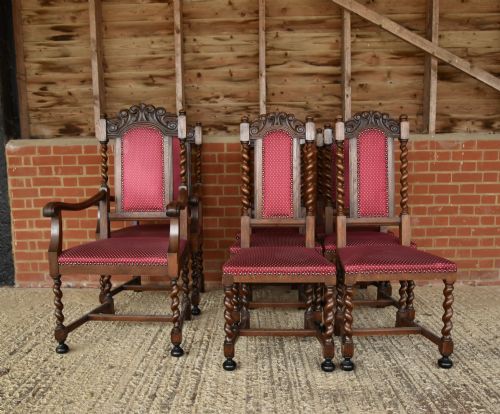
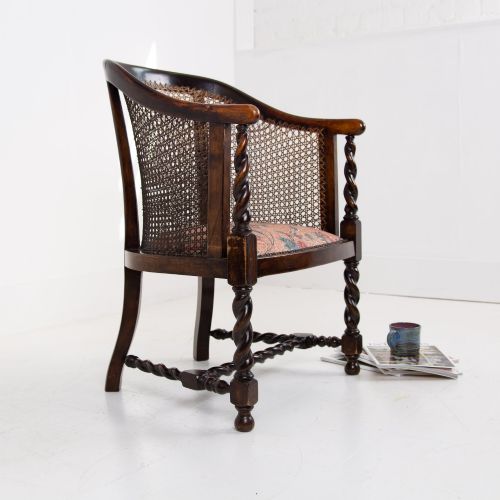
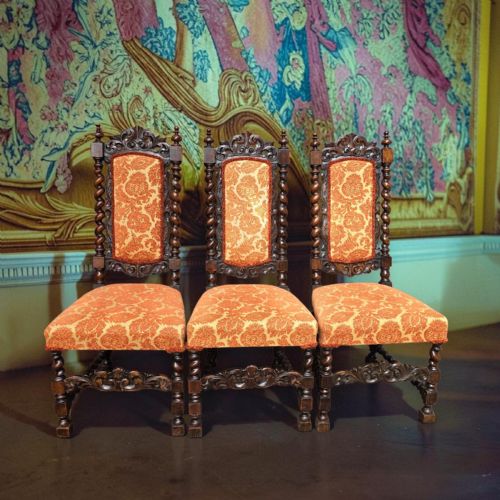
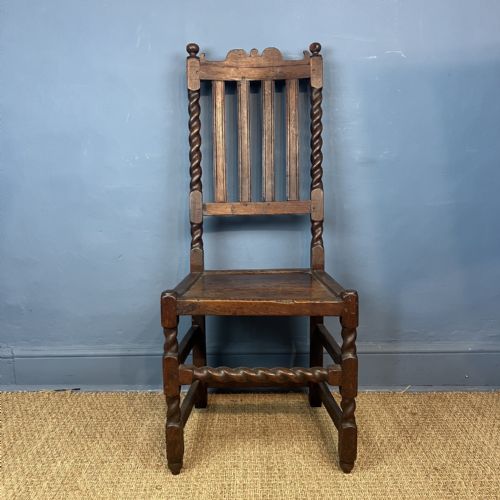
You are most likely to meet sets of dining chairs or pairs of armchairs featuring barley twist legs alongside styles like Jacobean, Carolean, and Gothic revival. Formats range from simple side chairs and hall chairs to grander caned back, bergere, and upholstered seating.
How they were made
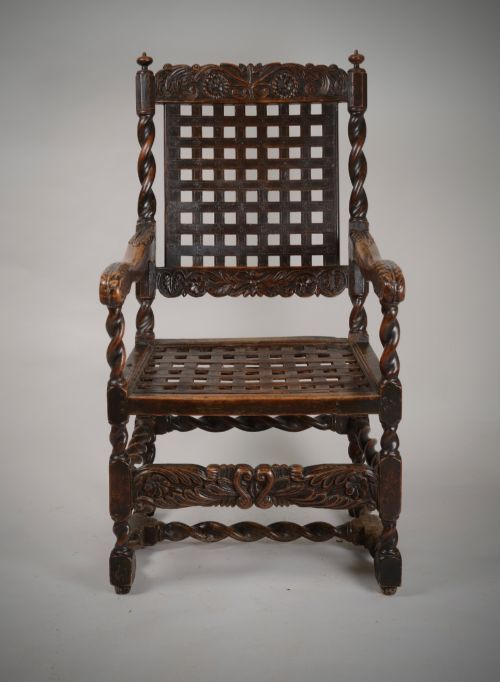
Cabinetmakers constructed these frames primarily in solid oak, often turning the timber on a lathe to create the characteristic spiral or barley twist uprights and stretchers. Joinery typically relies on traditional pegged mortise and tenon joints to bear weight across the heavy timber frames.
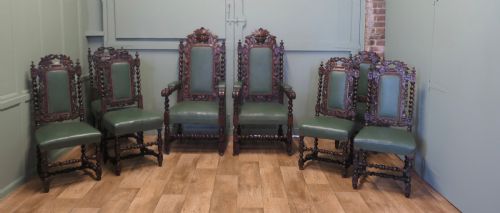
Seating surfaces vary according to the style and period, incorporating cane panels, woven bergere, leather, tapestry fabric, or velvet upholstery secured with brass tacks. Carved details such as lion heads, green men, and foliate motifs adorn the crest rails and arms of grander Victorian examples.
The inventory records formal dining sets, hall chairs, corner armchairs, and ecclesiastical prayer seats created across multiple revival periods.
What varies in quality
The distinction between standard examples and the top of the range rests on the crispness of the hand-carving and the thickness of the solid oak timber used in the frame. Matched sets of dining chairs command greater appreciation than assembled groups, particularly when the grain and colour of the oak align uniformly across every piece.
Original upholstery methods, intact period caning, and well-preserved surface patination elevate a piece above later replacements or heavy restorations. Robust construction in the twist turnings and stable joinery without excessive movement separate superior seating from lesser alternatives.
Liberty and Co·Edwards and Roberts
The Antique Oak Twist Chairs Glossary
- Barley twist
- A type of woodturning that resembles a spiral rope or the stalk of barley, frequently found on the legs and stretchers of these chairs.
- Bergere
- An enclosed upholstered armchair with a wooden frame where the sides and back are typically filled with woven cane.
- Carolean
- A seventeenth-century English furnishing style spanning the reign of Charles II, characterised by rich carving, scrolling foliage, and turned supports.
- Jacobean
- A seventeenth-century English design period featuring stiff, rectilinear frames and heavy turned oak elements, often revived in the nineteenth century.
- Prie-dieu
- A devotional prayer chair featuring a low seat and an elevated, padded top rail designed for kneeling and leaning.
- Throne chair
- A large, high-backed armchair featuring prominent carved ornamentation, solid oak construction, and an imposing stance.
Antique Oak Twist Chairs: Frequently Asked Questions
How do I identify seventeenth-century chairs?
Seventeenth-century originals display hand-cut joinery, pegged joints, and heavy timbers showing genuine age-related wear and patination. They often use native oak and feature simpler construction methods compared to later revival pieces.
Many chairs carrying seventeenth-century style descriptors actually date from Victorian or Edwardian revival periods when historical designs gained immense popularity.
Are these chairs suitable for daily dining?
Solid oak construction provides exceptional sturdiness, making these chairs well-suited for everyday use around a dining table. Their robust frames easily accommodate regular sitting when joints remain firm and stable.
For daily comfort, pairing wooden seats with loose cushions or selecting upholstered and bergere variants provides a softer seating experience.
What is a cane back chair?
A cane back chair incorporates woven rattan or cane panels into the backrest, creating a lighter visual profile within a heavy oak frame. This technique allows airflow and adds texture to the seating design.
Original caning requires gentle treatment, though many pieces feature well-executed modern replacements designed to match traditional weaving patterns.