



Antique Oak Slope Box
An antique oak slope box combines practical desktop storage with centuries of English cabinet-making, offering a slope for writing or a hinged lid for documents.
Antique Oak Slope Box
When you search for an antique oak slope box, you look at a practical class of desk accessories, bible boxes, and writing slopes designed for domestic or ecclesiastical use. The pieces span from the seventeenth century through the Victorian era, utilising timber such as golden, pollard, and burr oak alongside brass, iron, and leather.
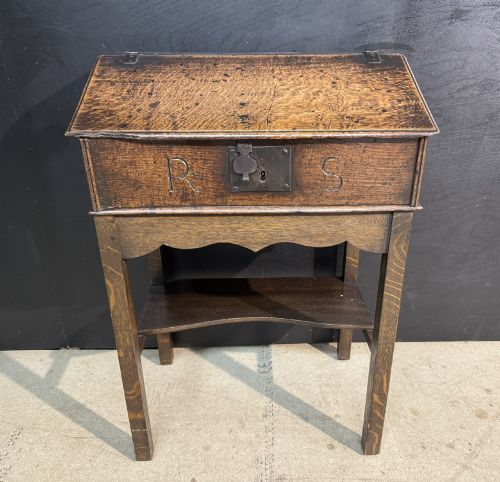
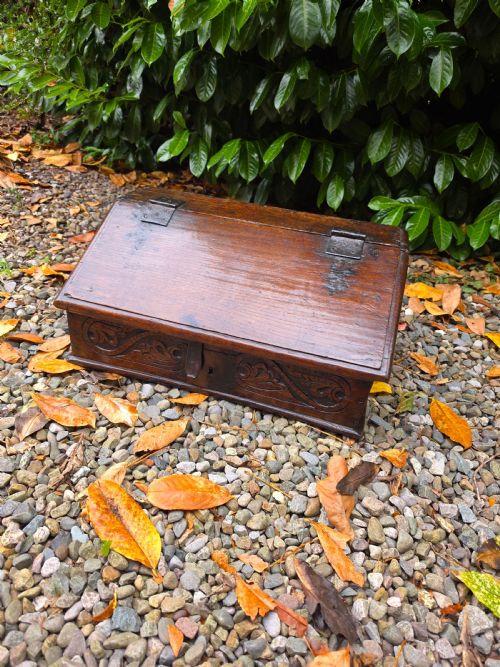
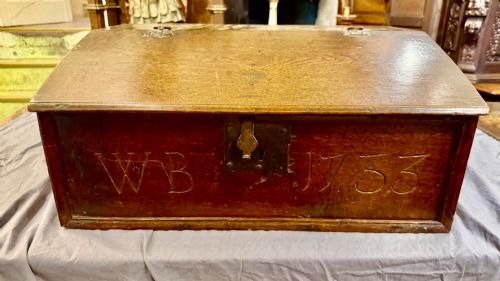
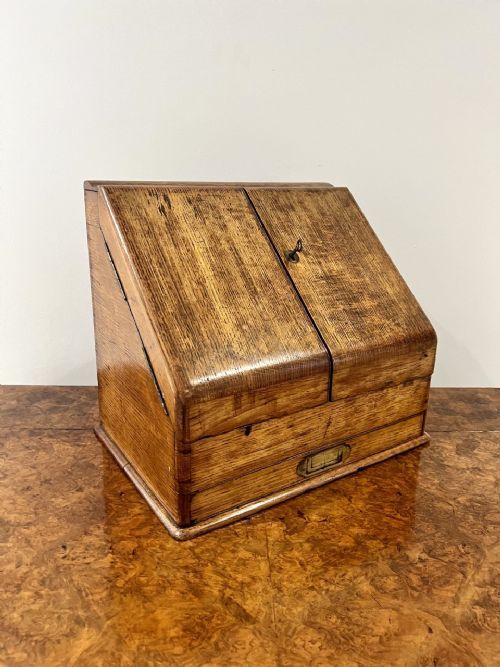
The form ranges from simple slant-front bible boxes and deed boxes to elaborate stationery cabinets and miniature bureaux on stands. Seventeenth-century examples often feature carved decoration and initialed panels, while later Victorian versions incorporate fall fronts and compartments for correspondence.
How They Were Made
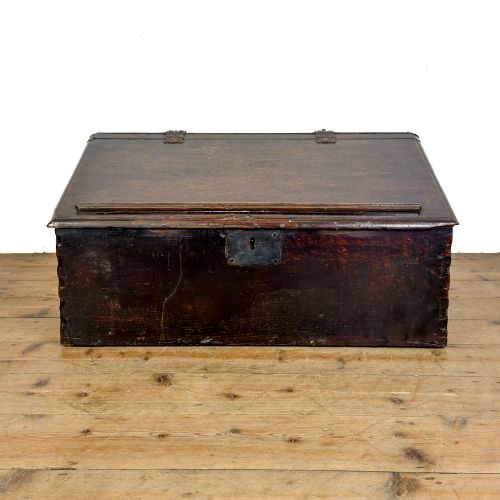
Cabinet-makers constructed these boxes using solid oak boards, frequently joined with dovetails or pegged tenons for structural strength on sloping lids and box bodies. Metal hardware played a functional and decorative role, with brass hinges, escutcheons, campaign mounts, and specialised locks securing the contents.
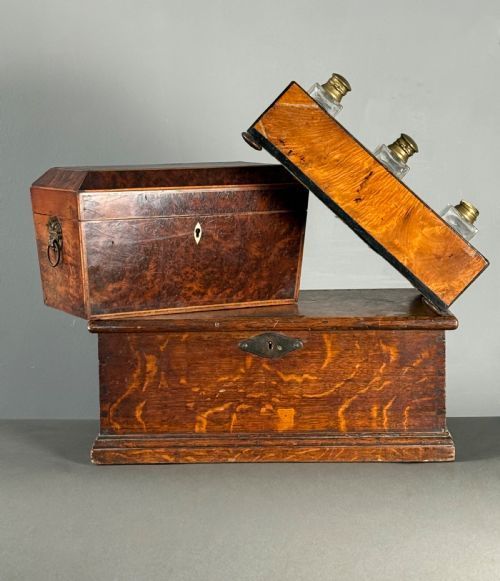
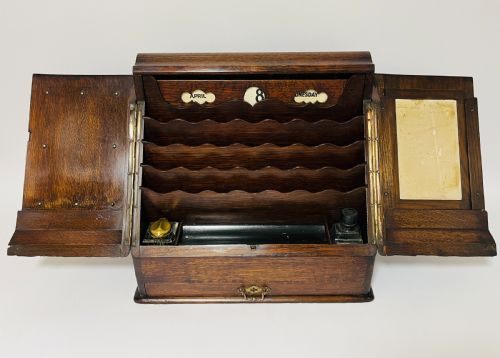
Surface elaboration included chip carving, panel moulding, and occasional inlay work utilising materials like holly, bog oak, mother of pearl, and bone. Interiors often featured fitted compartments, leather writing surfaces, and letter racks tailored to contemporary desk organisation.
The listings span from the 17th century through the Victorian era, utilising oak alongside brass, iron, walnut, leather, and mother of pearl.
What Varies in Quality
The caliber of an antique oak slope box rests upon the crispness of its original carving, the integration of secondary timbers, and the integrity of its joinery. Superior items display harmonious proportions, substantial oak thickness, and well-preserved interior fittings rather than later alterations or mismatched stands.
Hardware execution also distinguishes the grade, with high-tier pieces retaining robust brass locks, escutcheons, and hinges that match the period of manufacture. The grain selection in figured varieties, such as pollard or burr oak, dictates visual distinction across the desk top.
The Antique Oak Slope Box Glossary
- Bible box
- A hinged wooden chest historically used to store a family Bible, often featuring a sloping lid that doubled as a reading or writing rest.
- Slant-front
- A writing surface angled towards the user, hinged to provide access to interior compartments and document storage below.
- Escutcheon
- A protective plate surrounding a keyhole, commonly cast in brass or iron on the front panel of these boxes.
- Campaign style
- Portable furniture fitted with recessed brass handles and corner reinforcement, designed for travel and military use.
Antique Oak Slope Box: Frequently Asked Questions
What is an antique oak slope box?
An antique oak slope box is a desk accessory or small chest featuring an inclined lid, designed for writing correspondence or storing documents, letters, and books.
These pieces encompass bible boxes, writing slopes, and stationery cabinets produced across the seventeenth, eighteenth, and nineteenth centuries in solid oak.
How were these boxes used originally?
Users placed them on tables or desks to provide a firm, angled surface for handwriting letters and recording household accounts.
The interior compartments held inkwells, quills, wax seals, and important papers, keeping essential writing materials contained in one portable unit.
How do I date an antique oak box?
Dating relies on construction methods, hardware styles, and decorative motifs such as seventeenth-century chip carving or Victorian mass-produced joinery.
Earlier examples often display hand-pegged joints and vernacular designs, while nineteenth-century pieces frequently incorporate complex internal stationery racks and brass campaign mounts.
Did these boxes sit on stands?
Some larger desk boxes and bible boxes were raised on low stands or integrated into miniature bureaux with legs.
While many remained strictly table-top accessories, others were paired with contemporary or later stands to create independent writing desks.