




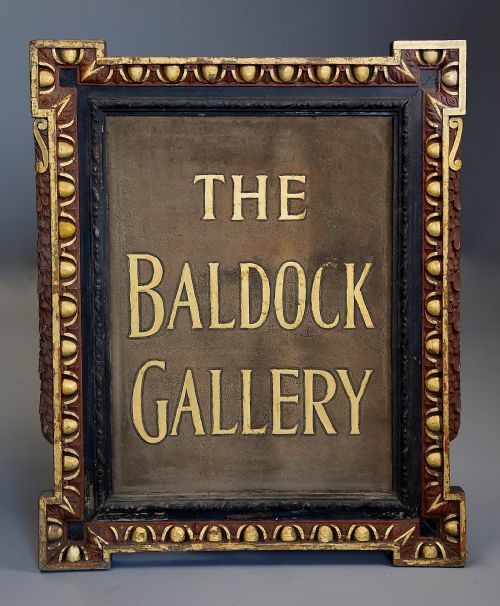


Antique Oak Sign
An antique oak sign brings commercial history and trade heritage directly into domestic spaces.
Antique Oak Sign
An antique oak sign serves as a surviving marker of past commerce, institutions, and religious spaces. These pieces span from the nineteenth century through the early twentieth century, taking forms such as trade boards, illuminated texts, and shop markers.
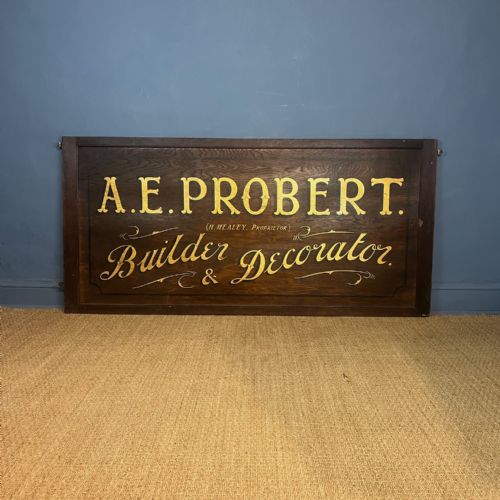
Makers utilised durable timber to withstand daily wear, producing functional boards that hung in public houses, galleries, and mercantile premises. Surviving examples often display original hand-painted lettering or carved details created for specific businesses.
Materials and construction methods
Craftsmen built these boards using solid timber or oak veneers, frequently applying paint, gold leaf, or carved lettering directly to the wood surface. Some examples incorporate brass, glass, or paper components to highlight specific lettering and decorative motifs.
Joinery techniques varied from heavy carving to simpler planed boards, depending on whether the piece hung inside a public house, a church, or a retail establishment. Surface decoration often included hand sign-writing executed in oil-based paints.
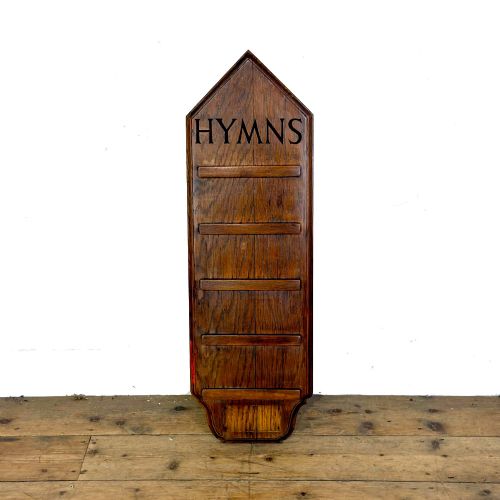
Listings feature oak signs spanning from the nineteenth century through the 1930s, incorporating glass, brass, and painted finishes.
Factors determining quality
Quality rests upon the clarity and execution of the original hand-painted or carved lettering, alongside the preservation of the surface finish. Pieces featuring crisp sign-writing, well-defined timber grain, and documented commercial origins stand apart from plainer utility boards.
The integrity of the timber and the originality of the text dictate desirability among collectors. Examples retaining their untouched painted surfaces demonstrate superior survival compared to boards with later repainting or heavy restoration.
Robert Mouseman·Gordon Russell·Liberty And Co·Heals Design
The Antique Oak Sign Glossary
- Sign-writing
- The manual application of lettering and decoration to a surface using brushes and oil-based paints. This skilled trade produced the custom commercial typography seen on trade boards and advertising pieces.
- Gold leaf
- Extremely thin sheets of beaten gold applied to timber surfaces to highlight carved letters or decorative borders. It provided a weather-resistant and luminous finish for prominent business displays.
- Trade sign
- A board or hanging marker identifying the profession, goods, or services offered by a merchant. These objects hung outside shops and commercial premises to attract passing trade.
- Tin tabernacle
- A prefabricated corrugated iron church or mission hall common in the late nineteenth century. Interiors often featured large mounted religious texts or boards to guide congregations.
- Relief carving
- A sculptural technique where figures or letters project from a background panel rather than being incised. This method added depth and tactile presence to architectural and commercial woodwork.
Antique Oak Sign: Frequently Asked Questions
How are antique signs dated?
Dating relies on examining the timber preparation, the style of the hand-painted lettering, and any recorded commercial history associated with the business named on the board. Structural clues within the oak framing also provide a reliable guide to the period of production.
Comparative analysis with documented trade catalogues and archive photographs helps narrow down the decade of manufacture. Original fixings and bracket attachments further assist in confirming the chronological bracket of the piece.
Where were trade boards displayed?
Merchants mounted these boards externally above shopfronts or internally behind counters to advertise specific wares and services to the public. Pubs, mercantile offices, and institutional halls utilised them for clear public communication.
Religious texts and civic notices typically hung inside churches, meeting halls, and administrative buildings. Their placement dictated the scale of the lettering and the protective finishes applied to the timber.
Are painted surfaces original?
Establishing originality involves inspecting the craquelure, pigment depth, and integration of the paint layer with the underlying oak substrate. Microscopic examination often reveals whether lettering is contemporary to the timber board or applied at a later date.
Many commercial boards were updated for new tenants, resulting in secondary layers of sign-writing over older surfaces. Uncovering these underlying campaigns requires careful observation under magnification.
How do I care for oak boards?
Maintenance requires keeping the timber away from direct heat sources and rapid humidity fluctuations to prevent splitting or warping. Gentle dusting with a dry, soft cloth preserves the fragile painted or gilded surfaces without introducing moisture.
Harsh chemical cleaning agents must be avoided entirely, as they strip away historical paint layers and dry out the grain. Maintaining stable environmental conditions ensures the long-term survival of the original finish.