




Antique Oak Settle Table
An antique oak settle table is a dual-purpose piece that transforms from a high-backed seat into a table, offering historical utility for compact spaces.
Antique Oak Settle Table
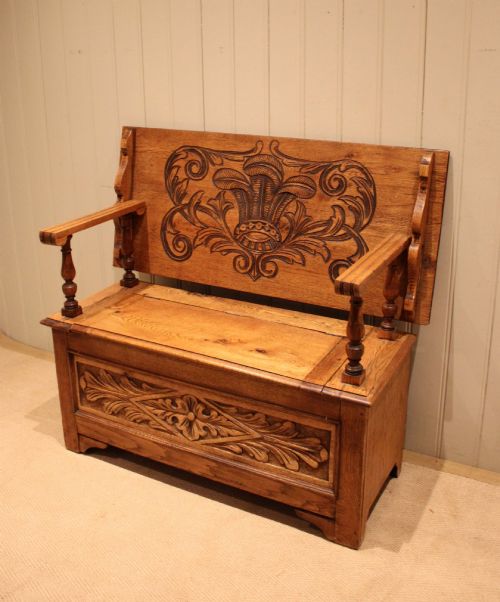
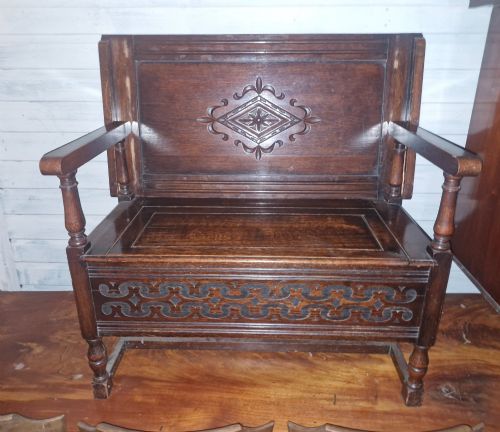
When you search for an antique oak settle table, you encounter versatile furniture historically designed to serve as both a seating bench and a flat surface. The pieces listed span periods from the late seventeenth century through the Victorian era and into the early decades of the twentieth century.
You will most commonly meet items classified as monk's benches, hall seats, and convertibles with lift-up storage beneath the seat or fold-over tops. Styles range from Jacobean Revival and Gothic Revival to Art Nouveau and Art Deco interpretations.
The forms function primarily as benches, hall seats, and chairs featuring mechanisms that pivot or fold the backrest forward onto the armrests to create a table top. Origins include British vernacular traditions alongside Spanish vernacular examples such as Catalan shepherd's benches.
What varies in quality
The sophistication of the carved detail distinguishes standard production from finer examples, ranging from simple panelled surfaces to deeply carved Victorian and Jacobean Revival ornamentation. The execution of the fold-over mechanism also dictates the success of the piece, as smoother joints and well-fitted pivots reflect superior cabinet-making.
Proportion and timber selection create further divergence, with rich golden or dark oak patination and heavy solid timber boards commanding greater visual presence than lighter or more rustic constructions.
Antique Oak Settle Table Retail Price Guide 2026
Typical asking prices for oak settle table among the pieces listed under this phrase on Sellingantiques today, from the lower quarter to the upper quarter. They describe what is for sale here now, not the wider market.
The listings show pieces spanning from the 17th century through Victorian times up to the 1930s, constructed predominantly in solid oak with occasional iron hardware.
The Antique Oak Settle Table Glossary
- Monk's bench
- A multi-functional item of furniture featuring a hinged back that folds down over the arms to form a table top. This form provides both a hall seat with storage and a practical surface.
- Settle
- A wooden bench with a high back, solid arms, and often a box base beneath the seat for storage. These pieces were traditionally placed near hearths to block draughts.
- Jacobean Revival
- A nineteenth and twentieth-century design style that copies the heavy, rectilinear forms and geometric carving of the early seventeenth century. It is frequently seen in dark oak hall furniture.
- Gothic Revival
- An architectural and decorative style drawing on medieval forms, featuring pointed arches, tracery, and heavy carved ornamentation. This style appears frequently on Victorian seating.
- Panelling
- A method of joining flat wooden boards within a framed structure to allow for the natural expansion and contraction of timber. Panel construction prevents splitting on large backrests and seats.
Antique Oak Settle Table: Frequently Asked Questions
What is a monk's bench?
A monk's bench is a convertible piece of furniture that functions as a high-backed chair or hall seat with a solid wooden seat that lifts to reveal storage.
By tilting the backrest forward over the armrests, the piece transforms into a table top, making it useful for smaller rooms.
How do I use a settle table today?
These pieces work well in hallways, entranceways, or living rooms where dual functionality provides both a place to sit and concealed storage.
The fold-over top allows the bench to double as a casual table when space requires an adaptable layout.
How do I date an oak settle table?
Dating relies on examining the construction methods, the style of carving, and the materials used in the frame. Pieces span from late seventeenth-century originals to Victorian revivals and early twentieth-century interpretations.
Revival pieces often combine older stylistic motifs with modern hinge hardware and twentieth-century timber finishes.