


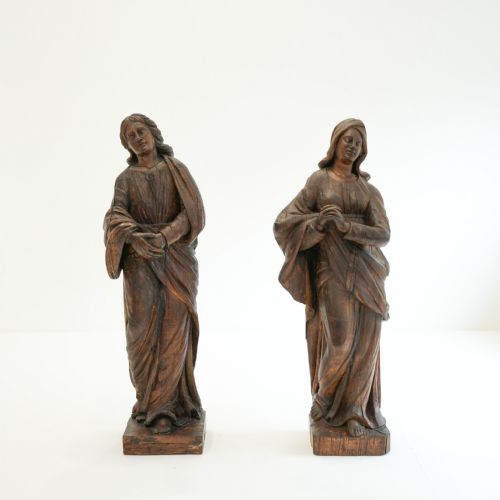


Antique Oak Saint Statue
An antique oak saint statue brings centuries of devotion into a room, carved from sturdy timber to hold the quiet presence of figures like St. Paul and the Virgin.
Antique Oak Saint Statue
An antique oak saint statue is a carved wooden representation of a holy figure, most often encountered in forms dating from the pre-sixteenth century up to the nineteenth century. These sculptures range from single figures of apostles and martyrs to pairs of saints and group compositions originating from regions like Germany, France, and Flanders.
Buyers seeking an antique oak saint statue will find works executed in styles spanning Late Gothic, Renaissance, Baroque, and Gothic Revival. The inventory includes fragments as well as complete standing figures, some retaining traces of original paint and gilding on their wooden surfaces.
How they were made
Maker artisans carved these pieces from solid oak timber and hardwood, utilising hand chisels and gouges to shape the dense grain. Figures were frequently hewn from a single block of wood, though larger groups involved joined sections.
Surfaces were often finished with layers of paint, gesso, and gold leaf, though centuries of wear have left many examples with exposed, patinated wood. Metal accents occasionally appear in associated fittings or attributes held by the figures.
Listings span multiple centuries, ranging from pre-sixteenth century Gothic carvings to nineteenth-century Gothic Revival and folk art interpretations.
What varies in quality
The survival of original surface treatments, such as polychrome paint or gilding, also defines the tier of a piece. Examples that retain their early surface integrity stand apart from those stripped down or heavily restored in later centuries.
Franz Keller
The Antique Oak Saint Statue Glossary
- Polychrome
- Painted in several colours. This term describes wooden sculptures decorated with pigments over a gesso ground.
- Gesso
- A plaster mixture used as a base for paint or gilding on wood. It provides a smooth surface for detailed decoration.
- Gilding
- The application of gold leaf onto a surface. It highlights specific details on religious figures.
- Anna Selbdritt
- A subject showing Saint Anne, the Virgin Mary, and the Christ Child together. It is a common grouping in late medieval woodcarvings.
- Donor figure
- A sculpture depicting the person who commissioned a religious work. They typically appear in a prayerful posture beside a saint.
Antique Oak Saint Statue: Frequently Asked Questions
How old is my statue?
Dating relies on the style of the carving, the cut of the garments, and the characteristics of the oak timber. Gothic and Renaissance pieces display distinct drapery conventions that evolved over the centuries.
Examination of the wood grain, tool marks, and any remaining pigment helps place the work within periods spanning the fifteenth to the nineteenth century.
Were these painted originally?
Most medieval and Renaissance figures were brightly painted and gilded to enhance their visual impact in churches. Pigments were applied over a gesso ground on the carved wood.
Over time, many statues lost their paint through cleaning or wear, leaving the bare oak exposed with a dark patina.
Where were they displayed?
These figures originally stood in churches, chapels, and private domestic shrines as objects of veneration. Some formed part of larger altarpieces or architectural church furnishings.
Today, collectors place them on mantelpieces, brackets, or dedicated display tables where the wood grain and form can be appreciated.
How should I care for oak?
Oak sculptures require stable indoor humidity and protection from direct sunlight to prevent the timber from splitting. Keeping them away from sudden temperature changes preserves the dry wood.
Dusting should be done gently with a dry, soft brush rather than liquid cleaners that might damage aged surfaces.