



Antique Oak Filing Unit
These antique oak filing unit designs offer honest utility, bringing character and storage to a room through sturdy timber and clever engineering.
Antique Oak Filing Unit
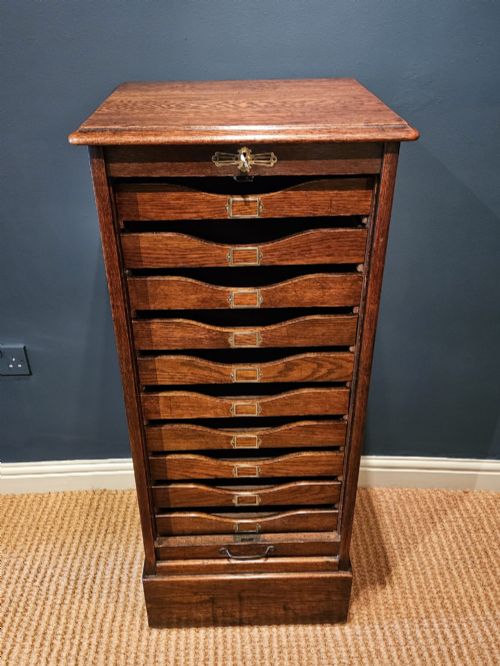
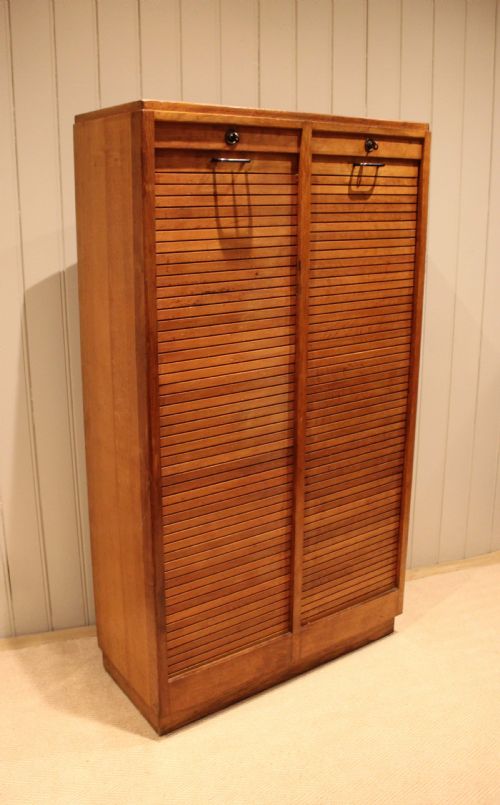
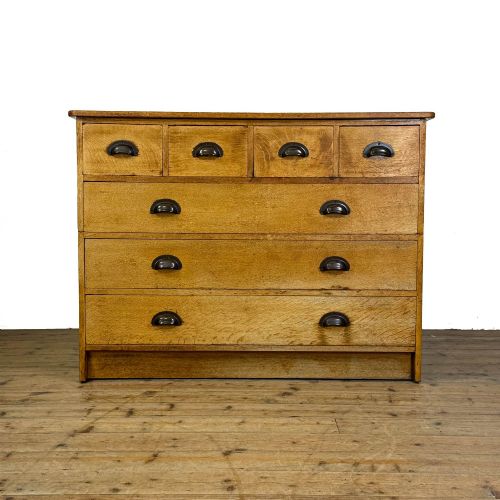
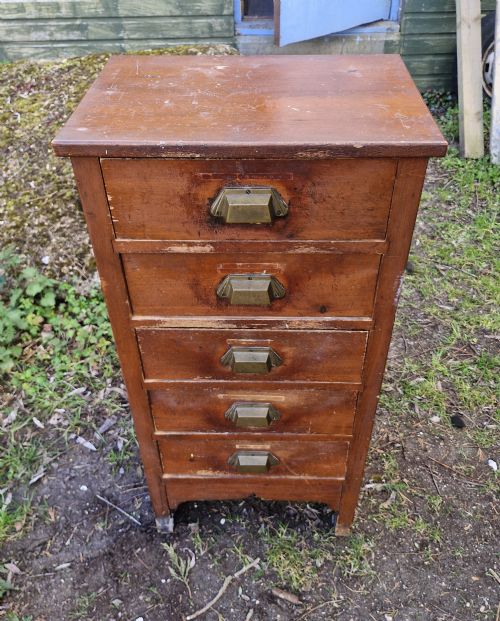
An antique oak filing unit serves as a practical storage solution for papers and office supplies, combining timber construction with functional drawer arrangements. When exploring this selection, buyers frequently encounter tambour front cabinets and multi-drawer office pieces.
The material palette centres on oak, often paired with brass or metal hardware, spanning periods from the late nineteenth century through to the mid-twentieth century. Edwardian examples and early twentieth century pieces dominate the selection, alongside occasional plan chests and haberdashery cabinets.
How they were made
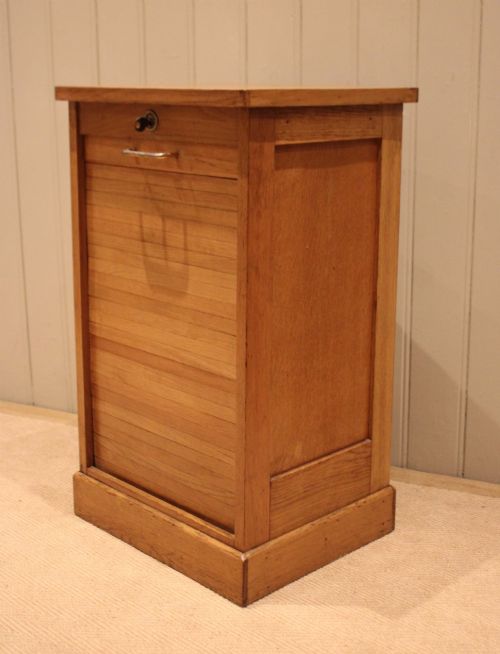
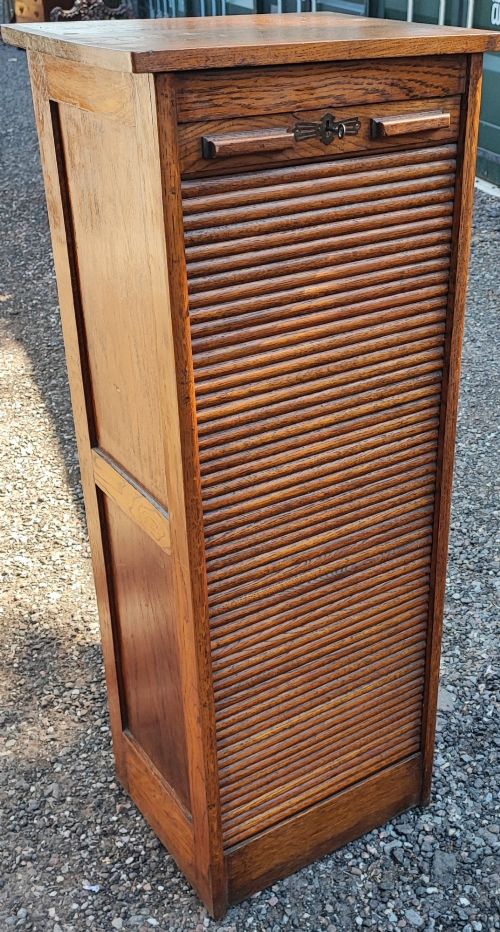
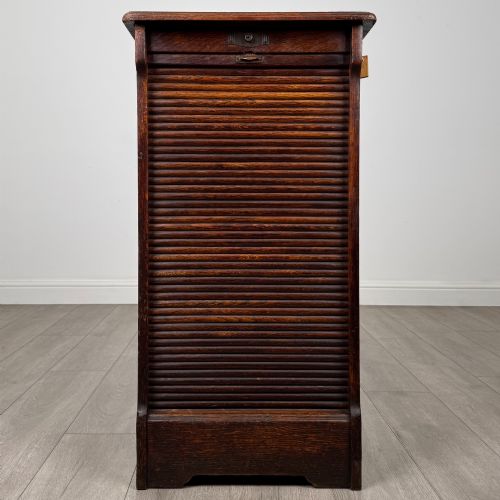
Construction relies primarily on solid oak and wood, shaped into modular carcasses designed for heavy office use. Many examples utilise flexible tambour slats running in tracks to conceal internal letter files and drawers.
Hardware details such as brass handles and metal mechanisms provide mechanical function and visual contrast to the timber. Canvas and steel components appear in specific internal filing systems and patent letter files.
Patent letter files from the turn of the century prove that nineteenth-century filing clerks possessed a deep enthusiasm for complicated wooden machinery.
What varies in quality
Quality reveals itself in the smoothness of the timber tambour mechanism and the precision of the drawer joinery. Superior examples maintain alignment in their moving parts despite decades of office use.
The choice of grain in the oak and the fidelity of the period brass handles distinguish finer workshop production from standard commercial office furniture.
Amberg·Shannon
The Antique Oak Filing Unit Glossary
- Tambour
- A flexible shutter door made of narrow strips of wood glued to canvas, allowing it to slide around a curved track to enclose a cabinet. This clever mechanism saves space in busy offices.
- Tambour Front
- A front closure on a cabinet formed by sliding wooden slats that retract into the body of the unit. It provides secure containment without the swing space required by traditional doors.
- Plan Chest
- A wide, shallow set of drawers originally designed for storing architectural drawings and maps. These pieces offer expansive flat surfaces and numerous low-profile drawers.
- Wellington Chest
- A tall, narrow chest of drawers secured by a hinged locking side pilaster that fastens with a key. This locking bar holds every drawer shut simultaneously.
Antique Oak Filing Unit: Frequently Asked Questions
What is an antique oak filing unit?
These pieces are functional wooden office furnishings designed to organise papers, letters, and documents in commercial or domestic settings. They range from multi-drawer cabinets to specialised letter files.
Most examples utilise oak construction, often featuring clever sliding tambour doors or brass hardware. Their design reflects the administrative needs of the Edwardian era and the early twentieth century.
How do tambour doors work?
Tambour doors consist of narrow wooden slats attached to a flexible fabric backing that runs along grooved tracks within the cabinet carcass. This allows the door to slide smoothly around a corner and conceal the contents.
When opening the cabinet, the slats retract into the sides or base of the unit. This mechanism requires careful alignment of the wooden strips and tracks to operate without friction.
Where were these cabinets used?
Original locations included solicitors' offices, counting houses, libraries, and corporate administration rooms where systematic paper filing was essential. Their robust construction suited daily clerical work.
Today, these units transition easily into domestic studies and living spaces to store modern paperwork, stationery, and collections while retaining period character.
How do I date an oak filing cabinet?
Dating relies on observing construction methods, hardware styles, and patent marks associated with specific office furniture designs. Edwardian and early twentieth century pieces often display distinct brass handle designs and specific wood finishes.
Makers' stamps and patent names stamped into the timber or metal fittings provide further chronological clues. Examining the secondary timbers inside the drawers also helps confirm the period.