
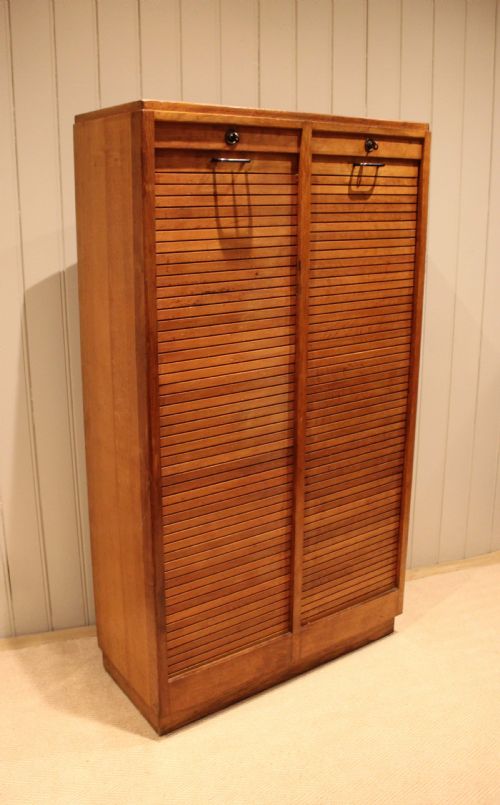


Oak Tambour Front Cabinet
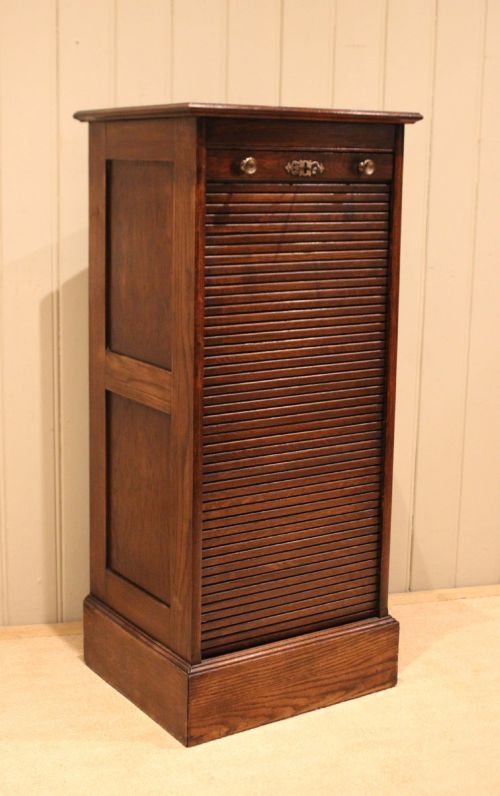
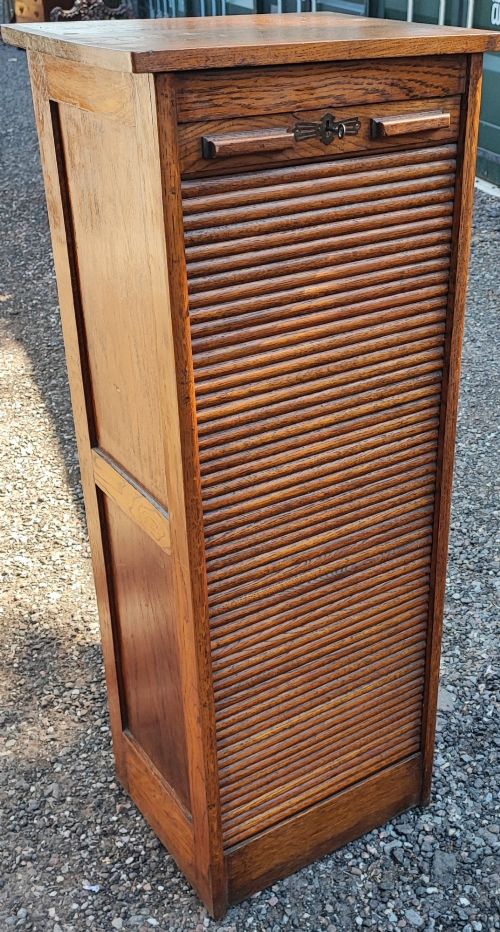
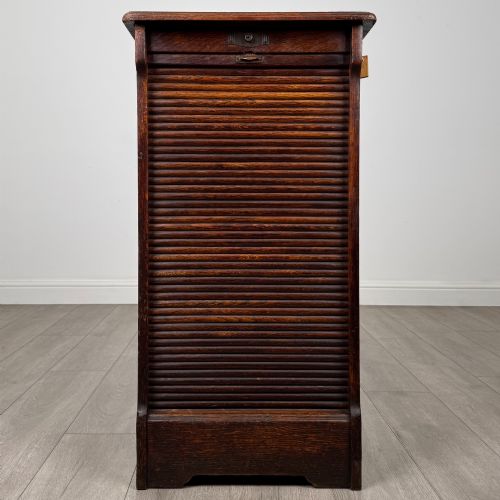
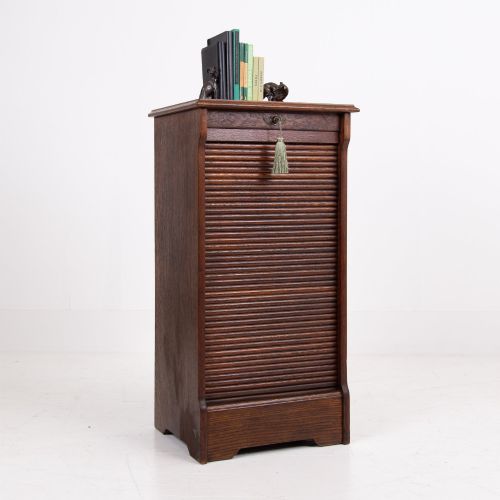
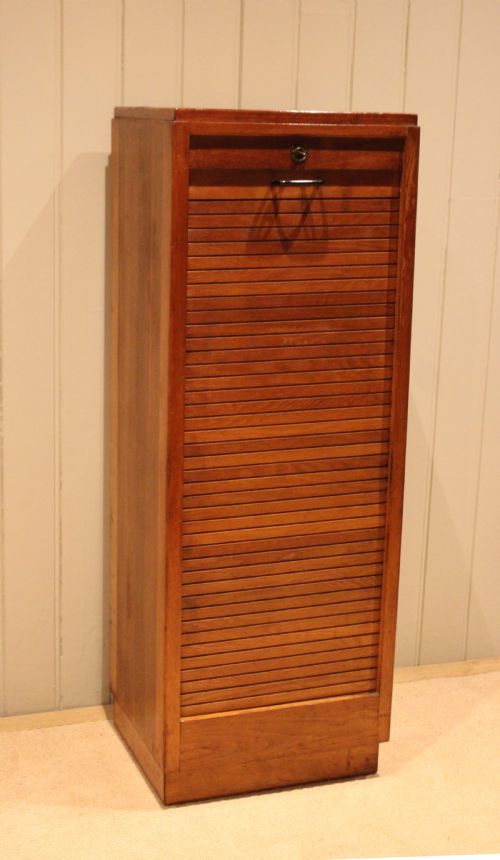
An oak tambour front cabinet brings practical office engineering into domestic rooms with slatted wooden doors that slide smoothly around a curve.
Oak Tambour Front Cabinet
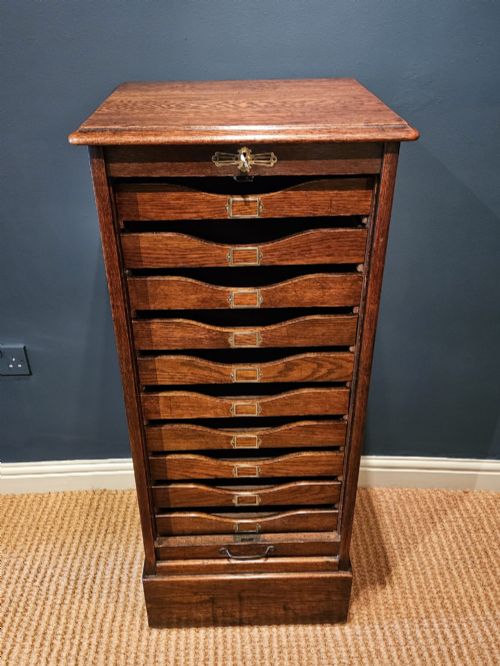
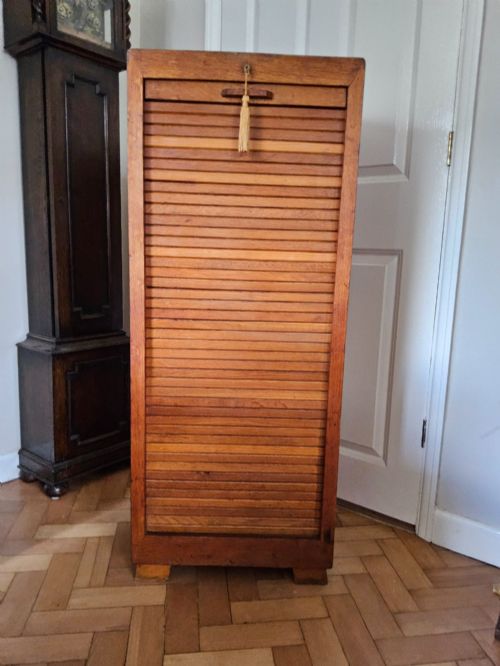
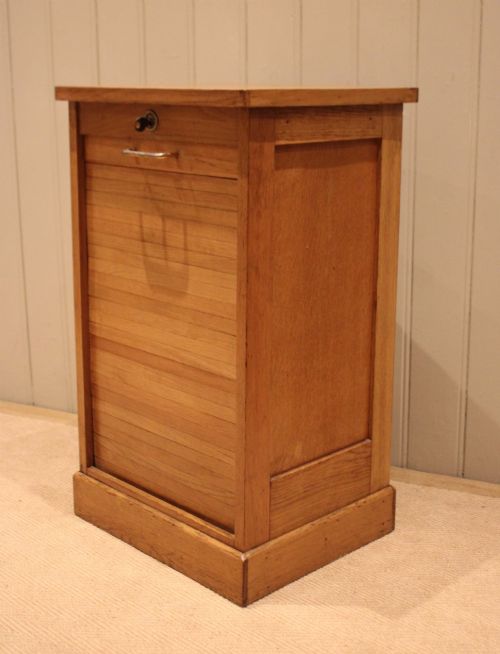
An oak tambour front cabinet is primarily an office or stationery piece designed to house files, letters, and small supplies behind flexible slatted doors. The most common version met on this page is the single or double tambour filing cabinet originating from the Edwardian period or the early twentieth century.
Makers produced these functional items using sturdy oak, often styled simply for professional use or finished with finer details for domestic studies. Pieces range from compact tabletop stationery boxes and cigar cabinets to large single, double, and triple column filing systems.
The archive and current listings show strong representation from Edwardian workshops alongside French interpretations and later Art Deco or Utility examples. Buyers select these cabinets for their clever space-saving closures and robust timber construction that integrates easily into modern interiors.
How they were made
Makers constructed these cabinets using solid oak and oak veneers for the primary carcass, pairing the timber with brass handles, hinges, and label holders. The characteristic flexible door relies on narrow wooden slats glued to a backing of canvas or strong fabric, allowing the shutter to glide along routed grooves in the sides.
Internal mechanisms frequently incorporate metal runners and paper or steel dividers to organise documents efficiently. Structural integrity depended on precise joinery to ensure the curved track guided the tambour slats without binding or catching during daily office use.
Some Edwardian cigar cabinets hide specialised cedar linings behind their rolling shutters to keep smokes fresh.
What varies in quality
Quality in an oak tambour front cabinet rests upon the smoothness of the sliding mechanism and the structural rigidity of the slatted shutter. Superior examples feature tightly aligned wooden slats on sound canvas backings that travel effortlessly within their tracks without sagging.
Cabinetmaking standards appear in the selection of figured oak timber, solid brass hardware, and panel thickness throughout the carcass. Refined proportions and clever internal fittings elevate certain office pieces into sophisticated pieces of fine furniture.
James Shoolbred & Co
The Oak Tambour Front Cabinet Glossary
- Tambour
- A flexible door or shutter formed of narrow strips of wood attached to canvas or fabric backing. This clever arrangement allows the door to slide around a tight curved track and conceal itself within the cabinet sides.
- Stationery Cabinet
- A small desktop or freestanding box fitted with internal pigeonholes, shallow drawers, and slots for paper and envelopes. These Victorian and Edwardian accessories kept writing desks tidy.
- Bureau
- A writing desk featuring a sloping fall-front that opens to reveal a fitted interior of small drawers and pigeonholes. Some versions incorporate tambour shutters above or below the writing surface.
- Filing Cabinet
- A tall office piece designed for vertical document storage, often fitted with internal wooden or metal dividers and pull-out trays. Edwardian and later examples frequently conceal these trays behind a roll-down slatted door.
Oak Tambour Front Cabinet: Frequently Asked Questions
How do tambour doors work?
Tambour doors consist of narrow wooden slats joined side by side onto a strong canvas backing. This flexible construction allows the entire shutter to bend around a curved corner track and slide back into the sides of the cabinet.
To operate the door smoothly, users pull a brass handle that guides the slats along routed grooves. Regular use relies on keeping these tracks clean and free from obstruction so the wooden curtain travels without sticking.
What were these cabinets used for originally?
Offices, legal chambers, and administrative departments utilised these cabinets to store confidential files, ledgers, and correspondence securely. The lockable slatted door kept contents private while offering quick access during busy working days.
Smaller tabletop versions served domestic studies and libraries for holding personal stationery, bills, and cigars. Their compact footprint made them essential furniture for managing paper documents before modern filing systems took over.
How do I date an oak cabinet?
Dating relies on examining the overall style, construction methods, and hardware choices present on the piece. Edwardian and early twentieth-century models often display traditional dovetailed joints, brass card holders, and quarter-sawn oak figuring.
Later pieces from the nineteen-thirties and forties tend to feature simpler lines, minimal ornamentation, and sometimes alternative backing materials or metal framing. Comparing the timber finish and lock types helps narrow down the decade of manufacture.
How do I fit one into a modern room?
An oak tambour cabinet works well as a bedside table, a hallway storage unit, or a compact desk companion in contemporary homes. The rich grain of the oak adds warmth, while the sliding door saves floor space where a traditional swinging door would obstruct the room.
Maintenance involves treating the wood with appropriate wax or polish and ensuring the sliding tracks remain lightly lubricated. Their classic office aesthetic pairs naturally with both vintage and modern minimalist interior schemes.